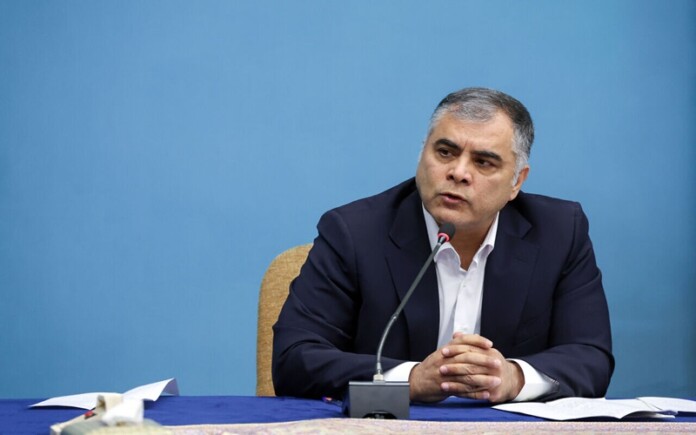
Mohsen Paknejad’s resignation was officially attributed to personal and family reasons, but growing scrutiny of oil intermediaries, unreturned revenues, and parliamentary demands for accountability has raised questions about the circumstances of his departure.
Iran regime’s Oil Minister Mohsen Paknejad has resigned, with the government officially citing personal and family reasons for his departure. The regime’s president Masoud Pezeshkian accepted the resignation and appointed Hamid Bovard, the chief executive of the National Iranian Oil Company, as acting oil minister. According to the president’s office, Paknejad had submitted his resignation some time earlier and pressed for its acceptance.
The official explanation, however, comes as the Ministry of Oil faces increasing scrutiny over the way Iran sells oil and transfers the resulting revenues under sanctions. Parliamentary investigations and reports concerning oil intermediaries (trusts) have placed the ministry under growing pressure, while questions remain about revenues from oil sales that allegedly have not returned to the country.
The oil intermediary network under scrutiny
Because Iran faces restrictions on international banking and financial transactions, oil sales have increasingly relied on intermediary networks designed to facilitate transactions and transfer revenues outside conventional banking channels.
These intermediaries have become an important component of the regime’s sanctions-evasion system. But their expanding role has also generated questions over transparency, oversight, qualifications, and accountability.
Reports cited in the regime’s media have alleged that the number of such intermediaries increased significantly during Paknejad’s tenure and that concerns were raised over how they were selected and supervised.
The issue has reached the regime’s parliament and judiciary. In September, the secretary of the parliament’s Article 90 Commission said the Ministry of Oil needed to answer questions concerning the oil intermediary case involving Hossein Aghayari, including issues surrounding the failure to return a significant portion of oil revenues. The official also said that the regime’s judiciary and the Inspection Organization had entered the case and that efforts to pursue possible impeachment of Paknejad would continue when circumstances allowed.
The regime’s judicial authorities have separately indicated that hearings concerning cases involving these oil intermediaries would be held on an expedited basis.
The unanswered question of oil revenues
One of the central issues surrounding the controversy is whether all revenues from oil sold through intermediary networks have actually returned to Iran.
Reports circulating in the regime’s media have cited a figure of approximately $200.5 million in oil revenues allegedly not returned to the country through these networks. The precise circumstances and ultimate disposition of the funds is not revealed completely.
The broader issue, however, is not limited to one figure or one intermediary. Parliamentary officials have raised concerns about the return of oil revenues and the contracts governing these intermediaries, while calls for greater accountability have continued.
This creates an obvious question surrounding the timing of Paknejad’s departure: if the resignation is entirely unrelated to the oil-intermediary controversy, why did parliamentary, inspection, and judicial scrutiny intensify around the ministry during the same period?
That question cannot be answered definitively from the publicly available evidence, while as usual the regime’s media never expose the entire facts around economic corruption. But the sequence of events has made the oil-revenue controversy an unavoidable part of the discussion surrounding the resignation.
A resignation does not close the case
The regime’s explanation remains that Paknejad left for personal reasons. At the same time, reports about the oil intermediary network have continued to raise questions about the ministry’s oversight and the return of revenues.
There have also been comments in the regime’s media concerning the alleged diversion of portions of oil revenues to political actors. What is established is that the controversy predates Paknejad’s resignation and has attracted the attention of multiple regime’s institutions. Parliamentary officials have discussed possible impeachment, while the judiciary and Inspection Organization have reportedly become involved in examining the intermediary arrangements.
The resignation therefore leaves a much larger issue unresolved.
A change of minister does not explain the status of oil revenues already generated, the contractual arrangements governing intermediary networks, or the mechanisms through which billions of dollars in oil proceeds are supposed to return to Iran.
The central question is consequently no longer simply why Mohsen Paknejad resigned. It is where Iran’s oil revenues have gone, who controlled the channels through which they were transferred, what oversight existed, and whether anyone will ultimately be held accountable for funds that failed to return to the country.
Until those questions are answered with documented evidence, the official explanation of “personal and family reasons” leaves the wider oil-revenue controversy unresolved.