


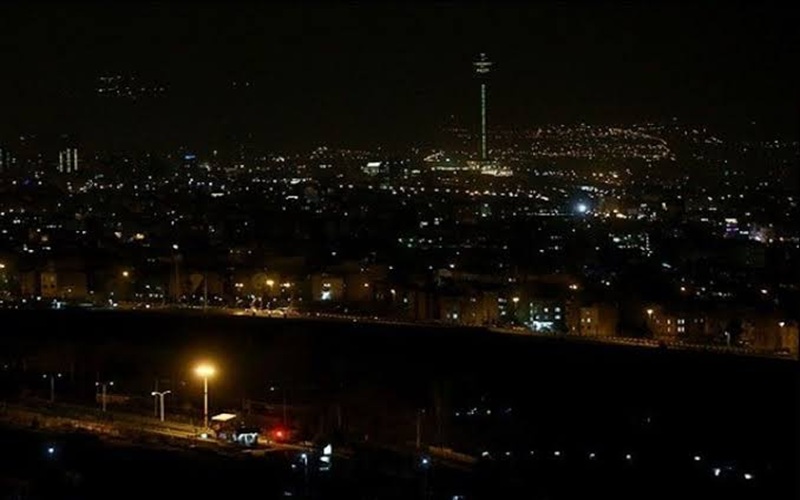

Scheduled electricity blackouts are returning to Iranian homes and businesses at the start of winter, while lawmakers warn that power shortages have already cost 600,000 jobs and could push unemployment beyond one million.
Iran is preparing to resume scheduled electricity cuts for residential and commercial consumers from December 1, as the country’s worsening energy crisis exposes the growing consequences of shortages in natural gas and electricity. While households face renewed power disruptions at the beginning of winter, industrial production has already suffered substantial losses, with a parliamentary official warning that more than one million workers could eventually lose their jobs if the situation continues.
Mohammadollahdad, chief executive of Iran’s state electricity company Tavanir, announced on Saturday, November 21, that electricity restrictions would begin on December 1 because of difficulties securing sufficient fuel for power plants. Under the initial schedule, households and businesses could face power cuts lasting up to two hours every other day.
He added that if temperatures fall further, electricity cuts could increase to two hours every day.
The return of scheduled blackouts, barely two months after the end of summer, highlights the structural problems behind Iran’s energy shortages. With the onset of colder weather, household gas consumption rises sharply for heating, leaving less fuel available for thermal power plants that depend heavily on natural gas to generate electricity.
Gas shortages deepen the electricity crisis
The government’s growing difficulty in balancing gas consumption between households, businesses, and power plants has become a central factor in the recurring electricity crisis.
On November 22, parliamentary speaker Mohammad Bagher Ghalibaf described energy consumption reform as the country’s most urgent priority, arguing that reforms should begin with natural gas rather than gasoline.
He said gasoline accounts for only nine percent of Iran’s energy consumption, compared with 73 percent for natural gas. On that basis, he argued that gasoline consumption should be the last priority for reform.
Ghalibaf called for better management of gas consumption, saying it could help reduce pressure on households and the government while strengthening economic security and social resilience.
However, the country’s dependence on gas-fired thermal power plants means that shortages in the gas supply directly translate into reduced electricity generation. As household heating demand increases during winter, power plants face greater difficulties obtaining the fuel needed to maintain production.
A September report by Rouydad24 had already warned that Iran’s energy crisis would not end with summer and would remain a major challenge for households and businesses. The report highlighted the heavy dependence of thermal power stations on natural gas and the growing competition for supplies as temperatures decline.
The consequences are now becoming evident even before the onset of severe winter weather. Repeated electricity restrictions in previous years have disrupted both residential life and industrial operations, with businesses forced to reduce production or suspend activities during periods of power shortages.
Electricity shortages threaten more than one million jobs
The economic consequences extend well beyond household inconvenience. Electricity shortages have increasingly disrupted industrial production, with workers bearing the cost through reduced working hours, lost income, and unemployment.
On Sunday, November 22, Nasrollah Pezhmanfar, chairman of the parliament’s Article 90 Commission, told the parliament’s official news agency, Khaneh Mellat, that production losses caused by electricity shortages had resulted in the loss of 600,000 jobs over the preceding six months.
He warned that if the situation is not brought under control, more than one million employed people could lose their jobs.
Pezhmanfar said that in the Iranian year 1404, approximately 16 percent of the electricity required by industrial parks was not supplied. According to him, conditions deteriorated further in 1405.
Industries are also facing a sharp increase in electricity-related costs. Pezhmanfar said businesses have been paying charges 4.5 times higher than official electricity tariffs, adding to the financial pressure created by production disruptions.
He warned that these costs are eroding the profit margins of industries such as steelmaking and making new investment increasingly difficult.
The combination of insufficient electricity, rising operating costs, and interrupted production threatens to weaken industrial activity further. For businesses already struggling with economic pressures, unreliable electricity supplies make planning, maintaining production levels, and retaining workers increasingly difficult.
A crisis reaching into households
The contrast between official calls for energy conservation and the daily difficulties facing ordinary Iranians has also become increasingly visible.
On November 19, Masoud Pezeshkian, the regime’s president, said he slept at home wearing a jacket and other warm clothing and kept the lights off.
His remarks came as households were preparing for another winter of electricity restrictions and growing uncertainty over energy supplies.
The resumption of blackouts demonstrates that Iran’s energy shortages are no longer confined to peak summer demand. The same crisis is now returning as winter begins, when households need more gas for heating and the country’s electricity infrastructure faces additional pressure.
With hundreds of thousands of jobs reportedly already lost because of electricity shortages, and the prospect of further losses exceeding one million, the consequences extend far beyond temporary power cuts. They point to a deepening crisis affecting household welfare, industrial production, employment, and investment across the country.