


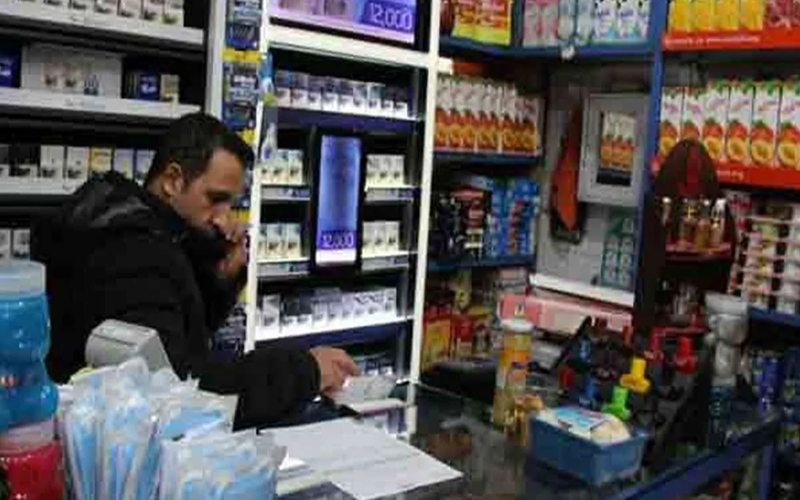

A new field report from a state-affiliated newspaper reveals the growing spread of poverty across Tehran, where even educated professionals and university graduates increasingly rely on credit purchases to afford basic necessities.
A field report published by the state-affiliated Shargh newspaper on May 30 paints a stark picture of the expanding poverty and economic hardship affecting broad segments of Iranian society. What was once largely confined to marginalized and low-income neighborhoods has now spread into urban middle-class communities. The return of credit purchases, growing household debt, food-related theft, and dramatic changes in consumption patterns all point to a deepening economic crisis that is reshaping everyday life across the country.
The testimonies collected in the report suggest that buying essential goods on credit is no longer an exception. Instead, it has become an increasingly common survival strategy for employees, university students, and educated young professionals struggling to cope with soaring living costs.
Survival Through Shared Debt
One of the most striking stories highlighted in the report concerns three educated young women who moved to Tehran seeking work and independence. Sharing a rented apartment, they now find themselves unable to cover even the most basic food expenses without relying on credit.
One of them, identified as Maryam, explained that she had recently been forced to purchase tomato paste and cooking oil on credit for the first time in her life. To avoid accumulating excessive debt with a single shopkeeper, the roommates divide their purchases among several stores. One buys bread and cheese on credit, another obtains legumes, while the third purchases oil and other necessities.
What was once considered a symbol of economic independence and social mobility for educated young people has increasingly become a coordinated effort simply to survive.
The Return of Credit Notebooks Across Tehran
According to Shargh, traditional credit notebooks have reappeared in supermarkets throughout Tehran. Shopkeepers report that the most significant change is not the existence of credit itself but the identity of those requesting it.
In previous years, credit purchases were primarily associated with low-income families. Today, however, office workers, educated professionals, and long-time customers increasingly rely on informal credit arrangements to obtain essential goods.
One shopkeeper in eastern Tehran described seeing well-dressed customers entering his store every day who appear financially stable but cannot afford to pay cash for basic necessities. Their shopping baskets have changed dramatically. Non-essential items have disappeared, replaced by bread, eggs, canned food, and legumes.
According to local merchants, the number of customers who cannot make it to the end of the month without borrowing continues to rise.
Asking for Half a Loaf
Bakers throughout the capital also report significant changes in consumer behavior. Some customers now ask to purchase only half a loaf of bread because they cannot afford a full one.
Fruit vendors describe a similar trend. For many families, buying fruit by the kilogram has become a luxury. Customers increasingly purchase only a few individual apples, oranges, or bananas instead of larger quantities.
Merchants say average purchase weights have fallen to less than half a kilogram, while demand for lower-quality and discounted produce has surged. In some cases, long-standing customers now request fruit on credit as well.
These developments highlight the extent to which inflation and declining purchasing power have transformed consumption habits across society.
Economic Hardship and the Erosion of Social Capital
When educated families are forced to buy bread, eggs, and fruit on credit, spending on education, culture, books, arts, and community participation inevitably declines. The consequences extend far beyond economics.
The growing inability of households to meet basic needs contributes to the erosion of social capital and weakens the foundations of civic life. Families focused on day-to-day survival have fewer resources and opportunities to invest in personal development, cultural engagement, or social participation.
The credit notebooks now found in supermarkets, bakeries, and fruit stores are more than records of debt. They serve as a visible indicator of a broader social and economic decline affecting millions of Iranians.
A Crisis Rooted in Structural Failures
The expansion of poverty among employees, students, and educated urban residents reflects deeper structural problems within Iran’s economy. Chronic mismanagement, systemic corruption, the depletion of national resources, and policies that have consistently failed to address citizens’ basic needs have all contributed to the current situation.
While growing numbers of Iranians struggle to afford bread, eggs, and other necessities, substantial national resources continue to be directed toward maintaining the regime’s security apparatus, expanding military capabilities, pursuing missile programs, and supporting regional proxy networks.
The result has been a sustained decline in living standards and purchasing power across large sections of society.
A Warning Sign for Iran’s Future
The resurgence of widespread credit purchases has become a powerful symbol of the gradual collapse of household purchasing power in Iran. Significantly, these realities are now being acknowledged even by state-affiliated media outlets that have often downplayed the severity of the country’s economic challenges.
For many observers, the spread of poverty into the educated middle class represents more than an economic problem. It signals a growing disconnect between the ruling establishment and the population, increasing public frustration, and mounting social pressures.
As economic hardship continues to deepen, the stories recorded in Tehran’s supermarkets, bakeries, and fruit shops offer a revealing snapshot of a nation grappling with a crisis that can no longer be concealed.