The government’s claim of a gradual “price reform” fails to address the wider economic shock as higher fuel costs threaten to push transportation and consumer prices even higher.
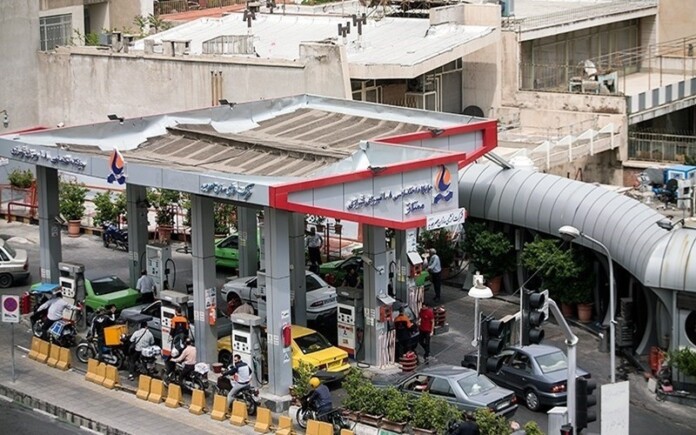
Iran’s regime has raised the price of the third-tier gasoline quota from 5,000 to 10,000 tomans per liter, triggering fresh concerns about higher transportation costs, rising consumer prices, and renewed social discontent.
The increase comes despite repeated assurances from President Masoud Pezeshkian and senior government officials that any adjustment to gasoline prices would be gradual, carefully managed, and implemented only after taking public concerns into account.
The government has described the measure as a phased “price reform.” But for millions of Iranians already struggling with inflation and declining purchasing power, the distinction between a gradual increase and a sudden one offers little relief. What matters ultimately is the cumulative cost imposed on households and businesses.
Reports of gasoline shortages and long queues at filling stations in several cities following the latest increase have added to public concern.
From fuel prices to a wider inflationary shock
The most significant consequence of higher gasoline prices is not limited to what motorists pay at the pump.
Fuel is embedded throughout the economy. Higher gasoline costs raise transportation expenses, which in turn affect the price of food, manufactured goods, services, and other necessities transported across the country.
This creates a chain reaction in which an increase in fuel costs can quickly spread through the economy.
The impact is particularly severe when households are already facing substantial increases in the prices of basic goods. Products that have already become dramatically more expensive since the beginning of the year can face another round of price increases as transportation and distribution costs rise.
The government’s argument that price increases can be introduced gradually does not eliminate this effect. Whether the adjustment occurs in one step or several stages, the cumulative increase eventually reaches the same economy and the same household budgets.
For low-income families, whose incomes are already consumed largely by food, rent, transportation, and other necessities, even relatively small increases in daily expenses can have significant consequences.
The government’s conflicting explanations
The regime’s justification for the gasoline increase has also exposed contradictions within its own economic messaging.
First Vice President Mohammad Reza Aref has described the latest measure as the first stage of a broader gasoline price adjustment. He has also argued that Iran imports gasoline at a cost equivalent to around 70 cents per liter and questioned why it should be sold domestically at a much lower price.
But government officials have simultaneously acknowledged serious difficulties in importing fuel and have warned of gasoline shortages.
Aref himself previously cited a significant imbalance between domestic gasoline production and consumption, putting production at roughly 110 million liters per day against consumption of about 140 million liters. That would leave a gap of approximately 30 million liters per day.
The contradictory explanations point to a broader problem. The regime is attempting to justify higher prices through the cost of imported gasoline while also confronting an energy system suffering from chronic production and consumption imbalances.
Is “cheap gasoline” really cheap?
Government officials have repeatedly compared gasoline prices in Iran with prices in neighboring countries and international markets. But such comparisons overlook the wider economic environment in which Iranian consumers live.
The argument that gasoline is artificially cheap becomes less convincing when the cost of vehicles, household incomes, and other expenses are taken into account.
For example, one comparison cited by Iranian officials contrasts gasoline prices in Iran and Kuwait. At the stated figures, gasoline costs around 10,000 tomans per liter in Iran compared with approximately 64,000 tomans in Kuwait.
On the surface, this appears to demonstrate a substantial fuel subsidy for Iranian consumers.
But the same comparison becomes more complicated when the cost of the vehicle itself is considered. A Land Cruiser that costs approximately 19 billion tomans in Kuwait can reportedly cost around 64 billion tomans in Iran. The Iranian buyer therefore pays roughly 45 billion tomans more for the vehicle—an amount vastly exceeding the annual savings generated by cheaper gasoline.
This exposes a broader flaw in the regime’s argument. Consumers do not experience fuel prices in isolation. They pay for vehicles, spare parts, maintenance, insurance, transportation, and a wide range of other costs shaped by the country’s economic policies and exchange-rate distortions.
A similar argument has been made about the exchange rate. The extremely low nominal price of gasoline cannot simply be compared with international prices in dollars without considering the purchasing power of Iranian households and the cost structure imposed on consumers by the regime’s economic policies.
Who ultimately pays for the adjustment?
The central issue is therefore not simply whether gasoline in Iran should be cheaper or more expensive.
It is who bears the cost of the adjustment.
When the government raises fuel prices without simultaneously addressing inflation, stagnant incomes, inefficient production, the high cost of vehicles, and the broader economic distortions created by years of mismanagement, the additional burden ultimately falls on consumers.
The consequences extend well beyond motorists. Higher transportation costs affect workers commuting to their jobs, families relying on public or private transport, businesses moving goods, farmers transporting agricultural products, and retailers passing increased distribution costs on to consumers.
The result can become a new inflationary cycle at a time when Iranian households are already struggling to maintain basic living standards.
A politically dangerous decision
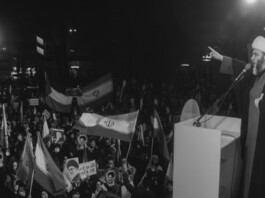
The regime is clearly aware of the political sensitivity of gasoline prices. Previous attempts to increase fuel prices have demonstrated how quickly fuel costs can become a catalyst for broader public anger.
That explains the government’s repeated insistence that the process will be gradual and that the concerns of the population will be taken into account.
Yet the latest increase demonstrates the limits of this approach. The regime faces an economic crisis that requires difficult decisions, but many of those decisions carry serious political risks.
Pezeshkian’s government is therefore caught between two pressures. Delaying measures to reduce the fuel deficit can deepen the economic imbalance, while implementing them can intensify inflation and public dissatisfaction.
The increase to 10,000 tomans may consequently represent more than a change in the price at the pump. It is another indication of the regime’s growing economic dilemma: policies presented as necessary reforms can themselves become sources of greater hardship and social anger.
For a population already under severe economic pressure, the question is not simply how much gasoline costs. It is how much more the next round of price increases will take from an already depleted household budget.