



With just one month remaining until the summer of 2025, Iran’s electricity crisis is escalating rapidly, exposing the regime’s inability to address chronic energy shortages despite repeated warnings and growing public discontent.
Two weeks ago, a memorandum of understanding was signed between the Ministry of Energy and the Ministry of Industry, Mine, and Trade, aimed at “preventing the losses of previous years.” However, the agreement has yet to be implemented and appears to have been sidelined amid growing demand and dwindling supply.
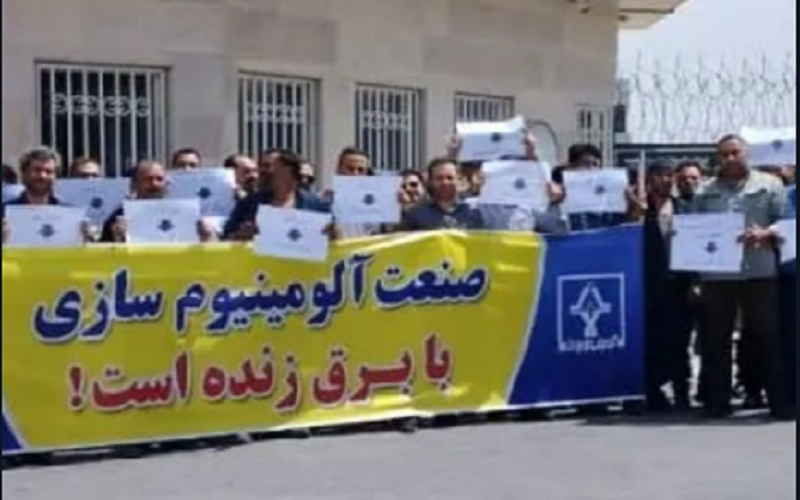
In response to the crisis, the regime has imposed drastic electricity restrictions—cutting power by 90 percent—for major industries such as steel and cement. This move has triggered widespread backlash. Rasoul Khalifeh Soltani, Secretary of the Iranian Steel Producers Association, criticized the decision as “unprofessional,” echoing the concerns of an industry already grappling with government mismanagement.
Deputy Energy Minister Homayoun Haeri had warned as early as April 26 about the rising electricity consumption and the risk of a serious summer crisis. Energy Minister Abbas Aliabadi has also issued multiple alerts, calling the country’s energy situation a “state of emergency” due to extreme temperatures and reduced energy capacity.
Aliabadi noted that while 12,500 megawatts of the country’s electricity generation capacity comes from hydroelectric power, persistent drought has slashed that capacity. Last year, only 5,000–6,000 megawatts were operational; this year, that figure has dropped to less than 2,000 megawatts.
In an apparent effort to downplay the crisis, Aliabadi recently visited Kermanshah alongside President Masoud Pezeshkian and surprisingly claimed that “Iran is among the leading countries in the region in the field of electricity,” despite mounting criticism and evident infrastructure shortfalls. He pledged that the so-called “energy imbalance”—a euphemism regime officials use instead of “shortage” or “deficit”—would soon be resolved.
Yet the reality on the ground paints a different picture. On May 13, Aliabadi voiced deep concern over both the depletion of water resources and the unprecedented spike in electricity consumption. In a highly unusual move, he called on the regime’s clerics to help resolve the heat and drought crisis, even appealing to “religious elites” to play a more active role in addressing environmental challenges.
This is not the first time religious responses have been suggested as part of official policy. In the summer of 2021, under President Ebrahim Raisi, a leaked letter from the Ministry of Energy ordered that a specific prayer be recited in prayer rooms across the ministry to address the electricity crisis. Although the letter circulated widely on social media, the ministry later denied issuing such a directive.
While industry groups such as steel producers have appealed to the government for rational solutions, President Pezeshkian, during his recent trip to Kermanshah, offered a mix of moral exhortation and blame-shifting. “By God! By the Prophet, do not abandon the issue of electricity,” he told local officials. He urged them to “treat people with respect and kindness” and to evaluate employees based on public satisfaction.
However, Pezeshkian also controversially blamed ordinary citizens for the crisis, claiming, “We consume six times more electricity than Europe.” He added, “We came in the morning and all the lights were on. In the rooms, there are as many bulbs as you want. If we reduce each of these by half, then we wouldn’t have any electricity problems at all.”
This assertion, however, has been widely discredited. Experts have repeatedly refuted claims that Iranian households consume six times more electricity than Europeans. Official statistics indicate that household and public consumption—including lighting—accounts for only 30 to 40 percent of the country’s total electricity usage. The remainder is largely consumed by industries, government facilities, and infrastructure—areas under direct state control.
As the summer heat approaches, Iran finds itself once again confronting a deepening energy crisis, marked by inadequate planning, mismanagement, and political deflection. With public frustration mounting and industrial output at risk, the regime’s reliance on rhetoric and religious appeals may do little to cool the country’s overheating power grid—or its dissatisfied citizens.