


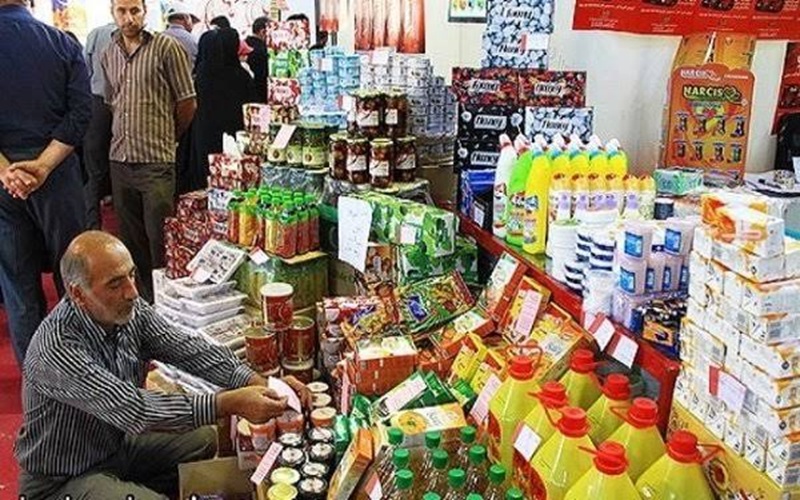

With food prices rising by more than 100 percent, essential medicines becoming increasingly unaffordable, and government subsidies covering barely a quarter of basic food costs, millions of Iranian households are being forced to sacrifice essential needs.
Millions of Iranian households are struggling to afford basic food and essential medicines as soaring prices erode the purchasing power of workers, pensioners, and other fixed-income earners. With food inflation exceeding 113 percent, some families are cutting back on protein, dairy products, and other necessities, while patients increasingly face difficult choices between buying medication and meeting their everyday expenses.
The scale of the crisis is reflected in the government’s own statistics. According to Iran’s Statistical Center, year-on-year inflation for food, beverages, and tobacco reached 113.4 percent in October 2026, marking the ninth consecutive month that this indicator remained above 100 percent. Meanwhile, the government’s support measures have failed to keep pace with the rising cost of living.
Against this backdrop, the Assembly of Experts has called for the establishment of a so-called “War Economy Headquarters” involving all three branches of government. Yet the economic policies pursued by the authorities continue to leave ordinary households bearing the consequences of a crisis over which they have little control.
Food inflation turns basic meals into a financial burden
The deterioration in household purchasing power is increasingly visible in everyday transactions. Advertisements show consumers resorting to buying canned tuna in four installments. A single egg has reportedly reached 27,000 tomans, while cooking oil, dairy products, meat, and poultry are disappearing from the shopping baskets of many families.
These are not isolated examples of hardship. They reflect an economic reality in which preparing an ordinary meal has become a difficult financial calculation for millions of wage earners and pensioners.
The October 2026 figures from the Statistical Center reveal the extent of the increase. Prices in the oils and fats category rose by 255.7 percent compared with October 2025, while milk, cheese, and eggs recorded a 154.6 percent increase.
The consequences extend beyond household budgets. More expensive cooking oil raises the cost of preparing meals, while rising egg prices make one of the most accessible sources of protein increasingly unaffordable. Higher dairy prices, meanwhile, force families to compromise on basic nutritional needs.
The pressure is also particularly severe outside major cities. The year-on-year inflation rate for urban households stood at 85.5 percent in October, compared with 107 percent for rural households.
This disparity is especially significant given the more limited access rural communities often have to healthcare, education, transportation, and public services. Rural households are therefore facing not only rising food costs but also additional expenses associated with accessing essential services.
The figures also undermine suggestions that moving away from major cities offers an affordable alternative. Without adequate infrastructure and employment opportunities, relocation cannot resolve the underlying problem of declining purchasing power.
Rising medicine prices force patients to sacrifice treatment
The crisis extends beyond food and other household necessities. Increasing medicine prices and shortages are making access to healthcare increasingly difficult, particularly for people who depend on regular medication.
Essential medicines, including insulin for diabetes patients, losartan for people with high blood pressure, and tamsulosin for prostate conditions, have become more expensive and harder to obtain in recent weeks.
For workers and pensioners already struggling with food and housing costs, these increases create another financial burden. Some retirees covered by the Social Security Organization have even reported losing access to free intravenous saline solutions.
As a result, patients are increasingly forced to choose between purchasing their medication and meeting other basic needs. Some reduce their prescribed doses, postpone treatment, or avoid visiting medical facilities altogether. Such decisions can aggravate existing conditions and eventually result in more complicated and expensive medical emergencies.
On November 8, Fatemeh Mohammadbeigi, deputy chair of the parliamentary Health Commission, described price increases of up to 1,000 percent for certain medicines as economically unjustifiable.
She suggested that some increases could be related to the war, shortages of raw materials, or damage to infrastructure, while stressing that abnormal price hikes unrelated to actual market conditions could not be accepted.
However, for patients who need medication every day, identifying the causes of price increases does little to make prescriptions affordable. Whether the increases result from shortages, sanctions, wartime disruptions, or market mechanisms, the immediate consequence remains the same: access to treatment becomes more difficult.
Government food subsidies cover barely a quarter of basic costs
The government has presented an increase in its electronic food voucher program, known as Kalabarg, as one of its main measures to support household purchasing power. However, the gap between the value of these subsidies and the actual cost of basic food items remains substantial.
Calculations based on average prices published by the Statistical Center and per-capita consumption standards established by the Ministry of Cooperatives, Labor, and Social Welfare show that purchasing the 11 basic items included in the program cost more than 5.692 million tomans per person in October 2026.
For a three-member household, assuming equal consumption, the same basket would cost more than 17 million tomans.
By comparison, the government increased the monthly food voucher by 500,000 tomans, bringing the allocation to 1.5 million tomans per person for 35.12 million recipients.
The subsidy covers only about 26 percent of the calculated cost of the basic food basket.
Consequently, households must pay more than 70 percent of the cost themselves. For minimum-wage workers and pensioners, whose incomes are already falling behind inflation, the subsidy provides only limited relief.
The figures demonstrate that government assistance has not kept pace with the rising cost of food. Increasing the nominal value of vouchers does little to restore purchasing power when the underlying prices of essential goods are rising much faster.
New foreign-exchange restrictions threaten another round of price increases
Additional uncertainty has emerged from a government decision restricting access to foreign currency through the official exchange center.
According to the Tasnim news agency, out of 4,599 import tariff lines, only 66 are eligible to receive foreign currency through the exchange center. Other importers must finance their purchases using their own export earnings or personal foreign-currency resources.
Economists warn that changing the source of foreign currency for imports can increase costs, particularly when businesses are forced to obtain dollars through channels with higher exchange rates.
These additional expenses can be reflected in the prices of imported products and production inputs, ultimately transferring the burden to consumers.
Tasnim reported that the Ministry of Industry, Mine and Trade determines import priorities, while the Central Bank’s role is limited to supplying foreign currency. This division of responsibilities leaves important questions about the criteria for determining eligible imports and how the government intends to prevent additional costs from reaching consumers.
Without transparent rules governing foreign-currency allocation and the financing of other imports, the restrictions risk creating further uncertainty for businesses and consumers alike.
Officials acknowledge the crisis but offer conflicting explanations
Government officials have increasingly acknowledged the deterioration in living conditions, although their explanations and assessments of the inflation trend have not always matched the available statistics.
On October 27, Economy Minister Ali Madanizadeh addressed the issue during a parliamentary session, acknowledging that workers, pensioners, employees, and other citizens were struggling with inflation and rising prices.
He apologized to the public for the economic hardship while maintaining that monthly inflation had followed a declining trend over the preceding four months.
However, the Statistical Center’s October figures presented a different picture of the immediate inflation trend. Monthly inflation increased from 4.2 percent in September to 4.4 percent in October. Annual inflation reached 76.8 percent, while year-on-year inflation stood at 88.7 percent.
It is also important to distinguish between declining inflation and falling prices. Even when the inflation rate decreases, it means prices are increasing more slowly, not that goods are becoming cheaper. Once prices have reached exceptionally high levels, households continue to face those costs unless incomes rise sufficiently to compensate.
Government spokesperson Fatemeh Mohajerani also acknowledged the pressure on household livelihoods on November 10, attributing much of it to war and economic blockade. She maintained that the government’s economic decisions were being made under wartime conditions, with the stated objective of protecting livelihoods and purchasing power.
Yet explanations based on external pressures do not resolve the immediate consequences for households.
The cost of the crisis continues to fall on ordinary households
From food and medicine to imported goods and basic services, the figures reveal a widening gap between household incomes and the cost of essential living expenses.
Workers and pensioners receiving fixed incomes have little capacity to absorb repeated price increases. Government food vouchers cover only a fraction of basic nutritional needs, while patients are increasingly exposed to the financial consequences of rising medicine prices.
The proposed War Economy Headquarters and repeated official assurances have yet to translate into meaningful relief for households. Meanwhile, the combination of soaring food prices, restricted access to treatment, and declining purchasing power is forcing millions of people to make increasingly painful sacrifices.
For many Iranian families, the question is no longer how to maintain their previous standard of living, but which basic necessities they can still afford to keep.