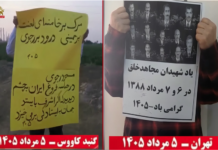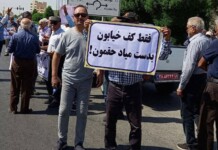
The head of the National Security and Foreign Policy Commission of Iran’s Parliament recently issued a stark warning amidst escalating livelihood protests in various cities. As workers and pensioners continue to struggle with severe economic hardships, Ebrahim Azizi cautioned that failure to make “correct decisions regarding the problems of the working class” could have serious repercussions for national security. His remarks underscore the growing unrest fueled by economic grievances.
Azizi’s comments come ahead of the Supreme Labor Council’s crucial meetings to determine the minimum wage for the coming year. This decision is seen as a litmus test for the government’s commitment to addressing workers’ demands amid widespread discontent.
Economic Pressures and Wage Disputes
Labor experts and activists argue that the minimum wage must be aligned with the economic realities and labor market conditions to safeguard workers’ welfare. Critics accuse the government and employers of suppressing wages, exacerbating the gap between income and expenses. An economic journalist highlighted that this issue is further compounded by the government’s budgetary decisions, including a 30% reduction in the preferential currency allocation for essential goods and an increase in the base exchange rate from 28,500 to 38,500 tomans.
To maintain current living standards, minimum wages must rise in proportion to the rising cost of living. Labor organizations estimate the monthly cost of living in major cities to be around 37 million tomans, starkly contrasting the current minimum wage of 11 million tomans for a married worker with children. With inflation and currency devaluation eroding purchasing power, any adjustments to the official exchange rate risk triggering another wave of price hikes.
The Test for the Supreme Labor Council
Determining next year’s wages is a critical challenge for the Supreme Labor Council. Workers’ calls for wage increases that match inflation rates will directly impact the livelihoods of millions of families. Reports from Eco Iran highlight that the minimum cost of providing adequate food for a single worker constitutes 25% of their salary, with higher burdens for families.
Similarly, Dideban Iran reported no concrete figures yet for 2025’s wage increases. However, analysis of the past five years suggests a potential 36% increase. This contrasts with the 20% salary hike proposed for government employees in the upcoming budget. Critics argue that such measures fall short of the provisions in Article 41 of Iran’s Labor Law, which mandates wages to reflect real inflation and living costs—a regulation often ignored in practice.
Poverty and Inequality
Amid growing inflation and currency depreciation, over 80% of Iranian households are now below the global poverty line. According to Eghtesad Online, a three-member household requires 40 to 50 million tomans monthly to avoid poverty—far exceeding the minimum wage of 11 million tomans for married workers. Meanwhile, high-ranking employees in positions such as bank presidents and investment managers earn an average of 35.3 million tomans, further highlighting income disparities.
Parliament Research Center data reveals that poverty rates reached 30.1% in 2023, with critics estimating even higher figures. Due to continued currency devaluation and stagnant purchasing power, this rate has likely surpassed 40% in 2024. Economic stagnation is evident, with a 2.5% GDP decline in spring 2024, attributed to industrial power outages, reduced oil exports, and contractionary fiscal policies. Projected growth rates of 2.5% for 2024 and 2.8% for 2025 fall far short of the 8% target set in Iran’s Seventh Development Plan.
A Grim Outlook
Inflation estimates exceeding 40% for the coming year, coupled with long-standing mismatches between income and expenses, pose significant threats to household livelihoods. As economic challenges deepen, the Supreme Labor Council’s decisions on wage increases will be a defining moment for millions of Iranian workers and their families.
Conclusion
The economic and social challenges faced by Iranian workers demand urgent and meaningful action. While the upcoming wage determinations may offer a temporary reprieve, systemic reforms are essential to address the structural issues fueling inequality and discontent. Without such measures, the livelihood crisis risks further destabilizing an already fragile socio-economic landscape.