


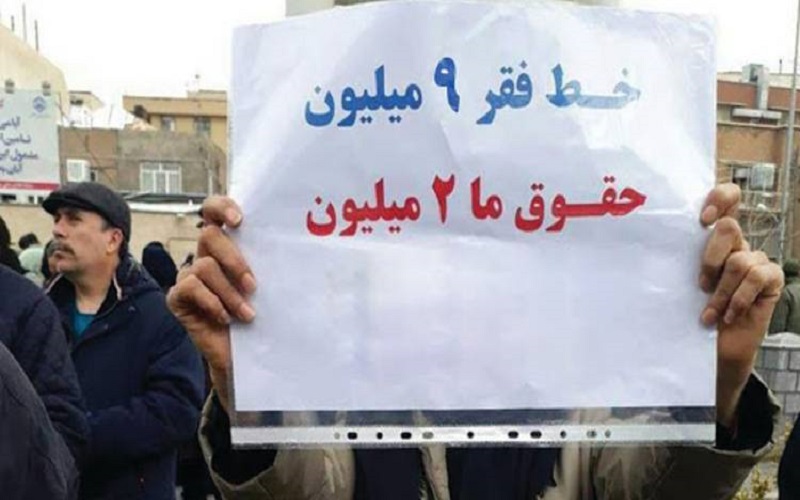

In 2023, Iran’s state-run newspaper Tejarat News published a comprehensive report detailing household expenditure and income statistics. The findings highlight the increasing cost of living across the country, with the average annual household expenses in Tehran soaring to 330 million tomans. Following Tehran, the provinces of Fars and Alborz rank next in terms of high living costs. In rural areas, the highest annual expenditure is reported in the villages of Bushehr Province, where households face costs as high as 318 million tomans.
The Growing Burden of Living Costs
Over the past twelve years, the sharp rise in the cost of essentials like food and housing has eroded the purchasing power of many Iranian households. The impact of this inflationary trend has been severe, leading to a substantial increase in poverty. Official statistics now indicate that 30% of Iranians live below the poverty line—meaning that nearly one in three citizens struggles to meet basic needs.
The Minister of Cooperatives, Labour, and Social Welfare, Ahmad Meydari, highlighted this alarming trend, pointing out that Iran’s poverty rate was 12-15% in the 2000s, rising to 20% by the mid-2010s, and further surging to 30% by 2019. This steady rise in poverty reflects broader economic challenges and a lack of effective policy responses.
Inflation and the Decline in Household Consumption
According to a report from the Iranian Statistics Center, food prices have skyrocketed between 2017 and 2024. Households have been forced to cut back on essential items, with consumption of red meat and chicken plummeting. Rising inflation, paired with stagnant wages, has led to a decline in the nutritional quality of Iranian diets. Families are increasingly turning to lower-quality, high-calorie foods as a way to cope with the rising cost of living.
In the decade of the 2010s, Iran’s economy struggled with high inflation, low economic growth, and growing unemployment. Between 2011 and 2021, the poverty rate climbed from 19% to 30.4%, leaving millions more Iranians struggling to make ends meet. Although detailed poverty statistics for the past two years remain unavailable, Meydari, citing the Iranian Statistics Center and the Parliament Research Center, asserts that poverty has remained at roughly 30%.
Persistent Inequality and Poverty Trends
The Iranian Statistics Center’s 2022 report on income distribution paints a bleak picture of inequality in the country. Despite government attempts to provide rural subsidies of 300,000 to 400,000 tomans, high inflation has eroded these efforts, widening the income gap. The Gini coefficient, a measure of income inequality, has increased, particularly in the province of Sistan and Baluchistan, which consistently ranks as the most unequal in Iran.
In addition to Sistan and Baluchistan, other provinces like Golestan, Kerman, and Ilam show significant disparities in wealth distribution. Rural areas in Hemdan and Fars provinces also report rising income inequality, exacerbating the economic divide between different regions of the country.
Poverty in Numbers: A National Crisis
According to official statistics, about five million Iranians live in extreme poverty, unable to afford basic necessities such as food. An estimated 26 million people—around 30% of the population—are at risk of falling into poverty. Most of these individuals are employed but find that their wages are insufficient to lift their families out of poverty.
The 2021 Poverty Monitoring report highlights that the poverty line for a family of four was around 4.5 million tomans in 2021. However, by 2022, this figure had jumped to 7.7 million tomans nationally, with the poverty line in Tehran alone reaching 14.7 million tomans. In comparison, the basic salary for workers with two children remained less than half of this amount, pushing many families below the poverty line and leaving them at risk of malnutrition.
Impact on Household Spending: Food, Housing, and Beyond
The rise in food and housing costs has drastically reduced the resources available for other household needs. While the share of household spending on food has increased, the quality and quantity of food have decreased, with families consuming fewer calories and lower-quality meals. The consumption of red meat and chicken has significantly declined, while reliance on cheaper alternatives, like eggs, has grown.
Housing costs, the second-largest expenditure for most households, have also surged. Between 2011 and 2021, the share of housing costs in total household spending rose from 23% to 27%. As a result, families have been forced to cut back on other critical areas such as education and entertainment.
The decrease in spending on education is particularly alarming. In 2003, education accounted for 17.5% of household expenditures, but this figure dropped to just 0.8% by 2022. According to the Parliament Research Center, this sharp decline in education spending may exacerbate intergenerational poverty, as future generations will be less educated and less economically productive than their predecessors.
A Bleak Outlook: The Future of Poverty in Iran
Despite growing awareness of Iran’s poverty crisis, solutions remain elusive. Inflation continues to rise, wages lag behind, and the distribution of wealth remains unequal. The outlook for many households is increasingly precarious. Even those who are just above the poverty line risk falling below it in the face of ongoing economic pressures.