


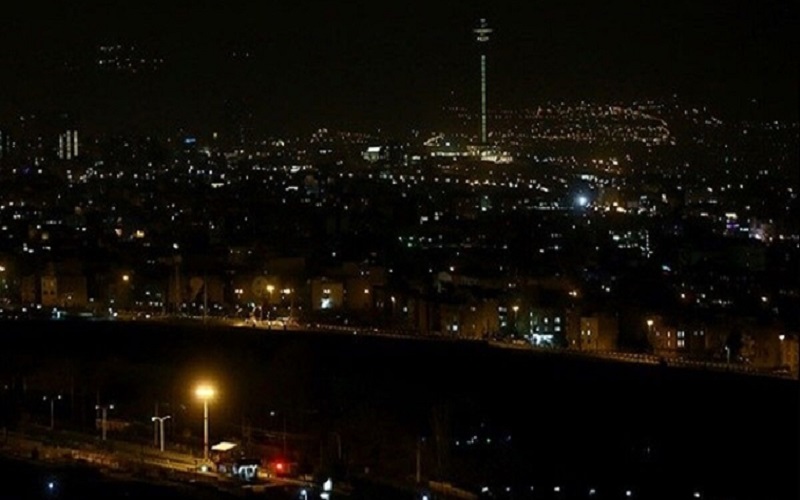

The massive power outage in Tehran on February 11, coinciding with the anniversary of the 1979 revolution, has once again highlighted Iran’s ongoing energy crisis. What began last summer with electricity cuts in industrial zones has now reached the capital, plunging residential areas, businesses, and highways into darkness. In some parts of the city, even mobile networks were disrupted, leaving residents disconnected.
The Consequences of Blackouts
Sudden and widespread power failures have severe economic and social repercussions. Traffic lights, subway systems, and public transportation grind to a halt, leading to gridlock and chaos. Factories, workshops, and small businesses reliant on electricity suffer losses, while residential buildings experience water shortages and disabled elevators and electric garage doors. The consequences of these blackouts extend beyond inconvenience, threatening livelihoods and public safety.
Government Infighting and Blame Game
Rather than addressing the crisis, government officials are engaged in finger-pointing. The deputy head of Tavanir, Iran’s power distribution company, attributed the blackouts to increased gas consumption due to cold weather, which allegedly disrupted fuel supplies to power plants. The Ministry of Oil swiftly denied responsibility, claiming the Ministry of Energy had mismanaged the fuel portfolio of power plants.
Meanwhile, government spokesperson Fatemeh Mohajerani admitted that the outages were a deliberate decision:
“We understand that power outages in cold weather cause many problems, but we are forced to do this. Power outages are not our first choice, but we are left with no other option.”
Instead of addressing the crisis, her only criticism of the government was its failure to inform the public in advance.
Mismanagement and Misplaced Priorities
Iran’s energy crisis is not a sudden phenomenon—it is the result of years of mismanagement, inefficiency, and chronic underinvestment in power infrastructure. Rather than prioritizing the country’s energy sector, the regime channels vast resources into military expenditures, the Islamic Revolutionary Guard Corps (IRGC), and nuclear and missile programs.
On February 12, a day after Tehran’s blackout, Supreme Leader Ali Khamenei met with defense industry officials, entirely ignoring the country’s economic freefall and growing crises. Instead, he doubled down on military expansion:
“Progress must continue in all military sectors. If at some point we had considered a certain level of accuracy for missiles, and today we need to increase it, then this must be done.”
This stark disconnect between the regime’s priorities and the people’s suffering underscores its failure to address Iran’s deepening crises.
IRGC’s Role in the Electricity Crisis
The IRGC, which holds extensive influence over Iran’s economy, politics, and security, is also a key player in the electricity crisis.
The Corps dominates power plant projects, prioritizing security and military ventures over sustainable energy development. Many of Iran’s Bitcoin mining farms—high-energy-consuming facilities—are owned by IRGC-affiliated entities.
These operations receive heavily subsidized or even free electricity, while ordinary citizens and businesses endure blackouts.
Official reports indicate that illegal Bitcoin mining accounts for nearly 20% of Iran’s electricity shortfall, exacerbating shortages during peak demand seasons.
Additionally, the IRGC oversees electricity export contracts to neighboring countries, siphoning off power while domestic demand remains unmet.
As a result, Iran’s electricity crisis is not merely a technical issue but a product of corruption, misallocation of resources, and the regime’s flawed priorities.
A Crisis Years in the Making
Iran’s power plants are outdated and inefficient, yet the authorities continue to deflect blame. Officials refer to the crisis as an “energy imbalance,” a vague term that masks the reality of systemic failure.
While the government insists that rising domestic and industrial consumption has outpaced production, this issue has persisted for years without meaningful intervention.
Initially confined to summer industrial restrictions, power cuts have now expanded to households and public infrastructure, disrupting everyday life.
As long as the regime prioritizes military expansion over energy investment, Iran’s electricity crisis will continue to worsen—leaving millions in the dark while the government fuels repression and conflict abroad.