


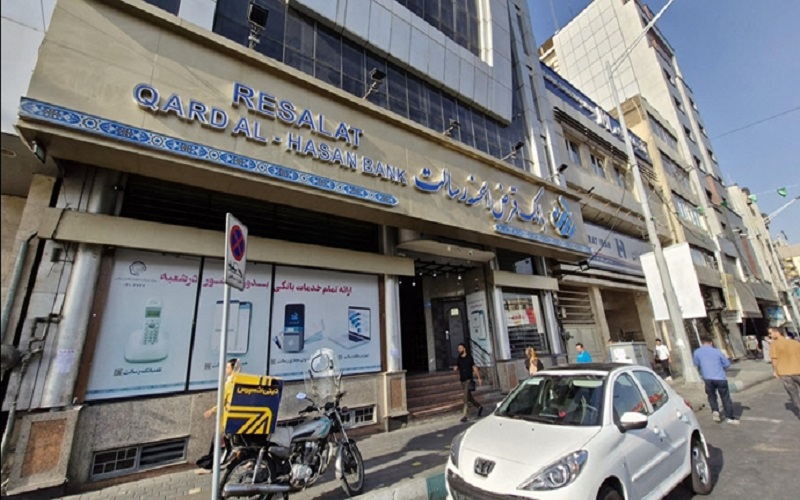

In recent years, widespread reports have surfaced detailing the systemic corruption within Iran’s banking and financial institutions. At the heart of this corruption are the regime’s affiliates and loyalists, many of whom hold key positions on the boards of these banks. They exploit the nation’s financial system, siphoning the deposits of ordinary citizens for their own gain.
A Scandal Unfolds
On September 14, 2024, the state-run newspaper Etemad published a shocking report. It revealed that nine out of Iran’s 29 banks and credit institutions paid a staggering 156.75 billion tomans to just 44 board members in the previous year. This means that each board member in these banks received an average of 3.56 billion tomans.
While this report focuses on just nine banks, it would be naïve to assume that the remaining 21 are free from corruption. The loans and funds funneled to regime insiders in these institutions, while potentially smaller in scale, still reflect the broader systemic rot.
Changing Numbers, Constant Corruption
According to various media reports, Iran currently has 29 active banks and credit institutions. However, this number fluctuates frequently. In 2019, for example, the regime reported having 34 and then 37 banks and financial institutions. These discrepancies are not accidental but rather indicative of deliberate efforts to obfuscate the true nature of the banking system.
Many of these banks are, in fact, shell organizations for the Islamic Revolutionary Guard Corps (IRGC) and the Ministry of Intelligence. They serve as conduits for money laundering and the transfer of funds to the regime’s overseas proxies and mercenaries. To avoid detection by international anti-money laundering agencies, these banks frequently change names or merge with other institutions, creating a web of financial deception.
The Rise of Private Banks — Or So It Seems
State-run media in Iran reported that by 2017, there were at least 20 authorized private banks in the country. However, the true number of unauthorized banks — secret financial institutions established by regime insiders — was believed to be much higher. A report in Donya-e Eghtesad from April 24, 2018, noted that the Central Bank had published a list of 42 authorized banks and financial institutions, including several that were still in the process of obtaining licenses.
One notable example is the merger of Mehr Eghtesad Bank with Sepah Bank in 2020. Sepah Bank, a military-owned institution, absorbed several other military banks, including Hekmat Bank, as part of a broader effort to shield these institutions from international oversight. By merging these banks, the regime sought to protect them from potential confiscation by global anti-money laundering bodies.
Merging Military Banks with Sepah Bank
In August 2020, the head of Iran’s Central Bank, Abdolnaser Hemmati, announced that all military-owned banks would be merged into Sepah Bank. This included institutions like Ansar, Qavamin, Hekmat Iranian, Mehr Eghtesad, and Kosar Credit Institution. The move was a clear attempt to consolidate the regime’s control over its financial institutions while avoiding international scrutiny.
Control of the Central Bank
On October 31, 2022, the state-run website Eghtesad reported that the Council of Jurisprudence had taken control of the Central Bank. This development further cemented the connection between Iran’s financial system and the regime’s Supreme Leader, Ali Khamenei. With the entire banking system now under direct control of the regime, financial decisions are guided by the interests of the ruling elite rather than the needs of the Iranian people.
The Illusion of Private Banks
Despite the appearance of a private banking sector, experts within the regime have repeatedly stated that no such institutions truly exist in Iran. On December 30, 2023, Saeed Laylaz, a prominent economist, appeared on state-run television and bluntly declared: “I don’t consider Iranian banks to be private; all Iranian banks are government-owned. We don’t have private banks.” He went on to explain that the regime grants so-called private banks to its loyalists, ensuring that every financial institution remains firmly under government control.
Banks as Investment Companies
On September 11, 2024, the state-run website Bahar News echoed Laylaz’s sentiments, stating that “there is no such thing as a bank in Iran.” Instead, the website described these institutions as investment companies that use people’s deposits to engage in profit-making ventures, all under the guise of banking. These banks function as private enterprises for regime insiders, making massive profits, avoiding taxes, and providing long-term, low-interest loans to themselves.
The Banks’ Grip on Iran’s Economy
Iran’s banks wield enormous power over the country’s economy. They are the primary stakeholders in many of Iran’s most valuable industries, including real estate, steel production, and petrochemicals. These banks have monopolized the housing market and control key sectors of the Iranian stock market, often on behalf of the IRGC and its Khatam al-Anbiya Construction Headquarters.
On December 30, 2023, Laylaz explained on TV Channel Four that Iran’s industries, including its steel and petrochemical sectors, are dominated by government or quasi-government organizations. He described this system as a “corrupt financial oligarchy” that permeates every aspect of the country’s economy. Laylaz also noted that opening a simple business in Iran requires navigating a maze of government institutions, all of which demand their share of the profits.
The Central Bank’s Real Estate Holdings
In addition to its dominance over the financial and industrial sectors, Iran’s Central Bank holds vast amounts of real estate. Hemmati admitted that under his leadership, the Central Bank owned approximately 20,000 properties, with 10,000 sitting empty. This massive property portfolio is another testament to the regime’s control over the economy.
The People’s Revolt Against Corruption
Khamenei and his political allies have effectively turned Iran’s banking system into their personal empire. The country’s banks serve as the financial backbone of the regime, enriching a select few while the majority of Iranians suffer under economic mismanagement and corruption. It’s no surprise, then, that during the uprisings of the Iranian people, banks have become one of the primary targets of public outrage. The people understand that the banks are not neutral institutions but the enforcers of the regime’s economic stranglehold.
In conclusion, the corruption within Iran’s banking sector is not an anomaly but a reflection of the broader issues plaguing the country’s political and economic systems. As long as the regime continues to control the banks, meaningful reform will remain impossible.