


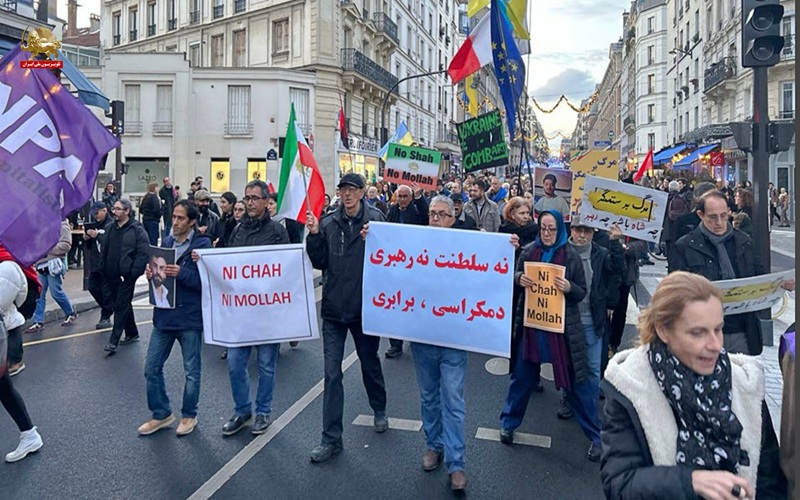

A planned award ceremony in Frankfurt has triggered protests by 306 Iranian associations and prominent German figures, raising questions about Reza Pahlavi’s claim to represent Iran’s people and the risks of legitimizing a return to hereditary rule.
The Frankfurter Allgemeine Zeitung reported on October 27, 2026, that the Friedrich Naumann Foundation for Freedom’s decision to have Reza Pahlavi accept its Freedom Prize on behalf of the Iranian people has triggered protests from Iranian exile organizations, victims’ associations, and prominent German political and legal figures. The controversy exposes a fundamental question: who has the democratic legitimacy to represent Iran’s people in their struggle against dictatorship, and why should the son of a former monarch be entrusted with that role without an electoral mandate?
A Prize for Iran’s People, Handed to an Unelected Figure
The foundation, which is close to Germany’s Free Democratic Party (FDP), plans to present the award at Frankfurt’s historic Paulskirche on November 7. According to its stated rationale, the prize honors the courage of Iranians fighting for freedom, civil rights, and democracy, including those killed, persecuted, or imprisoned by Iran’s ruling regime.
Foundation chairman Steffen Saebisch has emphasized that the award is intended for an entire people rather than an individual. Yet the decision to entrust Reza Pahlavi with receiving it creates an obvious contradiction: an award intended to recognize the collective struggle of millions is being placed in the hands of a political figure whose authority has never been established through a free vote in Iran.
The foundation reportedly selected Pahlavi because it considers him the best-known figure in the Iranian opposition and believes he serves as an important point of identification for many Iranians inside the country. It also maintains that he has not committed himself to a specific form of government and says Iran’s future political system should be decided democratically by its people.
But public recognition, media visibility, and inherited family status cannot substitute for democratic legitimacy. Nor does a general promise to let the public decide automatically resolve questions about a political figure’s record, institutional proposals, or commitment to accountability.
306 Iranian Associations Challenge the Decision
The controversy has prompted a coordinated protest by 306 Iranian associations and organizations worldwide. The Society of German-Iranians in Hesse helped initiate the letter opposing the decision to have Pahlavi accept the award.
The protesters include former political prisoners from the Shah’s era, relatives of victims of the current Iranian dictatorship, and Iranian civic organizations and initiatives. Their opposition underscores that the Iranian struggle for freedom cannot be reduced to a contest between the present ruling regime and the restoration of the monarchy that preceded it.
According to the Frankfurter Allgemeine Zeitung, the signatories have also criticized the foundation’s failure to respond to requests for discussions.
The dispute is not simply about the choice of a ceremony’s recipient. It concerns whether a German institution can honor the Iranian people’s democratic aspirations while elevating a figure associated with a hereditary political tradition that many Iranians reject.
For Iranians who suffered under both the Shah’s dictatorship and the current regime, freedom means ending authoritarian rule—not changing the identity of the person at the top.
The Unresolved Legacy of the Shah’s Security Apparatus
One of the central objections raised by the protesters concerns Pahlavi’s relationship with his father’s rule. Critics argue that he has failed to offer an unequivocal condemnation of torture, executions, and political repression carried out by SAVAK, the Shah’s notorious intelligence and security organization.
The historical record of the Shah’s dictatorship remains an essential part of Iran’s political debate. Political imprisonment, torture, and the suppression of opposition were not compatible with the democratic freedoms now invoked in the proposed award ceremony.
A credible commitment to democracy requires more than distancing oneself rhetorically from authoritarianism. It requires a clear reckoning with past abuses, recognition of victims, and acceptance of institutional safeguards designed to prevent their recurrence.
The protesters also question proposals attributed to Pahlavi’s transitional political framework, arguing that the concentration of authority in a single individual would conflict with the separation of powers. Such concerns deserve serious consideration in any discussion of Iran’s future, where the concentration of political, judicial, and security authority has repeatedly enabled repression.
Iran’s democratic future must be built on free elections, an independent judiciary, accountable institutions, and guarantees that no individual or political faction can monopolize power.
Why Monarchist Politics Can Benefit the Current Regime
The protesters raise another consequential concern: elevating a monarchist figure may allow Iran’s ruling regime to portray the entire opposition as seeking the restoration of the Shah.
That narrative serves the regime’s interests by obscuring the diversity of Iran’s democratic opposition and presenting the political choice as one between the existing dictatorship and a return to hereditary rule. It also risks alienating Iranians whose opposition to the current regime is inseparable from their rejection of the monarchy.
The democratic alternative is neither theocracy nor hereditary monarchy. It is a republic founded on the freely expressed will of the Iranian people.
The slogan “No Shah, No Mullahs” captures this rejection of both forms of authoritarian rule. It reflects the position that Iran’s future cannot be decided by inherited status, political branding, or the endorsement of foreign institutions. It must be determined by the Iranian people themselves through a free and democratic process.
This distinction is particularly important at a time when the Iranian people’s struggle against the ruling regime is being honored internationally. Recognition of their courage should not become an instrument for conferring political authority on an unelected individual.
Prominent German Figures Join the Opposition
The planned ceremony has also drawn criticism from prominent German public figures. According to the Frankfurter Allgemeine Zeitung, an open letter opposing the decision was signed by former German ambassador to the United Nations Joachim Rücker, former Federal Justice Minister Brigitte Zypries, and former Bundestag President Wolfgang Thierse, all members of the Social Democratic Party (SPD).
A separate protest letter has called on Frankfurt Mayor Mike Josef, also an SPD politician, to reconsider making the Paulskirche available for the event.
The historic venue carries particular significance in German democratic history. Its association with the 1848 Frankfurt National Assembly makes the controversy over its use more than a dispute about a ceremonial location. It raises questions about the principles an institution dedicated to freedom should uphold when recognizing the struggle of another nation.
The criticism does not diminish the importance of international solidarity with Iranians confronting repression. Instead, it highlights the need to distinguish solidarity with a people from the political promotion of a particular opposition figure.
Iran’s Future Must Belong to Its People
The controversy surrounding the Paulskirche award reveals a broader challenge for European policymakers and institutions: how to support Iran’s democratic struggle without substituting externally conferred prestige for popular consent.
The Iranian people need international solidarity with those imprisoned, persecuted, and executed by the current regime. They also need recognition of their right to reject every form of dictatorship, including the restoration of a monarchy without a freely established democratic mandate.
A genuine commitment to freedom cannot be selective about authoritarianism. It must reject torture and political executions regardless of who commits them, oppose the concentration of power regardless of the political system under which it occurs, and uphold the right of citizens to determine their own government.
The planned ceremony on November 7 should therefore prompt a broader debate about the meaning of democratic solidarity. Honoring Iran’s people means recognizing their struggle as their own—not assuming that one unelected figure can speak for a nation of diverse political convictions.
Iran’s future must be determined by its citizens through free elections and a democratic republic that guarantees pluralism, equality before the law, and the separation of powers. Neither the ruling theocracy nor a return to hereditary monarchy can replace that fundamental right.