


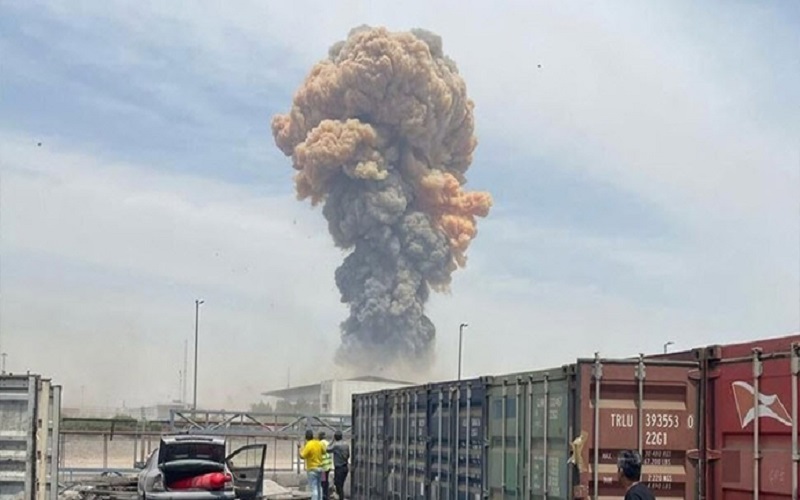

The devastating explosion at Rajaee Port in Bandar Abbas has laid bare the Iranian regime’s critical vulnerabilities in its economic and logistical infrastructure. The blast, which took place amid growing domestic unrest, has had sweeping political and economic consequences, particularly given Rajaee Port’s role as a central hub for Iran’s maritime exports and imports—especially oil, industrial metals, and cargo shipments.
Conflicting Death Toll Reports
The Iranian regime has been accused of concealing the true scale of the disaster. According to the National Council of Resistance of Iran (NCRI), the government has restricted access to information and blocked independent reporting in an effort to prevent public outrage. Eyewitnesses have reported that the fires triggered by the explosion may continue burning for up to 20 days.
Official statements have been inconsistent. Initial reports cited 70 deaths, but Hormozgan Province’s Chief Justice Mojtaba Ghahremani later revised the death toll to 57, including 46 identified bodies and 11 people still missing. Ghahremani admitted that initial figures may have been inflated due to the misidentification of dismembered body parts, which were mistakenly counted as separate individuals.
However, this new figure contradicts earlier statements by the regime’s Minister of Roads, who mentioned 100 deaths, and a pier employee who claimed that as many as 200 people had died. Eyewitness accounts suggest the death toll could be as high as 300 to 500.
Families Demand Transparency
The lack of transparency has deepened the grief of affected families. On May 5, Etemad, a state-run newspaper, quoted Ali Afrand, whose son Afshin is among the missing:
“We just want clarity. We’re waiting—just waiting. Even a piece of bone would bring us closure. Just something to tell us where our loved ones were and how they died.”
Since the explosion, families have searched hospitals in Bandar Abbas and Shiraz, but have found no trace of their relatives. When they sought answers from local authorities at the pier, they were told to leave and assured the matter would be “followed up.”
Economic Disruption and Strategic Consequences
Port operations in Bandar Abbas remain severely impaired. While the regime has attributed the explosion to mishandling of hazardous materials, workers have used social media to accuse officials of gross negligence and claim the real death toll is being covered up.
Satellite imagery confirms that the offices of Sina Port and Marine Services Company were completely destroyed. This company is linked to the Mostazafan Foundation, an economic powerhouse under the control of Iran’s Supreme Leader, with revenues funneled toward the Islamic Revolutionary Guard Corps (IRGC). The destruction of this facility underscores the strategic and financial cost of the explosion.
Just days later, a similar explosion occurred at the Ava Nar Parsian chemical plant in Isfahan, killing two more workers and raising further concerns about safety standards and the fragility of Iran’s industrial infrastructure.