



Why four decades of systematic violations reveal that the Iranian regime survives only by denying human dignity—and why awareness makes it unsustainable.
No period in Iran’s long history has placed “human rights” so centrally—and so painfully—in the country’s political and social vocabulary as the past 47 years. Never before has the systematic violation of the Universal Declaration of Human Rights been so comprehensive, so normalized, and so integral to the survival of a ruling system.
This is not a matter of isolated abuses or episodic repression. What Iran has experienced since the establishment of clerical rule is the institutionalization of human rights violations: violations conceived first within the ruling ideology and jurisprudence, and then executed on the ground through unchecked and often brutal practices. From childhood to old age, from daily subsistence to political participation, no social group has been spared.
There has likewise been no comparable era in Iran’s history in which international condemnations for human rights abuses have been so voluminous, persistent, and recurrent. The Iranian regime has accumulated one of the world’s most extensive and enduring records of censure for violations ranging from arbitrary detention and torture to executions and gender apartheid. These are not peripheral criticisms; they constitute a defining feature of the regime’s global standing.
At the core of this system lies a calculated assault on human dignity. Under the guise of religion, clerical governance has fused theology with criminal policy, producing an organized framework that degrades human worth. The result is a state where access to bread, water, clean air, education, employment, and a livable environment is directly conditioned by the denial of basic rights. Human rights violations are not incidental to governance; they are the mechanism through which governance is exercised.
This same logic explains the regime’s relentless hostility toward knowledge, expertise, and independent thought. The systematic elimination of intellectuals, the marginalization of science and professionalism, and the continuous hemorrhaging of Iran’s educated population through mass emigration are all inseparable from the broader violation of human rights. A system that depends on repression cannot coexist with critical thinking or civic autonomy.
What distinguishes the current era most starkly is that political power in Iran now depends entirely on the daily, comprehensive violation of human rights. The state does not merely tolerate repression; it requires it to remain intact. This reality exposes a fundamental vulnerability. The moment freedom and equality—still the most urgent and unmet demands in Iran—are meaningfully recognized, the foundations of clerical rule begin to erode.
History offers a clear lesson: the denial and humiliation of human rights inevitably culminate in violence. When legal, peaceful avenues for defending dignity are closed, societies are left with no option but resistance—through civil disobedience, uprising, and ultimately revolution. Despite centuries of political change, Iran regime’s rulers continue to approach human rights with a mindset closer to pre-modern despotism than to contemporary governance.
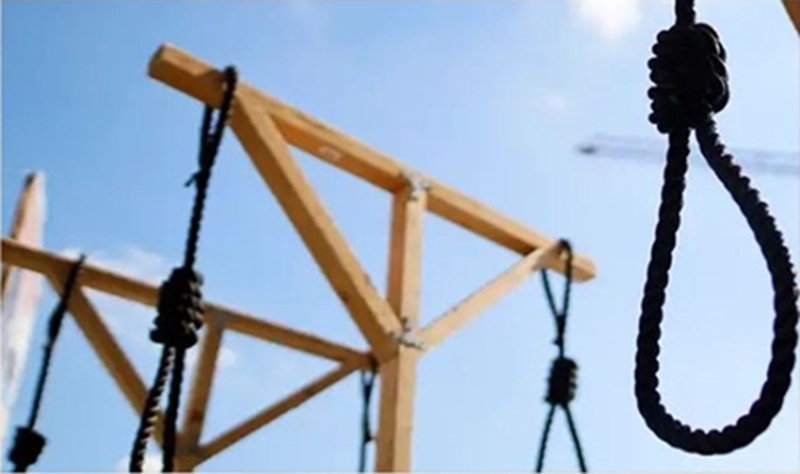
This is precisely why the Iranian regime has systematically blocked the teaching of the Universal Declaration of Human Rights in schools. While images of executions, enforced veiling, and militarism are inserted into elementary textbooks, students are deliberately denied access to the 30 articles that affirm inherent human dignity, equality, freedom, justice, and peace. An informed society is an existential threat to authoritarianism.
Public awareness—especially through education—would deprive the regime of one of its most critical supports: institutionalized ignorance. Organization, civic consciousness, and human rights literacy are incompatible with dictatorship. Where human rights are understood, authoritarian ideologies collapse.
For today’s Iran, the Universal Declaration of Human Rights is not an abstract moral text; it is an urgent political, social, cultural, economic, and educational necessity. Implementing its principles would immediately expose the incompatibility of clerical rule with human dignity. In this sense, the human rights charter functions as a de facto indictment of the ruling system.
Across generations, Iran’s freedom seekers—activists, political prisoners, organizers, and ordinary citizens—have continued their struggle through organized, civil, social, and professional forms of resistance. Their objective is neither abstract nor radical: the realization of basic human rights against a state that survives by violating them.
The path forward is therefore clear. Raising the banner of human rights means embracing organization, awareness, and collective action. It also means recognizing that the fulfillment of human dignity in Iran is inseparable from the rejection of a system structurally built on its denial.