Judiciary Chief confirms arrests after Iran-Israel war, raising alarm over mass detentions, espionage charges, and potential repeat of 1988-style executions
In the aftermath of the 12-day war between Iran and Israel, the Iranian regime has launched a sweeping crackdown on its own citizens, arresting more than 2,000 people in cities across the country. The arrests were confirmed by Gholamhossein Mohseni-Eje’i, Chief Justice of the regime, during a televised interview on Tuesday, July 22.
Eje’i stated that the detainees fall into several categories. Some were arrested simply for being present at the scene of Israeli airstrikes or filming the aftermath. Comparing them to “people who grab a camera during a street accident,” he admitted that these individuals had no specific intent to act against the regime.
However, the judiciary head also revealed that a number of detainees are accused of “organizational collaboration with the enemy,” a charge that under Iranian law could lead to long-term imprisonment or even execution. “Any cooperation with the enemy during wartime,” Eje’i said, “is punishable by heavy imprisonment or death.”
While Eje’i did not provide exact figures on how many people remain in custody, human rights organizations report that over 2,000 individuals have been arrested since the beginning of the war. Although some detainees have been released on bail or under legal restrictions, fears are growing over the fate of those accused of espionage or political activity.
Fast-Tracked Trials, Death Sentences Threatened
Judicial and intelligence officials have repeatedly indicated that cases involving charges like espionage will be handled “out of turn.” On July 15, Esmail Khatib, the regime’s Intelligence Minister, ominously warned that additional detainees would “receive their punishment,” referencing the recent execution of individuals accused of spying.
Adding to the concern, the Revolutionary Guard–linked Fars News Agency published an article on July 8 referring to the 1988 mass executions of political prisoners as a “successful experience” and called for its repetition in dealing with current regime opponents.
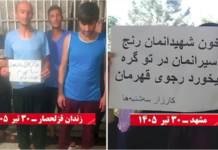
That summer, nearly 30,000 political prisoners—primarily members of the People’s Mojahedin Organization of Iran (PMOI/MEK)—were summarily executed following a fatwa by Ayatollah Khomeini. Human rights organizations have described those killings as crimes against humanity.
Legal Machinery of Repression Accelerated
Following the war, Iran’s parliament swiftly passed a new law aimed at expanding the regime’s authority to carry out executions. While officials claim the law targets “foreign collaborators,” rights groups assert its real purpose is to suppress protests and instill fear in the population—particularly among youth and political dissidents.
This escalation in judicial repression has drawn widespread international concern. Human rights defenders warn of the regime’s growing tendency to use the threat of execution as a political weapon, rather than a legal measure, in order to punish and silence dissent.
Calls for International Action
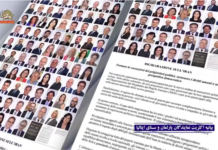
A group of Iranian activists and human rights defenders have issued a joint statement urging the international community—particularly the European Union and the President of the United Nations Human Rights Council—to take immediate action. They are calling for:
- An unconditional halt to the issuance and execution of death sentences in Iran
- A demand that all diplomatic and nuclear negotiations with Tehran be conditioned on compliance with human rights standards
- Immediate monitoring by international human rights bodies of the situation of political prisoners in Iran
The regime does not view foreign governments as its main adversaries. It sees its own people as the enemy. Since the war, pressure on ordinary citizens has intensified through mass arrests, arbitrary accusations, and deliberate psychological and physical torture of political prisoners.
According to political prisoners and their families, the regime is using the post-war environment as a cover to carry out vengeance against its own population—through death sentences, harsh detentions, and systemic intimidation.
A Dangerous Precedent
The specter of the 1988 massacre looms large. The current crackdown echoes the same patterns: mass arrests, charges of collaboration with enemies, opaque trials, and the threat of execution—all intensified by the regime’s fear of public unrest and growing support for opposition movements such as the MEK.
As Iran faces increasing internal dissent and international isolation, this latest wave of repression marks a dangerous escalation. Human rights organizations warn that unless the international community responds swiftly and decisively, another mass atrocity may be on the horizon.
The people of Iran are once again bearing the brunt of a regime that sees survival through brutality, not reform. And with over 2,000 already in custody and more at risk, the time for global action is now.