


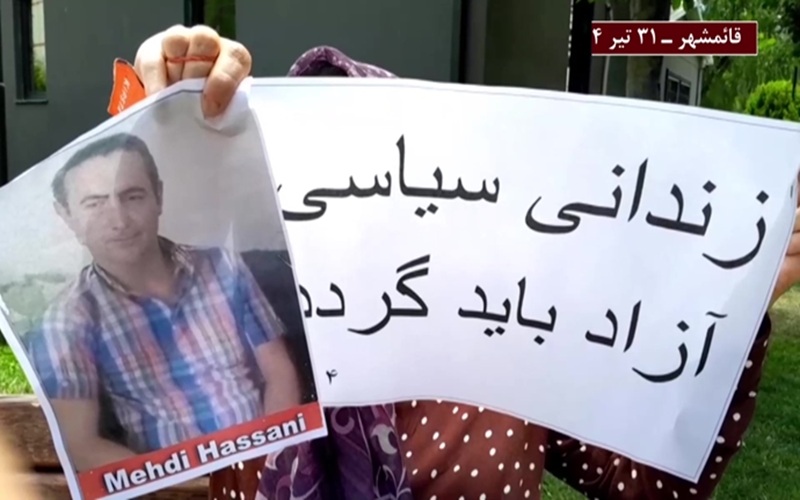

Tehran still refuses independent inspections of its prisons decades after the mass execution of 30,000 political prisoners
As the anniversary of the 1988 massacre of political prisoners approaches, global calls for justice are once again met with silence and obstruction from the Iranian regime. The Iranian regime continues to reject requests from international human rights bodies to inspect its prisons—especially those tied to the execution and torture of political dissidents—despite mounting evidence of ongoing abuses.
The 1988 massacre remains one of the most horrific crimes of the 20th century. Under a fatwa issued by the regime’s first Supreme Leader Ruhollah Khomeini, the regime executed an estimated 30,000 political prisoners—most of them members or supporters of the People’s Mojahedin Organization of Iran (PMOI/MEK). Prisoners were denied legal representation, subjected to minutes-long sham trials, and hanged in groups. Many of the executions took place inside Evin Prison, one of Iran’s most notorious detention centers.
Amnesty International has classified the massacre as a crime against humanity. Yet for over three decades, Iranian regime authorities have resisted any effort at transparency, systematically denying access to the very institutions tasked with uncovering the truth.
Denial of International Access
Despite repeated appeals, the Iranian regime has never allowed independent human rights organizations—such as the United Nations, Amnesty International—to inspect Evin Prison, or other infamous facilities such as Qarchak Prison and Greater Tehran Penitentiary. These prisons are repeatedly named in international reports for practices including torture, sexual abuse, enforced disappearances, and extrajudicial executions.
While regime officials claim to uphold “transparency,” they continue to block visits by UN special rapporteurs and other neutral observers. Human rights advocates argue that this refusal signals a fear of exposure and accountability for past and present crimes. The regime’s long-standing strategy has been to tightly control narratives around its prisons while silencing victims and their families.
A Crime Etched in Collective Memory
The massacre of 1988 is not simply a historical event—it is a living wound for thousands of Iranian families who have never received truth or justice. Many do not even know where their loved ones are buried. The regime has refused to acknowledge the killings, let alone conduct investigations or prosecute those responsible—many of whom still hold powerful positions in Iran’s judiciary and security forces.
Human rights activists and families of the victims have repeatedly demanded international investigations and tribunal proceedings. However, Tehran has consistently denied the legitimacy of such calls, accusing critics of waging psychological warfare or acting on behalf of hostile foreign powers.
The pain of this denial is compounded by recent actions. IRGC-affiliated Fars News Agency recently published a chilling endorsement of the 1988 executions, referring to them as a “historic success” and calling for their repetition in response to contemporary opposition forces. This has heightened fears that the regime could again resort to mass killings under the cover of national security.
International Condemnation and the Push for Justice
Global human rights watchdogs continue to document Iran’s systemic repression. Evin Prison, where many of the 1988 executions took place, remains a symbol of institutional brutality. Reports detail methods of psychological torture, sexual violence, secret executions, and inhumane conditions that persist to this day.
Despite mounting international pressure, including from the UN and the European Parliament, Tehran has made no meaningful concessions. Instead, it continues to deflect scrutiny while deepening its repression of political activists, especially in the aftermath of protests such as those in 2022, which saw thousands arrested and dozens executed.
For survivors and the families of the victims, the regime’s refusal to open its prisons to inspection is not just an act of secrecy—it is a form of continued violence. “The blood of our loved ones cannot be washed away by silence,” said one family member. “Without justice, there is no peace.”
The Urgency of Action
As Iran faces rising domestic unrest and growing international isolation, the regime’s human rights record is once again under the spotlight. Rights defenders argue that diplomatic engagement with Tehran must come with clear conditions—chief among them, full access to Iranian prisons for international inspectors and an end to the culture of impunity.
More than 35 years after the 1988 massacre, the regime’s efforts to erase or ignore its crimes are failing. The calls for justice grow louder each year, and with them, the demand that those responsible be held to account before international courts.
The Iranian people—and history—will not forget.