As conflicting official figures emerge and thousands of detainees remain unaccounted for, the Iranian regime’s refusal to disclose the true scale of recent arrests raises fears of one of the largest political crackdowns in its history.
A Nation of Missing Names
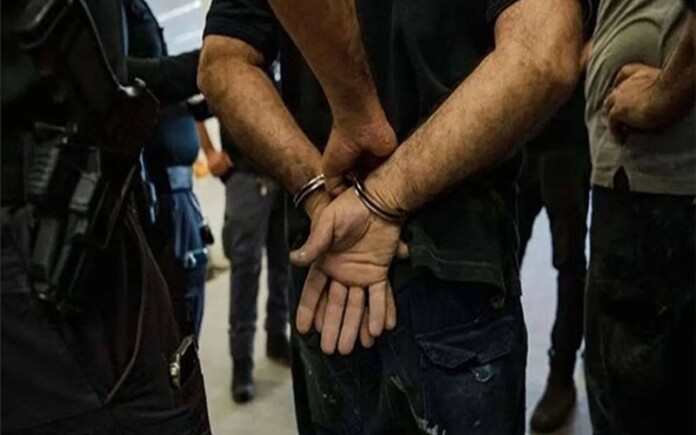
Months after the sweeping arrests that followed both the January 2026 protests and the aftermath of the 12-day war, a fundamental question remains unanswered: How many people are actually behind bars in Iran?
The Iranian regime has offered no comprehensive, transparent, or verifiable accounting of those arrested, where they are being held, what charges they face, or what legal processes await them. This silence is not merely an administrative failure. It is a political strategy—one that leaves families in anguish, shields security agencies from scrutiny, and creates an atmosphere of fear across society.
The absence of reliable information has become one of the most alarming aspects of the current repression campaign. Human rights organizations, civil society activists, and relatives of detainees are increasingly warning that Iran may be witnessing one of the largest waves of politically motivated arrests in decades.
The Numbers Do Not Add Up
Even the limited figures released by government officials reveal troubling inconsistencies.
In May 2026, Iran’s police chief Ahmadreza Radan announced that more than 6,500 individuals had been arrested since the outbreak of the war on accusations ranging from espionage and collaboration with hostile actors to cooperation with opposition groups. According to Radan, hundreds of those detained were linked to what authorities described as “special security cases.”
Yet this figure represents only a fraction of the broader crackdown.
Before the war, the nationwide protests of January 2026 had already generated a massive wave of arrests. No official and comprehensive count was ever released. Media outlets close to Iran’s security establishment suggested that approximately 3,000 people had been detained. Human rights organizations, however, argue that the real figure may be many times higher, with some estimates exceeding 20,000 arrests.
The discrepancy is not a minor statistical issue. It reflects a system in which information is tightly controlled and where public oversight is deliberately obstructed.
More troubling still are the contradictions emerging from different branches of the state itself. Following the end of the 12-day war, a police spokesperson claimed that 21,000 “suspects” had been detained. Meanwhile, the judiciary stated that only around 2,000 individuals had been arrested in connection with the conflict and its aftermath, adding that many had already been released.
Such a dramatic gap raises an unavoidable question: if the authorities themselves cannot—or will not—provide consistent figures, what is the true scale of the crackdown?
The Expanding Definition of a Security Threat
The regime’s growing reliance on security-related accusations has further blurred the line between genuine criminal activity and political repression.
In recent months, state-affiliated media have repeatedly reported arrests for sending photographs to foreign media outlets, communicating with journalists, posting content on social media, “spreading public anxiety,” or allegedly cooperating with foreign adversaries.
The broad and often vague nature of these accusations creates an environment in which almost any form of dissent can be reclassified as a security offense.
Human rights advocates argue that the expansion of these definitions has dramatically increased the state’s capacity to criminalize ordinary civic activity. Under such conditions, journalists, activists, students, workers, and even ordinary citizens become vulnerable to prosecution under national security statutes that allow for broad interpretation by intelligence and judicial authorities.
The result is a legal framework that increasingly serves political control rather than justice.
The Hidden Geography of Repression
When political prisoners in Iran are discussed, public attention usually focuses on notorious facilities such as Evin Prison, Ghezel Hesar, Fashafouyeh, Adelabad, Vakilabad, and the Central Prison of Tabriz.
Yet human rights groups warn that many of those arrested in recent months are being held elsewhere.
Iran’s prison system consists of hundreds of detention centers, prisons, and holding facilities administered by different institutions. Alongside officially recognized prisons, numerous reports point to the existence of detention centers operated by intelligence agencies, the Islamic Revolutionary Guard Corps, police forces, and other security organizations.
The true number of locations where detainees may be held remains unknown.
For many families, the uncertainty is agonizing. Relatives frequently report being denied information about where loved ones are detained. Access to independent legal counsel is often restricted. Visits may be prohibited for extended periods. In many cases, even the status of an ongoing investigation remains unclear.
These practices transform detention itself into a form of punishment long before any verdict is issued.
Why Secrecy Matters
The greatest danger may not lie solely in the number of arrests but in the secrecy surrounding them.
Iran’s recent history offers numerous examples of detainees who disappeared into the judicial system for months or years before reemerging with severe prison sentences—or death penalties. The lack of transparency allows authorities to conduct investigations beyond public scrutiny and significantly limits opportunities for legal defense.
Without public lists of detainees, disclosure of charges, access to lawyers, and open judicial proceedings, there is no meaningful mechanism for accountability.
In such an environment, the difference between a suspect, a political prisoner, and a condemned inmate can depend less on evidence than on the calculations of security institutions operating behind closed doors.
The Cost of Silence
The regime’s refusal to provide accurate information about those arrested is not merely a bureaucratic omission. It is a warning sign.
Every unidentified detainee represents a family living in uncertainty. Every undisclosed prison location raises questions about treatment and due process. Every contradictory official statement deepens concerns that the true dimensions of the crackdown are being deliberately concealed.
The consequences of this opacity may not be fully visible today. They may emerge months or years from now, when hidden prosecutions, lengthy prison terms, and death sentences begin to surface from a system that has operated largely beyond public view.
Until Iranian authorities publish comprehensive information about detainees, their whereabouts, their legal status, and the evidence against them, the shadow hanging over thousands of arrests will remain. And with every passing day, that shadow grows darker.
For a government already facing deep public distrust, secrecy is not a sign of strength. It is often an indication that the truth is too politically costly to reveal.