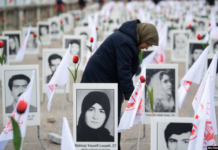
The “No to Executions Tuesdays” campaign in Iran has reached its 60th consecutive week, with inmates across 38 prisons participating in hunger strikes to protest the regime’s ongoing executions. Since its inception in January 2024, the campaign has gained significant traction, emerging as a bold act of defiance against the Iranian government’s systematic execution of political prisoners and other detainees.
A Message of Resistance and Hope
In its latest weekly statement, the campaign extended Nowruz greetings to the “beloved people of Iran and Iranians around the world.” As the Fire Festival (Chaharshanbe Suri) approaches, the statement expressed hope that “the people’s resistance against tyranny and executions in Iran will burn brighter like the flames of this ancient festival, putting an end to darkness, executions, killings, and violence.”
The inmates also sounded the alarm on the regime’s increasing use of the death penalty. According to the statement, at least 116 people were executed in the Iranian month of Esfand (February-March). Even more distressing, 1,148 prisoners were executed between March 2024 and March 2025, setting yet another grim record.
Escalating Repression and Impending Executions
The statement highlighted yet another inhumane act committed by the authorities. On March 13, a citizen named Heydar Mohammadi (Hasanvand) was tortured to death at the Nahavand detention center. Meanwhile, the regime’s Supreme Court has rejected the appeal of political prisoner Hatam Ozdemir, who has been sentenced to death in Urmia Central Prison. His execution, the statement warns, “could take place at any moment.”
Despite these harsh conditions, the “No to Executions Tuesdays” campaign has persevered, marking its second Nowruz in defiance of the regime’s oppressive policies. The prisoners pledged to continue their struggle against executions with even greater determination in the coming year (March 2025–March 2026).
A Call for Solidarity
Acknowledging the invaluable support received over the past year, the prisoners expressed their gratitude to political parties, organizations, and civil, labor, and human rights groups both inside and outside Iran. They also extended their appreciation to various segments of society—including workers, teachers, nurses, retirees, writers, artists, justice-seeking families, and students—who have opposed executions and supported the campaign in various ways.
The campaign, which now spans 38 prisons, seeks to take even small steps toward saving the lives of thousands of death row inmates. The statement underscored the dire situation in Iran’s prisons, where countless detainees face imminent execution. “From Ghezel Hesar to Sheyban, and from Tabriz Central Prison to Vakilabad, Adelabad, Zahedan, Sanandaj, and Urmia, one can trace the trail of crimes that will be carried out unless serious action is taken.”
A particularly alarming example is Lakan Prison, where 14 out of approximately 130 female prisoners have been sentenced to death, with execution orders already issued for two of them. This is just one of many such facilities where lives hang in the balance.
A Nationwide Movement Against the Death Penalty
The campaign’s latest statement calls on all prisoners and all freedom and justice seekers to support and join the movement against executions. The 59th week of hunger strikes saw participation from inmates in numerous prisons across the country, including Evin Prison, Ghezel Hesar Prison, Karaj Central Prison, Greater Tehran Prison, and many more.
As the Iranian regime continues to carry out executions at an alarming rate, the “No to Executions Tuesdays” campaign remains a beacon of resistance, urging both national and international action to halt the killing machine of the Iranian government.