Amnesty International Condemns Executions as Torture-Based Convictions and Urges Global Accountability
28 July 2025 – Iran — The Iranian regime has come under intense international scrutiny following the secret execution of two political prisoners, Behrouz Ehsani, 69, and Mehdi Hassani, 48, in Ghezel Hesar prison on 27 July. Human rights groups have condemned the killings as a grave escalation of Iran’s broader crackdown on dissent amid growing political tensions.
Amnesty International has sharply criticized the executions, revealing that the men were hanged without any prior notice to themselves or their families. Both were sentenced to death by a Revolutionary Court after a five-minute trial based on confessions extracted under torture. For nearly two years leading up to the trial, they were denied legal representation.
“These executions were carried out arbitrarily amid Iran’s horrific execution crisis,” said Kristine Beckerle, Amnesty’s Deputy Regional Director for the Middle East and North Africa. “The men were not allowed to speak in their own defense, and their so-called confessions were obtained through beatings, solitary confinement, and threats against their families.”
The Iranian judiciary’s news agency later issued a vague statement accusing the men of “manufacturing launchers” and causing damage to civilian and public infrastructure. No evidence was provided. Ehsani and Hassani had consistently denied all charges, which were allegedly linked to their association with the banned opposition group, the People’s Mojahedin Organization of Iran (PMOI).
Hunger Strike Protesters Executed
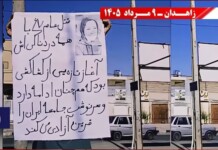
Both prisoners had protested the death penalty by participating in a peaceful campaign known as “No to Execution Tuesdays,” during which they staged hunger strikes every Tuesday for a year and a half. Their secret execution, Amnesty says, reveals the regime’s intent to use capital punishment not just as a legal measure but as a political weapon.
“The executions highlight the authorities’ ruthless use of the death penalty as a tool of political repression in times of national crisis to crush dissent and spread fear among the population,” said Beckerle.
The timing of the executions is notable, coming weeks after Iran’s 12-day military confrontation with Israel. Since then, state repression has intensified: mass arrests, expedited judicial proceedings, and an emergency bill poised to broaden the application of capital punishment have all raised alarm among rights advocates.
Fears of Further Political Executions
Amnesty International has documented at least 19 individuals currently at risk of execution on political grounds. These include Swedish-Iranian academic Ahmadreza Djalali, who was subjected to enforced disappearance on 23 June after being removed from Evin prison following Israeli airstrikes. Authorities have refused to disclose his whereabouts, sparking fears of a pending secret execution.
Among those also facing imminent execution are women’s rights defender Sharifeh Mohammadi, Kurdish humanitarian worker Pakhshan Azizi, and Kurdish dissident Verisheh Moradi.
Additionally, nine individuals have been sentenced to death for their involvement in the 2022 protests:
Fazel Bahramian, Mehran Bahramian, Milad Armoun, Alireza Kafaei, Amir Mohammad Khosheghbal, Navid Najaran, Hossein Nemati, Alireza Bamerzpournak, and Mehrab (Mehran) Abdullahzadeh.
Six others are facing execution for alleged ties to the PMOI:
Abolhassan Montazer, Akbar (Shahrokh) Daneshvarkar, Babak Alipour, Mohammad Taghavi Sangdehi, Pouya Ghobadi, and Vahid Bani Amerian.
Amnesty has also received the names of 13 more individuals at risk:
Razgar Babamiri, Pezhman Soltani, Soran Ghasemi, Kaveh Salehi, Tayfour Salimi Babamiri, Manouchehr Falah, Amin Farhahvar Gisavandani, Ehsan Faridi, Mohammad Javad Vafaei Sani, Masoud Jamei, Alireza Merdasi, Farshad Etemadi Far, and Yaghoub Derakhshan.
Amnesty Urges Global Legal Action
Amnesty is calling on the Iranian government to immediately halt all planned executions and establish an official moratorium with the goal of complete abolition. The organization also urges governments worldwide to pursue criminal investigations against Iranian officials suspected of torture and other crimes under the principle of universal jurisdiction.
“These executions also underscore the need for other states to initiate criminal investigations… including senior Iranian officials,” said Beckerle. “Without concrete accountability measures, the authorities will persist in committing crimes under international law.”
Amnesty International opposes the death penalty in all cases, without exception, and considers it a violation of the right to life and the ultimate cruel, inhuman, and degrading punishment.