


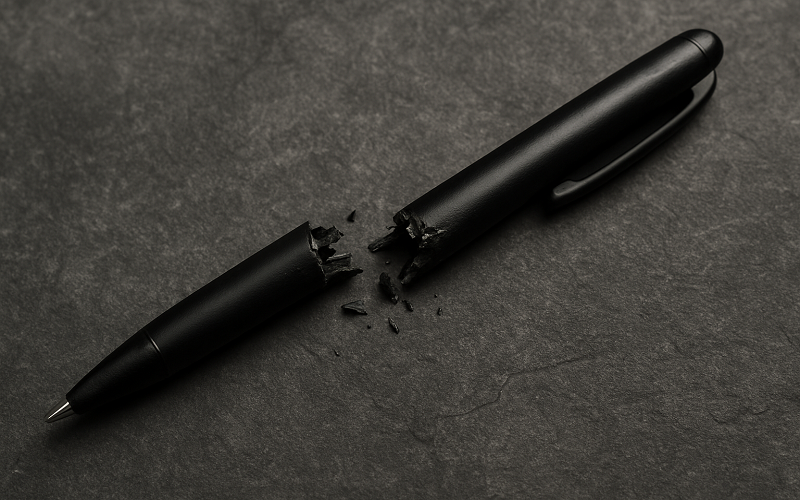

In 2024, the Iranian regime continued its systematic campaign against freedom of expression, particularly targeting writers, artists, and cultural figures who dare to challenge the status quo. Despite a slight decrease in the number of imprisoned writers compared to the previous year, the regime’s grip on the creative community remains ironclad, with 43 writers behind bars—13 of them women, marking Iran as the world’s leading jailer of female writers for the third consecutive year.
The crackdown reflects a sustained backlash that began with the mass protests in 2022, sparked by the death of Mahsa Amini. While some arrested writers from that period have since been released, many now live in exile, silenced under the threat of re-imprisonment or heavy surveillance. Others remain behind bars or face renewed court summons for continued dissent expressed through writing, music, or translation work.
Writers—especially those advocating for gender equality or denouncing compulsory hijab laws—face severe retaliation. Women continue to be disproportionately targeted, not only for their activism but for expressing feminist ideas in poetry, essays, and social media posts. These acts of expression are regularly reclassified by the regime as “propaganda,” “collusion,” or even more extreme charges such as “waging war against God,” a crime punishable by death.
The situation is particularly dire for writers from ethnic and religious minority groups. Kurdish poets, musicians, and commentators endure extreme forms of repression, including torture, solitary confinement, and long prison sentences without fair trial. The same punitive tactics are used against writers from the Baha’i and Gilaki communities. Their creative output—poems, letters, or protest songs—often serves as the sole voice for marginalized communities, and for that, they are persecuted with brutal efficiency.
Inside prison walls, the state’s repression is relentless. Female prisoners who continue to write or protest from within face violent retaliation, such as assaults by guards and denial of medical care. Conditions in Iran’s notorious prisons, especially Evin, are known to deteriorate rapidly for those who speak out. In some cases, medical furloughs are granted only after significant international pressure or life-threatening health declines.
Despite these risks, many imprisoned writers remain defiant. From within their cells, they continue to write letters, publish works, and advocate for justice. These acts of resistance are not just personal—they are a lifeline to a broader movement seeking freedom, dignity, and human rights in Iran.
Iran’s ongoing war on words demonstrates the regime’s fear of dissent, particularly when it emerges from artists and intellectuals who can mobilize public sentiment. In a country where traditional media is state-controlled and censorship is omnipresent, the online space becomes a crucial—albeit dangerous—platform for independent voices. But even there, surveillance, cyber harassment, and arrests are constant threats.
Iran’s ranking as one of the most hostile environments in the world for writers is not simply a statistic. It is a reflection of a regime that equates free thought with insubordination, and art with insurrection. And yet, amid imprisonment, exile, and censorship, Iran’s writers persist—proving that even in the darkest conditions, the written word continues to resist.