


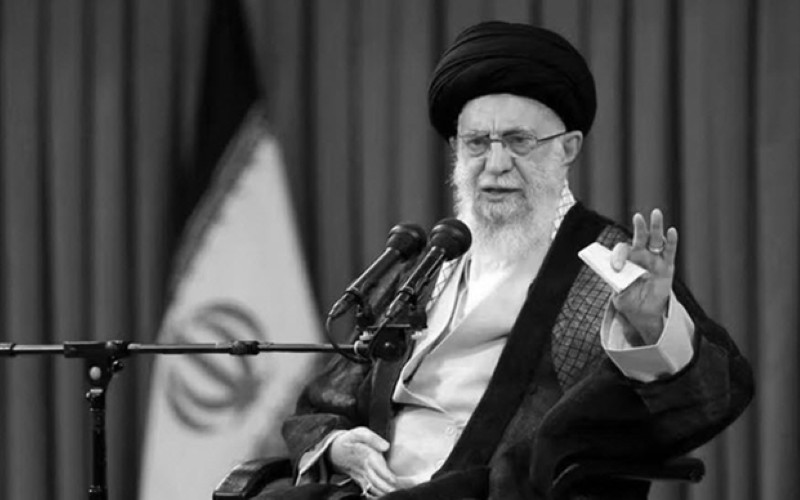

From sanctions and proxy losses to regional isolation and internal unrest, 2025 marked a decisive turning point in the collapse of Khamenei’s regional strategy.
The year 2025 began under the shadow of a major geopolitical loss for Iran regime’s supreme leader Ali Khamenei. In the final days of 2024, Iran regime’s most important regional ally, Bashar al-Assad, effectively lost control in Syria, depriving Tehran of a cornerstone of its regional influence.
What followed from January through December 2025 was not a series of isolated setbacks, but a chain of interconnected defeats—domestically, regionally, and internationally—that together amounted to a strategic failure for Iran’s ruling system.
Escalating U.S. Sanctions on the IRGC Financial Network
December 31, 2024
On December 31, 2024, the U.S. Treasury Department imposed new sanctions on individuals and entities linked to the Islamic Revolutionary Guard Corps (IRGC) and its financial networks. These measures directly targeted Iran’s ability to fund proxy groups such as Hezbollah in Lebanon and Iraqi militias, undermining the financial backbone of what Tehran calls the “Axis of Resistance.”
Continued U.S. Airstrikes on Yemen’s Houthis
January 3, 2025
On January 3, 2025, the United States confirmed a new wave of airstrikes against Houthi positions in Yemen. As Iran’s primary proxy force in the Red Sea, the Houthis lost critical military and command infrastructure. This marked a strategic failure in Tehran’s attempt to use maritime threats as global leverage.
Blow to Hezbollah’s Command Structure in Southern Lebanon
January 17, 2025
On January 17, 2025, several commanders from Hezbollah’s missile units—already designated as terrorists by the United States—were killed in targeted operations. The incident exposed deep intelligence penetration and disrupted coordination between Tehran and Hezbollah, representing a serious strategic loss.
Rising Pressure to Contain Iran-Backed Militias in Iraq
January 18, 2025
On January 18, 2025, U.S. officials formally urged the Iraqi government to exert tighter control over Iran-aligned militias within the Popular Mobilization Forces (PMF). Discussions of disarmament and forced integration signaled the beginning of a strategic retreat for Iran’s influence in Baghdad.
International Pressure on Lebanon to Rein in Hezbollah
January 25, 2025
On January 25, 2025, the United States and several European countries renewed calls for the enforcement of UN Security Council Resolution 1701, demanding limits on Hezbollah’s military activities. Hezbollah remains Tehran’s most important proxy force.
Israeli Strikes on IRGC and Proxy Targets in Syria
February 2, 2025
On February 2, 2025, Israel carried out a series of airstrikes against IRGC-linked bases and Iran-backed militias in Syria. Tehran’s inability to respond effectively highlighted the high cost and diminishing returns of its military presence in the country.
Efforts to Disarm Iraqi Militias Intensify
February 2, 2025
The same day, Iraq’s parliament—under international pressure—reviewed proposals to fully integrate militias into the national army. The move aimed to dismantle Iran’s parallel military structures in Iraq and marked another strategic setback for Tehran.
Killing of Senior Proxy Commanders in Syria
February 9, 2025
On February 9, 2025, reports emerged that several senior Iran-backed militia commanders had been killed in Syria. These figures played key roles in weapons transfers and regional coordination, dealing a direct blow to the IRGC Quds Force command network.
Expanded European Sanctions
February 15, 2025
On February 15, 2025, the European Union imposed new sanctions on individuals and entities linked to domestic repression and proxy warfare. This deepened Iran’s rift with Europe and marked the failure of Khamenei’s remaining diplomatic channels.
Coalition Destroys Houthi Drone Stockpiles
February 23, 2025
On February 23, 2025, international naval forces destroyed major Houthi drone depots and launch sites in Yemen. The operation sharply reduced the group’s ability to threaten Red Sea shipping and exposed Iran’s failure to protect its proxy supply chains.
European Warning on Snapback Sanctions
March 18, 2025
On March 18, 2025, three European powers formally warned that continued nuclear violations could trigger the UN snapback mechanism. The warning confirmed the collapse of Iran’s nuclear diplomacy.
New U.S. Sanctions on IRGC Arms Transfers
April 7, 2025
On April 7, 2025, the U.S. Treasury sanctioned companies and individuals involved in transferring weapons from Iran to Hezbollah and Iraqi militias. These measures further weakened Tehran’s regional logistics network.
Lebanon Moves to Secure Borders
April 7, 2025
That same day, the Lebanese army—backed by Western logistical support—expanded deployments along border areas to block illegal arms transfers, restricting Hezbollah’s operational freedom.
The 12-Day War
June 13 – July 2, 2025
Between June 13 and June 24, 2025, a 12-day war involving indirect U.S. participation demonstrated that Iran’s leadership could neither prevent escalation nor manage its consequences. It became one of the most serious strategic defeats of Khamenei’s foreign policy.
Activation of the UN Snapback Mechanism
September 28, 2025
On September 28, 2025, the snapback mechanism was officially activated, restoring UN sanctions on Iran’s regime. This marked the complete collapse of the nuclear deal strategy.
Growing Regional Isolation
October 13, 2025
On October 13, 2025, the Sharm el-Sheikh regional summit took place without Iran’s regime, as Arab states moved closer to the U.S.–Israel axis. Iran regime’s exclusion underscored its deepening regional isolation.
Renewed U.S. Sanctions on Oil and Financial Networks
October–November 2025
In October 2025, the United States imposed sweeping sanctions on Iran’s energy sector, targeting nearly 40 individuals, entities, and vessels. Further sanctions followed in November, aimed at cutting off oil revenues and financial transfer networks linked to Hezbollah.
Internal Protests Erupt
December 28, 2025
On December 28, 2025, widespread protests erupted inside Iran which are continuing right now for 13 consecutive days. These demonstrations, combined with regional and international failures, raised serious questions about the durability of Khamenei’s rule.
A Year That Redefined Failure
By December 31, 2025, Iran’s ruling system faced a reality shaped by revived sanctions, weakened proxy forces, regional isolation, and collapsing deterrence.
From January 1 to December 31, 2025, Khamenei’s foreign policy produced no tangible gains. Instead, his long-promoted strategy of “strategic depth” collapsed across every front—from Lebanon and Iraq to Yemen.
The consequences of this strategic defeat will extend far beyond 2025.