


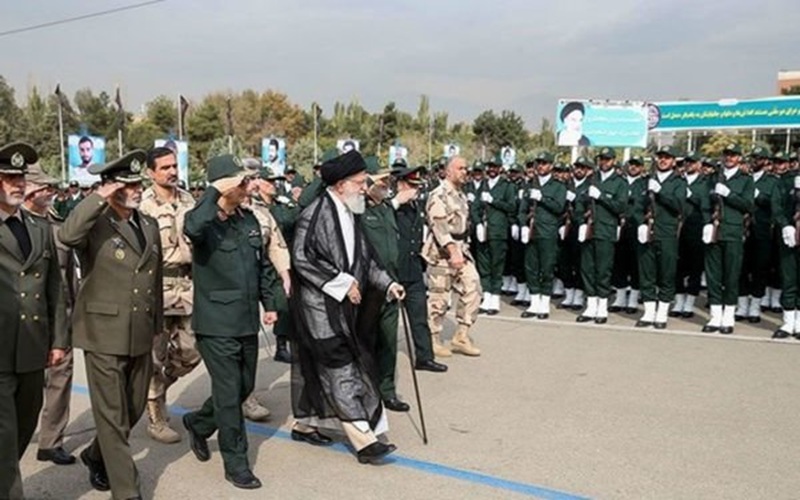

A deepening rift between President Masoud Pezeshkian and the IRGC exposes the regime’s struggle between pursuing talks or preparing for military confrontation amid economic collapse.
Iran regime’s political leadership is embroiled in a serious internal conflict over whether to prepare for war or return to the negotiating table—a debate that has become the central point of contention between President Masoud Pezeshkian and the commanders of the Islamic Revolutionary Guard Corps (IRGC).
For hardline elements within the regime, negotiations under current circumstances are tantamount to surrender. They believe that the only way to safeguard the regime is to remain defiant and prepare for military confrontation.
In stark contrast, Pezeshkian has openly argued that negotiations are the only viable solution, warning that war will achieve nothing given Iran regime’s limited military capabilities.
Speaking to domestic media executives, he questioned: “If we don’t negotiate, what are we going to do? War? So what if they attack? Should we rebuild so they can attack again?”
His remarks—implying the regime lacks the military capacity for prolonged conflict—prompted a fierce backlash from IRGC-linked media, notably the Tasnim news agency, which accused him of projecting weakness despite professing loyalty to the Supreme Leader.
Clashing Interests Behind the Divide
The IRGC’s opposition to negotiations is rooted not only in ideology but also in structural and economic self-interest. Over the past years, it has effectively taken over key roles traditionally held by the National Oil Company and the Central Bank, overseeing oil sales and revenue collection. Through vast oil, commercial, and financial networks designed to circumvent sanctions, IRGC commanders and their associates have amassed enormous profits.
The lifting of sanctions through negotiations would jeopardize these lucrative operations. Moreover, during times of crisis or war, the IRGC enjoys significantly increased budgets, enhanced policymaking authority, and direct influence over national strategy—as demonstrated after the recent war, when it received the bulk of a €2 billion allocation for the armed forces.
Economic Pressures on the Government
Pezeshkian, however, must contend with the immediate realities of governance: declining oil revenues, illicit oil sales to China, the looming threat of renewed UN sanctions, and a chaotic economy. Should sanctions return, the government’s ability to provide essential goods, energy, and public services would be further diminished. In his view, avoiding conflict and securing economic relief are essential to maintaining even minimal stability.
Escalating Media War
This dispute has spilled into the media. IRGC-affiliated outlets, including Tasnim, have dismissed ongoing diplomatic engagements as U.S. deception. The government, abandoning its defensive posture, has begun publicly challenging the IRGC.
In one striking exchange, Foreign Minister Abbas Araghchi responded to an IRGC-linked journalist’s accusation of diplomatic failure by saying, “We did our diplomatic job; it was the military who should not have been deceived and should have done their job properly.”
Such remarks point to a widening and public rift at the highest levels of the regime.
Negotiation as a Tactical Move
Even if the regime resumes talks, analysts expect no fundamental change in its approach. Any negotiations would likely aim to buy time—stalling until after Donald Trump’s presidency and averting a confluence of threats, including the reinstatement of Security Council sanctions and a possible renewed nationwide uprising.
The regime now faces a critical choice: abandon some of its entrenched policies and negotiate—effectively conceding under pressure—or brace for war and risk an accelerated path toward collapse. This decision may determine not only its immediate survival but also the long-term trajectory of its rule.