


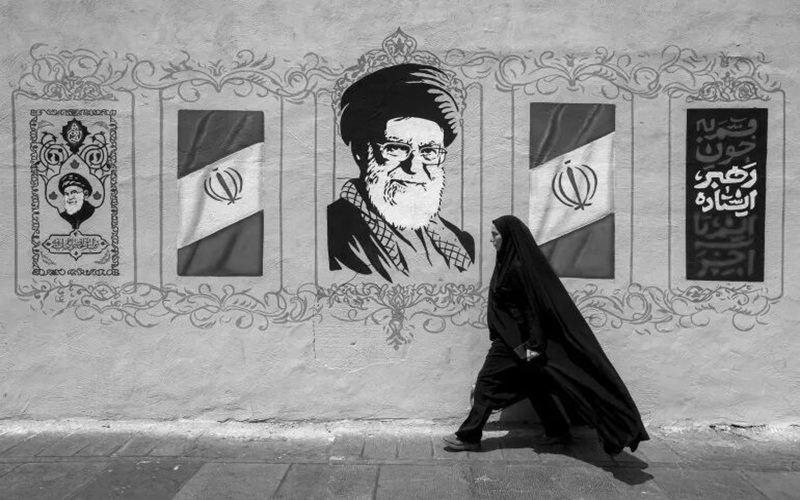

Mounting condemnation from Europe, Gulf states, Lebanon, and the wider Islamic world exposes the costs of Tehran’s regional aggression and domestic repression. Sustained international pressure can help create the conditions for democratic change in Iran.
A Diplomatic Front Against Iran’s Regime Is Expanding
Iran’s regime has spent decades presenting itself as a regional power capable of projecting influence far beyond its borders. Its network of armed proxies, interference in neighboring countries, and threats against international security have been central to that strategy. Yet a series of diplomatic developments in October 2026 points to a growing problem for Tehran: the policies designed to expand its influence are increasingly generating opposition from countries that once had to accommodate them.
Within approximately 48 hours, several developments highlighted this mounting pressure. European Union leaders condemned the regime’s regional conduct, including its actions concerning the Strait of Hormuz, as well as human rights violations and repression inside Iran. Tehran responded by summoning Ireland’s ambassador, Ireland holding the rotating presidency of the European Union, and Germany’s ambassador.
The confrontation with Germany followed the arrest of an individual on suspicion of espionage and terrorism, with German investigations reportedly pointing to Iranian regime involvement. Tehran’s decision to summon the German ambassador instead of addressing the underlying security concerns illustrates the growing tension between the regime and European governments.
These diplomatic exchanges matter, but their significance extends beyond the individual incidents. They form part of a broader pattern in which the regime’s regional policies, security activities, and domestic repression increasingly converge into a single international problem.
The important question is no longer whether Iran’s regime faces international criticism. It is whether the growing convergence of that criticism will make its existing strategy increasingly costly and difficult to sustain.
From Europe to the Gulf: Regional Opposition Gains Significance
The statements from the Gulf Cooperation Council add another dimension to this pressure. Gulf states have objected to the regime’s destabilizing regional conduct and violations of good-neighborly relations, calling for an end to actions they regard as aggressive and terrorist in nature.
This opposition carries particular weight because the countries of the region have direct experience of the consequences of Tehran’s policies. They face the security implications of regional conflicts, threats to maritime routes, and the activities of armed groups supported by the regime.
The Strait of Hormuz is especially significant. Any escalation involving this strategic waterway has implications far beyond Iran and its immediate neighbors, affecting international shipping, energy markets, and regional security. By turning the strait into an arena of confrontation, the regime risks strengthening the very international alignment it seeks to prevent.
The developments involving Lebanon are equally revealing. Lebanon’s foreign minister has directly criticized Tehran’s role in supporting Hezbollah, arguing that Iranian funding and weapons have contributed to the country’s crisis. This criticism challenges a central element of the regime’s regional strategy: its use of armed non-state actors to maintain influence and project power.
For years, Hezbollah served as one of Tehran’s most important instruments in the Levant. But the consequences for Lebanon have become increasingly difficult to separate from the wider costs of this relationship. When Lebanese officials openly identify Iranian support for Hezbollah as a source of national instability, the regime’s claim to be acting in the interests of the region becomes harder to sustain.
The message is significant: countries affected by Tehran’s regional network are increasingly willing to challenge its activities directly rather than treat them as an unavoidable feature of Middle Eastern politics.
The Islamic World’s Response Undermines Tehran’s Political Narrative
Another important development came from the Organization of Islamic Cooperation. Its ministerial-level meeting adopted a resolution addressing terrorism, regional aggression, and the regime’s support for Yemen’s Houthis. The resolution also called for Houthi representatives associated with the regime to be arrested when traveling abroad and handed over to Yemen’s internationally recognized government.
For Tehran, such positions carry a particular political cost.
The regime routinely presents itself as a defender of Islam and Muslim interests. Yet opposition from governments across the Muslim world to its support for armed groups and destabilizing regional activities undermines that narrative. It exposes the distance between the regime’s ideological rhetoric and the security concerns of the countries it claims to represent.
This is not simply a matter of diplomatic embarrassment. When European institutions, Gulf states, Lebanese officials, and a major multilateral organization raise related concerns, the regime faces a more difficult international environment. Its conduct becomes harder to dismiss as a dispute with a handful of Western governments.
Nevertheless, diplomatic isolation should not be confused with the regime’s imminent collapse. Governments can condemn Tehran while maintaining economic relations, pursuing negotiations, or disagreeing over how much pressure to apply. The significance of these developments lies in the direction of travel: the regime’s policies are generating resistance across several diplomatic and regional arenas at once.
Why International Isolation Does Not Automatically Produce Change
There is, however, a crucial distinction between weakening a regime’s international position and creating the conditions for democratic change inside the country.
The regime may regard diplomatic condemnations as manageable. It can summon ambassadors, issue counterstatements, and portray criticism as foreign hostility. International pressure alone does not guarantee that its institutions of repression will disintegrate or that political power will pass to the Iranian people.
This distinction exposes two fundamentally different approaches to Iran’s future.
The first places its hopes in an external force to overthrow the regime, whether through military intervention or another form of foreign-imposed political change. Among the advocates of this approach are supporters of restoring the monarchy, who envision the regime’s removal creating an opportunity for Reza Pahlavi and the return of a political order associated with the former Shah.
But replacing clerical authoritarianism with monarchical rule would not, in itself, establish democracy. Iran’s experience under the Shah demonstrated that authoritarian rule is not confined to one ideological or religious system. The central question is not simply who occupies the seat of power, but whether the Iranian people can determine their own future through free political participation, democratic institutions, and accountable government.
Foreign intervention also carries its own dangers. Military action can destroy infrastructure, intensify civilian suffering, and create political vacuums that authoritarian forces seek to exploit. The removal of one government by an outside power does not automatically produce a sovereign, democratic state.
Nor should the international community assume that diplomatic isolation alone can deliver the political transformation that Iranian society needs.
The Decisive Factor Is the Iranian People
The alternative is to recognize the Iranian people as the principal force capable of establishing a democratic future. International condemnation can constrain the regime, expose its conduct, raise the costs of repression, and create greater space for those demanding freedom. But such pressure should support, rather than substitute for, the Iranian people’s struggle for political change.
This means rejecting the false choice between preserving the existing regime and restoring the monarchy. Iran needs a political alternative grounded in popular sovereignty, democratic accountability, and the rejection of dictatorship in all its forms.
The Iranian Resistance’s proposed democratic republic and Ten-Point Plan offer a framework centered on free elections, separation of religion and state, gender equality, the abolition of the death penalty, and a non-nuclear Iran living in peaceful relations with the international community.
Such a future would directly challenge the foundations of the regime’s domestic repression and regional interventionism. A government accountable to its citizens would have a fundamentally different basis for conducting foreign policy than one that relies on ideological expansion, armed proxies, and internal coercion to preserve its power.
The international community therefore faces a choice of its own. It can continue treating each diplomatic confrontation as an isolated crisis, or it can recognize the connection between the regime’s domestic repression and its destabilizing regional policies. A coherent response would hold Tehran accountable for both while supporting the Iranian people’s right to determine their political future.
Isolation Is a Pressure Point, Not a Democratic Solution
The diplomatic developments of October 2026 indicate that Iran’s regime is confronting criticism on multiple fronts. European condemnation, objections from Gulf states, direct criticism from Lebanon, and the position taken by the Organization of Islamic Cooperation all point to the widening regional and international costs of Tehran’s conduct.
Yet the ultimate test is not how many governments issue condemnations or how frequently Tehran summons ambassadors. It is whether international pressure contributes to a political environment in which the Iranian people can end dictatorship and establish a democratic system of their own choosing.
The regime’s isolation can weaken its diplomatic standing and expose the failures of its regional strategy. But isolation is not a substitute for organized domestic opposition, nor is it a guarantee of democratic change.
Iran’s future should belong neither to the clerical establishment nor to a restored monarchy imposed through foreign intervention. It should belong to the Iranian people. The purpose of international pressure must be to help create the conditions for that outcome—not to decide Iran’s future on their behalf.