How the Iranian regime weaponizes war to obscure a systematic campaign of repression—and why society no longer accepts either
What defines Iran’s current crisis? War—or executions?
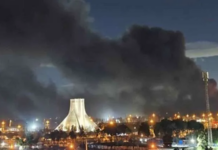
At first glance, the answer may seem obvious. War dominates the landscape. Its scale, its noise, and its psychological weight stretch across the horizon, capturing attention and shaping perception. It darkens the future and fixes the public gaze upward—toward missiles, aircraft, and geopolitical confrontation.
Executions, however, operate differently. They unfold on the ground, often in silence, yet with far greater strategic precision. Beneath the shadow and noise of war, executions can be carried out more systematically, with reduced scrutiny and diminished immediate backlash. While war distracts, executions proceed.
The Iranian regime has undoubtedly absorbed significant blows from aerial conflict. Yet its primary threat does not come from the sky. It comes from the ground—an Iran in which a vast majority of the population is disillusioned, oppositional, and increasingly oriented toward regime change.
This “ground” is not merely territorial; it is social—a dense accumulation of frustration, anger, and a growing conviction that there is no viable return to the past.
It is this internal threat that explains the regime’s decision to execute six members of the PMOI and four rebellious activists within a span of six days. From the perspective of the authorities, such measures—despite their domestic and international costs—are calculated as necessary instruments of survival.
The real danger lies in a society that has developed continuity in resistance. The ongoing “No to Execution Tuesdays” campaign, now surpassing 110 weeks, is not just a protest movement; it represents a form of social organization and persistence.
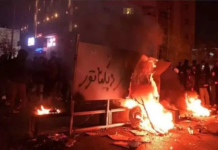
It signals the emergence of collective memory—one that records repression and reproduces defiance. This is a society fundamentally transformed since the bloody uprising of January 2026. The rupture between state and society has moved beyond dissatisfaction into outright disconnection.
Reconciliation, under current conditions, is no longer a plausible trajectory. In such an environment, executions are not merely judicial or security measures. They function as a language—a means through which the state communicates with society. The intended message is clear: fear, passivity, and retreat.
Yet this language does not operate unilaterally.
Each execution also carries the potential to produce the opposite effect: renewed anger, heightened solidarity, and expanded resistance. The aftermath of the recent executions illustrates this dynamic.
A wave of solidarity—what can be described as a digital and social “operetta” of resistance—has formed around those executed, portraying them as symbols of endurance and freedom. This response continues to evolve.
Even external war, despite the blows it inflicts on the regime, can paradoxically serve its internal objectives. By creating a state of emergency, war enables the authorities to justify intensified repression. It lowers sensitivity, blurs distinctions, and deliberately conflates dissent with disloyalty.
The line between “defense” and “suppression” becomes intentionally obscured, allowing internal opposition to be framed as an extension of external threat.
Therefore, Iran’s defining issue cannot be reduced to a binary choice between war and executions.
The two are not opposing forces; they are interconnected components of a broader strategy. War constructs the stage. Executions perform behind it.
What ultimately matters is how these mechanisms interact with a society that increasingly interprets each execution not as strength, but as weakness—a sign of the regime’s inability to prevail in its broader confrontation with the people, and an act of retribution against them.
Such a society does not remain silent. It contextualizes every execution within a larger narrative of experience, awareness, and inevitability. In this framework, repression no longer deters; it accumulates. Each act becomes fuel—feeding what many now see as an unavoidable national movement aimed at ending a system defined by war abroad and executions at home.