


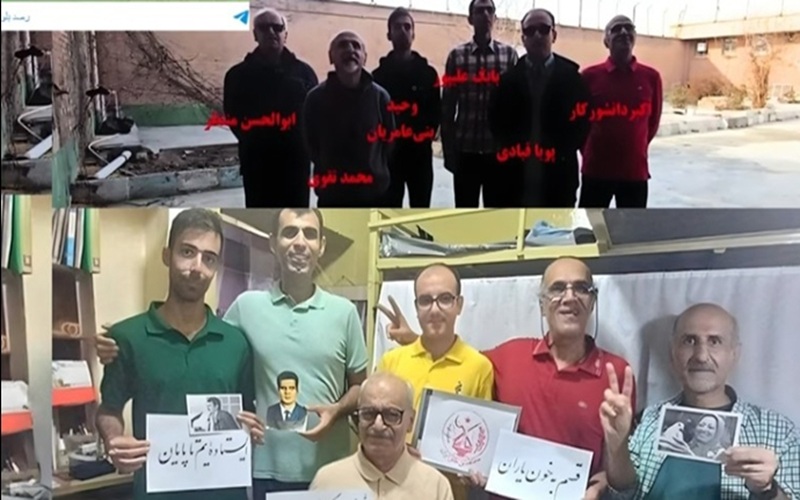

From Washington to Europe and the United Nations, officials warn of systemic repression and call for urgent international intervention
Escalating Executions Draw International Alarm
Reports of a rising wave of executions of political prisoners in Iran—particularly under the current wartime climate—have triggered a surge of international condemnation. Political leaders, lawmakers, and human rights bodies warn that Tehran is intensifying repression, using capital punishment as a tool to silence dissent and project control.
High-Profile Political Reactions
Ingrid Betancourt, the former Colombian presidential candidate, strongly criticized the executions in a message published on X. She characterized the killings as a form of mass violence and suggested that the victims’ final acts symbolized a profound commitment to freedom. She also underscored the timing, noting that these executions occurred amid ongoing conflict, amplifying their gravity.
These political prisoners left us their most beautiful song — a final tribute to freedom — before being slaughtered by the Iranian regime. Executed while war raged in Iran. There will be no freedom, justice, or democracy as long as tyranny in Iran changes its face but stays in…
— Ingrid Betancourt Pulecio (@IBetancourtCol) April 6, 2026
Betancourt further argued that genuine freedom, justice, and democracy in Iran remain unattainable as long as authoritarian rule persists—even if it attempts to rebrand itself.
In Washington, Mario Díaz-Balart, Vice Chairman of the House Appropriations Committee, condemned the executions as acts of brutality against innocent citizens. He called for their immediate halt and stressed the importance of holding Tehran accountable for what he described as crimes against humanity.
The Iranian regime’s executions of its own innocent people are barbaric and must stop immediately.
Under President Trump’s bold leadership, we will continue to hold Tehran, the world’s largest state sponsor of terrorism, accountable for its crimes against humanity. https://t.co/BdbFPmvyjK
— Mario Díaz-Balart (@MarioDB) April 6, 2026
His message, accompanied by an image of Iranian protesters near the White House, also amplified the voices of demonstrators who view executions as a deliberate strategy of intimidation—designed to instill fear and suppress demands for freedom.
European and U.S. Lawmakers Denounce “Systematic Repression”
A wider group of political figures across the United States and Europe has also spoken out against the execution of six political prisoners affiliated with the People’s Mojahedin Organization of Iran. They described the killings as evidence of both escalating repression and a deepening legitimacy crisis within Iran’s ruling system.
Carla Sands paid tribute to the executed individuals, portraying them as patriotic figures who gave their lives in the struggle for freedom against a repressive regime.
God bless the patriots of Iran fighting for their freedom against the brutal mullah regime. #10pointplan @iran_policy https://t.co/GwyUXDXfsR
— Carla Sands (@CarlaHSands) April 4, 2026
Marko Mihkelson, Chairman of Estonia’s Foreign Affairs Committee, warned that Iranian authorities are systematically targeting those who dare to advocate for change. He called on the international community to confront the regime and formally challenge its legitimacy.
The free world must outlaw the Iranian terrorist regime, which brutally executes anyone who dares to stand up for a better future for their country.
— Marko Mihkelson 🇪🇪🇺🇦🇪🇺 (@markomihkelson) April 4, 2026
From the United Kingdom, Jim Shannon referenced the execution of individuals including Vahid Bani Amerian and Abolhassan Montazer, placing them within a broader pattern of ongoing executions tied to political opposition.
1) Today, PMOI/MEK members Vahid Bani Amerian & Abolhassan Montazer were hanged in Ghezel Hesar Prison, Karaj. They join fallen heroes Mohammad Taghavi, Akbar Daneshvar Kar, Babak Alipour & Pouya Ghobadi in the fight for a free Iran. The@FCDOSecretary @YvetteCooperMP…
… pic.twitter.com/lVvvs0AFYa— Jim Shannon MP (@JimShannonMP) April 4, 2026
Meanwhile, Dorien Rookmaker emphasized that the executions reflect both the brutality and the underlying fear of Iran’s leadership in the face of organized resistance. She called for an urgent United Nations session to address the ongoing executions and warned that many other political prisoners remain at imminent risk.
Bij zonsopgang vandaag werden Vahid Bani Amerian en Abolhassan Montazer opgehangen in de Ghezel Hesar-gevangenis, Karaj. De twee heldhaftige leden van de Volksmojahedin-organisatie van Iran (PMOI/MEK) hebben zich nu aangesloten bij hun kameraden die hun leven hebben gegeven in de… https://t.co/VC3W6aSNdb
— Dorien Rookmaker (@RookmakerDorien) April 4, 2026
United Nations Raises Concerns Over Due Process and Systematic Abuse
The United Nations Human Rights Council’s Independent International Fact-Finding Mission on Iran has reinforced these concerns in its latest report, issuing a strong condemnation of Iran’s use of the death penalty against political detainees.
According to the mission’s findings, many individuals are being sentenced to death following proceedings that fail to meet basic standards of fairness and due process. The report highlights the use of vaguely defined national security charges—such as “armed rebellion”—to prosecute individuals, often in connection with political affiliations or participation in protests.
Investigators concluded that these executions form part of a broader, systematic campaign targeting civilians who are demanding rights and equality. In many cases, individuals appear to have been punished not for clearly defined criminal acts but for their political beliefs or associations.
The report also points to the broader context in which these executions are taking place: a society under sustained pressure, where ongoing conflict and internal repression intersect. The use of capital punishment, it notes, has further intensified already severe conditions, functioning as a mechanism to deter dissent and maintain control.
The mission has once again called for the immediate suspension of executions in Iran, warning that their continued use in such circumstances constitutes a serious violation of fundamental human rights.