


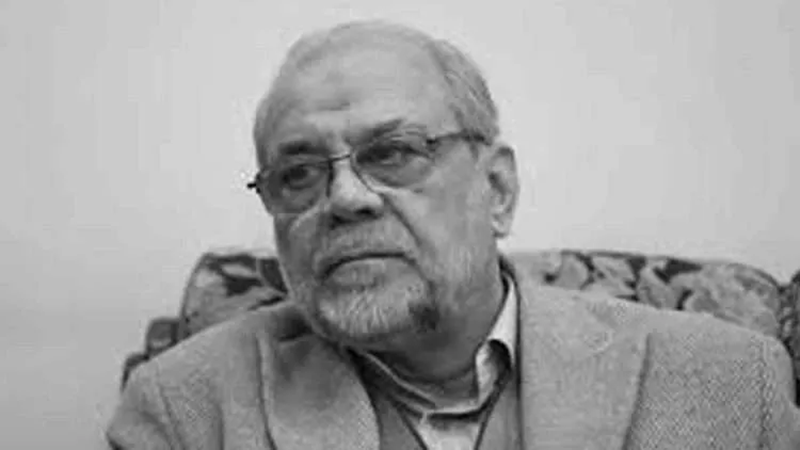

The appointment of Mohammad Bagher Zolghadr signals the full consolidation of power by the IRGC’s hardline core amid escalating internal and external crises
The appointment of Mohammad Bagher Zolghadr as Secretary of Iran regime’s Supreme National Security Council is not a routine bureaucratic reshuffle—it is a structural turning point. Following the killing of Ali Larijani, a figure long associated with political mediation and crisis management, this decision lays bare a deeper reality: the Iranian regime has abandoned even the pretense of political balancing and is consolidating authority within its most hardline security apparatus.
This is not merely a change in personnel; it is a shift in doctrine. The regime is signaling that, in the face of mounting existential threats, it no longer trusts political actors or institutional mechanisms. Instead, it is handing over national security decision-making entirely to the entrenched core of the Islamic Revolutionary Guard Corps (IRGC).
Zolghadr is not a politician in any conventional sense. His career has been forged within the security and intelligence machinery of the state, placing him at the center of some of the regime’s most controversial and coercive operations. Unlike his predecessor, whose influence derived from parliamentary and diplomatic experience, Zolghadr represents the institutional DNA of repression. From his early involvement in intelligence structures to his role in shaping extraterritorial operations and proxy warfare, his trajectory reflects the regime’s reliance on force rather than legitimacy.
His reported role in establishing operational frameworks such as the Ramadan Headquarters in the 1980s helped lay the groundwork for Iran’s long-term regional strategy—one rooted in asymmetric warfare and proxy networks. Domestically, his association with internal security measures, including oversight roles during periods marked by political repression, underscores his function as a guarantor of regime survival during internal crises.
What makes this appointment particularly significant is its institutional implication. The Supreme National Security Council, constitutionally chaired by the regime’s president, once served—at least nominally—as a space for negotiation between elected officials and the regime’s unelected power centers. That fragile equilibrium has now collapsed.
Under Zolghadr, the council is poised to transform from a deliberative body into an execution arm of the regime’s security core. The current president is likely to be reduced to a procedural figurehead, while real authority shifts to a secretariat aligned directly with the Supreme Leader and IRGC command structures. Decision-making will no longer be shaped by competing institutional interests but dictated by a unified security doctrine.
Zolghadr’s past involvement in what has been described as “security-engineered political outcomes,” including his role in shaping electoral dynamics in the mid-2000s, further illustrates his expertise in controlling both political space and public outcomes. His presence effectively places the current administration under a form of internal surveillance and constraint, limiting any potential for independent policymaking—particularly in sensitive areas such as negotiations or crisis response.
The timing of this shift is equally revealing. Coming in the aftermath of a short but consequential military confrontation and the loss of key regime figures, the leadership appears to have entered a phase best described as “survival mode.” In this context, Zolghadr’s appointment carries three clear strategic signals.
First, it reflects the full militarization of foreign policy. By entrusting national security coordination to a figure deeply embedded in proxy warfare strategy, the regime is aligning diplomacy entirely with battlefield priorities.
Second, it indicates preparation for intensified domestic repression. Zolghadr’s background across judicial, intelligence, and internal security institutions positions him as a specialist in containment—what could be termed the architecture of suppression. His appointment is a preemptive response to the regime’s fear of renewed uprisings.
Third, it reveals an increasing homogenization within the ruling elite. Figures with political nuance or independent influence are being replaced by loyal security insiders. In moments of acute vulnerability, the Supreme Leader appears to rely exclusively on a closed circle of military-aligned loyalists.
The broader conclusion is difficult to ignore. The Iranian regime is moving away from even symbolic forms of republican governance toward a model centered entirely on security preservation. The Supreme National Security Council no longer functions as a national institution—it is evolving into a command hub for the regime’s hardline core.
This transformation marks the end of any lingering illusion that internal reform or moderate governance can influence the system’s trajectory. The regime is preparing for its most challenging scenarios, whether external conflict or internal upheaval. In this recalibrated power structure, public representation—already limited—has been further marginalized, replaced by an overriding imperative: survival at any cost.