



Failed talks with the United States expose a regime trapped between external pressure and escalating factional conflict—where strategic miscalculations and fear of domestic uprising drive increasingly desperate behavior.
The latest round of inconclusive negotiations between the Iran regime and the United States has once again underscored a fundamental reality: the gap between the two sides remains profound, while the regime itself is trapped in a deep and potentially irreversible political deadlock. Beneath the surface of diplomatic engagement lies a system increasingly unable to produce coherent strategic outcomes.
Power Struggles Within the Regime
Available signals from within the governing structure point to an intensifying rift—what insiders describe as a “power split”—between the Islamic Revolutionary Guard Corps (IRGC) and hardline security factions on one side, and the negotiating camp on the other. This fragmentation is not merely tactical; it reflects a deeper crisis of legitimacy and competing visions for regime survival.
The internal discord has been further exacerbated by the emergence of a critical new point of contention: the potential closure of the Strait of Hormuz.
The Strait of Hormuz as Strategic Leverage
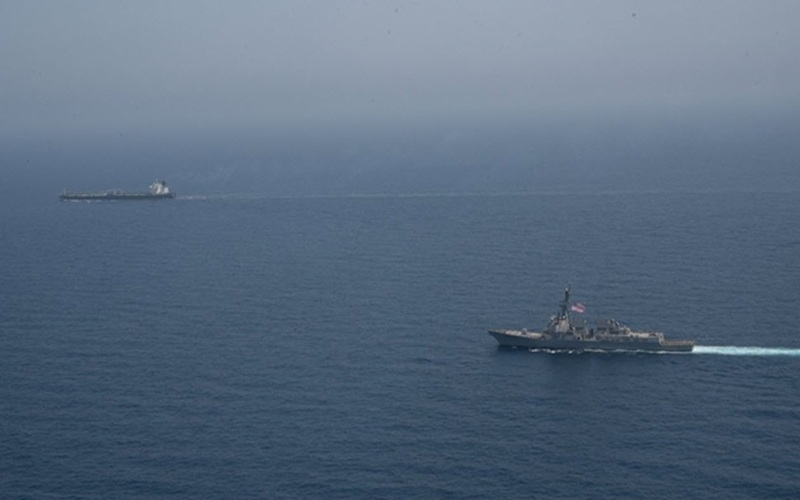
The regime has increasingly framed the possibility of blocking the Strait of Hormuz as a form of geopolitical leverage—effectively a hostage-taking mechanism aimed at extracting concessions in nuclear negotiations. However, this approach reveals more weakness than strength.
Countermeasures by opposing actors—particularly restrictions in adjacent waterways such as the Gulf of Oman—have demonstrated the regime’s limited capacity for strategic escalation. Rather than projecting power, these measures have exposed operational vulnerabilities and a weakness in strategic design.
The economic consequences have been severe. By some estimates, the regime is incurring losses approaching half a billion dollars per day. Not only has the movement of its own oil and cargo vessels been disrupted, but access for foreign shipments—including those potentially carrying military equipment or missile fuel components—has effectively been curtailed.
Escalation of Factional Conflict
The Hormuz issue has also intensified factional infighting. Mixed signals from senior figures—such as Foreign Minister Abbas Araghchi and parliamentary speaker Mohammad Bagher Ghalibaf—have fueled internal tensions. While diplomatic channels emphasize keeping the waterway open, hardline factions push for escalation.
This contradiction reflects a broader structural problem: the absence of a unified command system, particularly in the post-Khamenei environment. The resulting chaotic decision-making has created a vacuum in which competing centers of power act without coordination.
Public displays of this crisis are increasingly visible. Regime-aligned factions—often backed by the IRGC and Basij forces—have staged demonstrations, delivered inflammatory speeches, and deployed state media to attack rival camps. The rhetoric has, in some cases, descended into outright threats and insults against the negotiators.
One cleric, openly attacking Ghalibaf, accused him of betraying both his comrades and the Supreme Leader, using language that underscores the intensity of internal divisions. In another instance, cleric Mousavi Motlagh called for silencing any voice that speaks of division, declaring such voices as agents of the enemy and demanding their suppression.
A Regime Without Cohesion
These episodes are not anomalies; they are symptomatic of a system that has lost its central pillar of cohesion. With the erosion of centralized authority, even previously marginal actors are asserting influence, further destabilizing the system. Notably, factions associated with former regime President Hassan Rouhani and so-called reformists have remained largely silent—an indication of the highly securitized environment and the risks associated with entering this tense arena.
Even figures like Ghalibaf have begun to recalibrate their positions under pressure. In a recent statement, he distanced himself from escalation, emphasizing that a ceasefire cannot coexist with actions such as maritime disruption or economic hostage-taking—implicitly acknowledging the heavy costs of the regime’s current trajectory.
Fear of Internal Uprising
At its core, the regime’s internal division over negotiations is driven by a shared fear: an uncertain future in which any form of compromise could trigger domestic consequences. Entering negotiations or accepting limitations may lead, almost automatically, to a relative opening of political space inside the country.
Such a shift would function like a compressed spring released among a deeply discontented population. In the presence of organized resistance networks and activist cells, this could accelerate the path to overthrow.
The Regime’s Strategic Dilemma
This is the central paradox confronting the Iran regime. De-escalation risks internal explosion; escalation risks economic and military attrition. In response, the regime has doubled down on a familiar toolkit: prolonging external tensions while intensifying internal repression.
Mass arrests, indiscriminate crackdowns, and a surge in executions are not merely control tools—they are preemptive measures aimed at containing the potential for uprising. The strategy of “field and street” dominance reflects an acute awareness that the greatest threat to the regime does not come from abroad, but from within.
In this context, the regime’s contradictory behaviors—from nuclear negotiations to maritime brinkmanship—should not be seen as incoherent foreign policy, but as manifestations of a system struggling to survive its own deepest internal contradictions.
The conclusion is inescapable: the Iran regime’s greatest vulnerability lies not in external pressure, but in the unresolved conflict between a ruling system determined to preserve itself and a society increasingly unwilling to accept it.