An article published by Responsible Statecraft, titled “How the UAE and MEK weaponize AI to spread propaganda,” offers another example of how allegations against Iran’s organized opposition can overshadow the clerical regime’s documented activities.
Written by Nick Cleveland-Stout, a researcher at the Quincy Institute, co-founded by former National Iranian American Council (NIAC) president Trita Parsi, whose Iran-policy advocacy has long faced accusations of favoring Tehran, the article follows a familiar pattern of attacks on the Iranian Resistance.
Using Anthropic’s September 2026 threat intelligence report, it omits the PMOI’s explicit denial, converts suspicions into established facts, and largely ignores the report’s extensive findings about the Iranian regime’s own AI-enabled propaganda and surveillance operations.
The response Responsible Statecraft ignored
On September 13, 2026, the People’s Mojahedin Organization of Iran (PMOI/MEK) issued a detailed statement categorically rejecting the allegations.
The PMOI declared that they had no knowledge of or involvement in the activities described by Anthropic. They rejected accusations of fraudulent AI operations, reiterated their commitment to complying with AI platform regulations, and requested specific evidence of any alleged violations.
The statement also emphasized that any independently undertaken activities by individual members or supporters remain those individuals’ responsibility.
Responsible Statecraft ignored this public response entirely.
Remarkably, the article reproduced a denial from another organization accused in an OpenAI investigation of being a Russian-controlled fake think tank. Yet the PMOI was afforded no comparable opportunity to present its position.
Turning suspicions into established facts
Responsible Statecraft’s treatment of Anthropic’s findings reveals another serious problem: it presents observations and suspicions as proven facts.
The article asserts that individuals working for the MEK carried out the operation. But Anthropic’s own report explicitly acknowledged a critical limitation in its conclusions:
“We are not able to verify the level of centralized control.”
Anthropic also acknowledged that the actors did not share account infrastructure or display visible signs of coordination.
These qualifications are fundamental to understanding the findings. Suspicions of organizational involvement are not equivalent to verified organizational responsibility.
Similarly, Responsible Statecraft claims an AI agent infiltrated more than 500 Telegram groups. Anthropic reported scraping data from social-media channels, a materially different characterization.
By stripping away these distinctions, the article turns an investigation containing significant uncertainties into a seemingly definitive indictment of the PMOI.
The Iranian regime’s AI operations that went unreported
The most revealing omission concerns Anthropic’s findings about the Iranian regime itself.
Anthropic documented AI-enabled influence operations involving three Iranian state propaganda institutions: the Islamic Culture and Communications Organization, the Islamic Propaganda Office of Khorasan Razavi, and the Bina Cultural Observatory.
These operations involved manufacturing apparently independent voices, developing propaganda campaigns, and disseminating narratives aligned with the Islamic Revolutionary Guard Corps (IRGC).
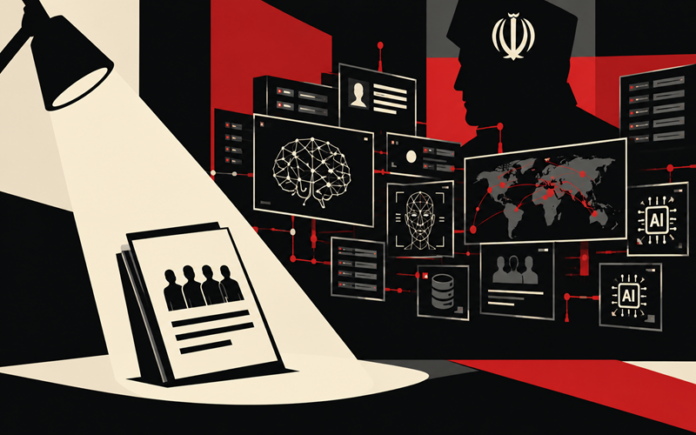
A separate investigation uncovered 16 Claude accounts associated with Iranian paramilitary and domestic security entities. Their activities involved a surveillance infrastructure whose operators claimed to have profiled 6,388 Iranians in one year, analyzed 155,216 tweets, and developed a malicious browser extension to harvest social-media identities.
Anthropic classified the Iranian state-aligned propaganda operation as Category Three for observed distribution, compared with Category Two for the MEK/NCRI-aligned operation. These categories measure distribution rather than overall severity.
Responsible Statecraft ignored these Anthropic case studies, offering only brief coverage of a separate OpenAI investigation into Iranian influence activities.
Why were Tehran’s documented operations not equally newsworthy?
The Quincy Institute’s troubling Iran-policy connections
The article’s institutional background deserves closer examination.
Cleveland-Stout works for the Quincy Institute, whose co-founder and executive vice president, Trita Parsi, previously headed NIAC, the notorious Iranian regime lobby inside the Beltway.
A 2021 investigation by Tablet documented Parsi’s longstanding contacts with Iranian officials, particularly former foreign minister Javad Zarif, and examined controversies surrounding NIAC’s political activities.
NCRI investigations have also documented and criticized connections between Quincy-associated figures, pro-Tehran lobbying circles, and repeated campaigns portraying the Iranian Resistance negatively.
These connections provide important context for scrutinizing the editorial priorities of the author.
Against this background, the decision to amplify disputed allegations against the PMOI while overlooking substantial evidence of Tehran’s activities raises serious questions about Responsible Statecraft’s selective approach.
Demonization cannot whitewash Tehran’s crimes
The reality that such attacks cannot obscure is the Iranian regime’s continuing brutality.
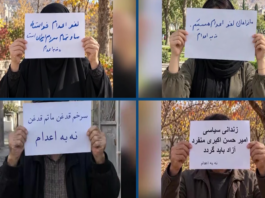
During the January 2026 uprising, security forces killed thousands of protesters and bystanders. Multiple human rights organizations documented evidence of nationwide massacres. On October 16, Amnesty International reported that at least 34 people had been executed in connection with the uprising following grossly unfair trials, with others facing imminent execution; nine of them were PMOI/MEK members.
While Tehran deploys sophisticated technologies to manipulate public opinion and surveil its citizens, its machinery of repression continues killing those demanding freedom.
Selective attacks on the PMOI cannot erase these crimes, rehabilitate the clerical regime, or extinguish the Iranian people’s struggle for a democratic republic.
Nor should the Quincy Institute be treated as a detached or genuinely independent arbiter on Iran. Quincy is not merely influenced by Trita Parsi; it is his institutional brainchild, co-founded and shaped by him as a vehicle for the worldview he previously advanced through NIAC. Its Iran coverage has repeatedly echoed Tehran’s preferred themes: weakening pressure on the regime, discrediting its principal opponents, and recasting appeasement as impartial analysis. In that sense, Quincy functions less as an independent think tank than as a Washington platform that gives the regime’s narratives the appearance of scholarly legitimacy.