


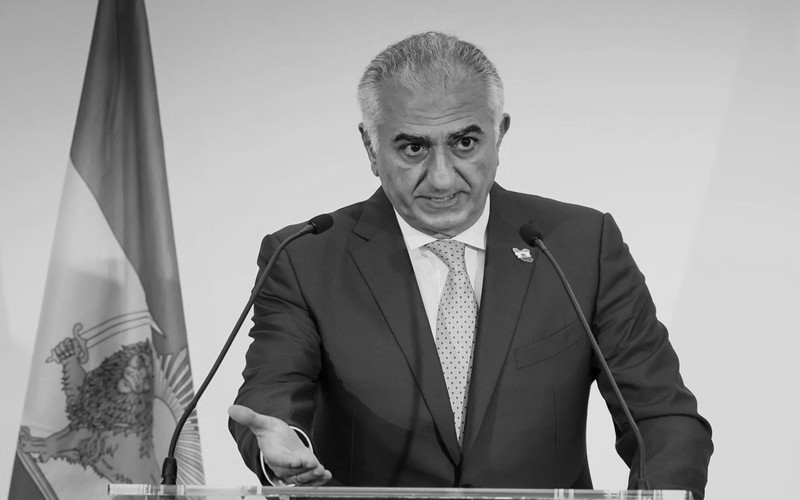

How Reza Pahlavi’s Interventionism and Monarchist Branding Undermine Iran’s Internal Resistance Movement
Some Western governments and analysts still cling to a comforting fiction: that Iran’s path out of theocracy runs through a familiar, exiled royal face. They entertain Reza Pahlavi — the son of the last shah — as a unifying alternative, much as Washington once hailed the Pahlavi regime itself as an “island of stability” in a turbulent region. That delusion collapsed spectacularly in 1979. Today it repeats the same error, elevating a marginal diaspora voice over the gritty, homegrown resistance that actually threatens the clerical state. The winter uprising of 2025-2026 exposed the danger. Ordinary Iranians launched the protests. Pahlavi’s attempt to steer them did not accelerate victory; it supplied the regime with a perfect pretext for massacre. And the pattern continues.
January’s Fatal Choreography
The revolt began on Dec. 28, 2025, in Tehran’s Grand Bazaar — merchants shuttering stalls over hyperinflation and the rial’s collapse, not over any exile directive. The fury spread organically to Mashhad, Rasht and western towns like Malekshahi and Abdanan, where security forces briefly melted away. Decentralized neighborhood networks, hardened by past revolts and supported by the organized Resistance movement, were already channeling the strikes, radicalizing tactics and building serious momentum. The regime wavered, caught between two different playbooks— the mass killings of 2019 and the measured crackdown of 2022. Collapse seemed possible.
By early January the uprising was in full swing when Pahlavi inserted himself. Months earlier he had claimed in a Politico interview that more than 50,000 officials and military personnel had registered on a secure platform for defection. As protests swelled, he issued precise, timed orders: Iranians should chant in unison at exactly 8 p.m. on Jan. 8 and 9 from streets, rooftops or balconies. “Help is on the way,” he assured them in video messages, framing the domestic revolt as one that needed his choreography to succeed
The regime, already paranoid about foreign plots, received its narrative gift. Security forces opened fire with military-grade weapons. Videos that briefly escaped the blackout showed bodies piled in the streets. The death toll climbed into the thousands.
On Jan. 9, Supreme Leader Ali Khamenei broke his silence: “Everyone should know that the Islamic Republic came to power with the blood of hundreds of thousands of honorable people, and it will not back down in the face of those causing destruction.”
He branded the protesters “vandals” acting “to please the president of the United States” and ordered security forces to show “no leniency.” Pahlavi’s highly visible calls handed the theocracy exactly what it craved: proof of a monarchist restoration plot orchestrated from abroad.
He repeated the mistake on Jan. 10 and again on March 29, falsely claiming the regime’s security apparatus had “completely collapsed.” The defections never materialized. What arrived were mass graves, secret trials and a new wave of executions — including at least eight members of the organized Resistance movement and 15 other protesters whose disciplined, underground work bore no resemblance to diaspora spectacle. The regime has always known its true existential threat lies in domestic networks inside Iran, not in Virginia.
Dividing the Opposition, Feeding the Regime
Pahlavi’s approach has not evolved. His supporters stage regular parades in London and other European capitals, often in replica SAVAK uniforms or Imperial Guard regalia. To millions of Iranians who remember the shah’s security state and its brutal suppression of dissent, these images are not inspiration but a warning of restored tyranny. The regime’s propaganda machine eagerly broadcasts the footage inside Iran, reinforcing its core message: any change will simply revive the old dictatorship.
This theater divides the opposition at the worst possible moment. It marginalizes the decentralized neighborhood cells and the organized Resistance movement that have sustained underground networks for nearly half a century despite relentless crackdowns.
Pahlavi’s strategy — heavy on personal branding, begging for foreign intervention, unverifiable promises of mass defections and media-friendly coordination — substitutes European photo-ops for the slow, perilous work of building genuine infrastructure inside the country. The result is while giving the established terror state ready-made visuals to quell its population.
The Only Path Forward
Western policy helped create this trap. For decades it labeled the organized Resistance movement a terrorist organization, bombed its camps and chased phantom moderates inside the regime — the same fundamental miscalculation that once propped up the shah as an “island of stability.” That approach must end now.
The real engine of change has always been, and remains, inside Iran. The latest spike in political executions is the theocracy’s own admission of where the danger lies. The world must finally back these domestic networks with concrete action. The world must finally understand that what matters is not Tehran’s words but actions.
Western capitals have been repeatedly misled by a chorus of self-proclaimed “Iran experts” and diaspora voices who promote familiar, comfortable faces over the messy, blood-soaked reality of internal struggle. Until that changes, the regime — which has successfully penetrated Western think tanks and diaspora circles — will continue to reap the benefits.
Reza Pahlavi is not the face of tomorrow’s Iran. He remains an impediment today. The regime will not fall to hashtags or European parades. It will fall to the disciplined, homegrown force that has already paid in blood for nearly half a century.
Everything else is commentary.