


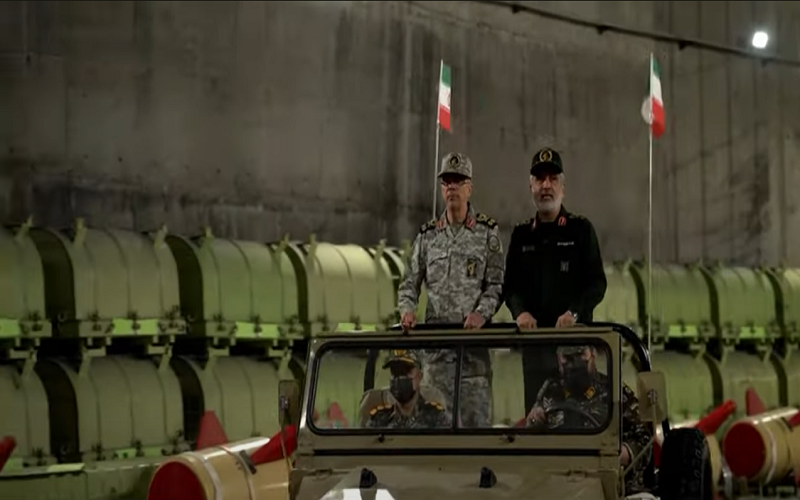

The latest Annual Threat Assessment of the U.S. Intelligence Community paints a stark picture of the Iranian regime’s ambitions and threats.
From its expanding military and nuclear capabilities to its cyber warfare and proxy conflicts, the regime remains one of the most destabilizing forces in the Middle East.
Despite its internal struggles, including economic decline and societal discontent, Tehran continues to pursue aggressive strategies to ensure its survival and expand its regional influence.
Given these realities, any policy of appeasement or further concessions risks emboldening a regime that has repeatedly demonstrated its willingness to use violence, terrorism, and repression to achieve its goals.
The Iranian Regime’s Expanding Threats
The Iranian regime’s strategic vision is centered around three key pillars: military expansion, regional influence through proxy forces, and diplomatic maneuvering to counter Western isolation efforts.
-
Military Capabilities and Proxy Network
The regime has the largest stockpile of missiles and UAVs in the region, which it uses both for deterrence and offensive operations. It continues to arm and support terrorist organizations and militant groups such as Hezbollah, Hamas, and the Houthis, maintaining a dangerous “Axis of Resistance” against Israel and Western allies. Iran’s direct and indirect attacks on Israel and U.S. forces in the region underscore its commitment to challenging the West through asymmetric warfare. -
Cyber Warfare and Malign Influence
The regime has ramped up its cyber capabilities, conducting aggressive operations targeting U.S. institutions, journalists, and political campaigns. Its cyber activities, coupled with influence operations, aim to manipulate public opinion, spread disinformation, and undermine democratic processes. -
International Maneuvering and Strategic Partnerships
Tehran has sought to strengthen its ties with key U.S. adversaries, particularly Russia and China. Military cooperation with Russia, including providing drones for its war in Ukraine, highlights the regime’s opportunistic foreign policy. Meanwhile, it continues to court China as an economic and political partner to mitigate the impact of sanctions.
The Dangers of Appeasement
Despite these threats, there are voices in the international community that advocate for engagement and concessions to the Iranian regime. However, history has shown that such an approach only emboldens the regime rather than moderates its behavior.
-
Strengthening the Regime’s Grip
Concessions, particularly in the form of sanctions relief, provide the regime with financial lifelines that it channels into military buildup and suppression of domestic dissent. Instead of addressing economic woes for its people, the regime prioritizes expanding its security apparatus and influence abroad. -
Encouraging Further Aggression
A lack of strong deterrence has often led the Iranian regime to escalate its hostilities. Past diplomatic overtures have not resulted in meaningful changes in Tehran’s behavior; rather, they have provided time and resources for the regime to advance its nuclear and military capabilities. -
Endangering Regional Stability
Weak policies toward the regime embolden its regional proxies, increasing violence across the Middle East. Hezbollah, Hamas, and the Houthis continue their attacks with the backing of Tehran, destabilizing Lebanon, Syria, Iraq, and Yemen. The risk of a wider regional war grows as long as the regime feels unchecked.
Conclusion
The Iranian regime is at one of its most fragile points in decades, facing internal unrest and external pressure. However, appeasement and concessions would not push it toward reform; instead, they would enable it to suppress its people further and expand its threats.
A firm and resolute policy, including sustained sanctions, support for opposition forces, and military deterrence, is necessary to curb the regime’s ambitions and prevent it from becoming an even greater threat to global security.
The time for half-measures has passed—only a strong, united stance against the regime’s aggression can ensure lasting stability in the region.