From Tehran’s Grand Bazaar to university campuses, Iran’s uprising signals the end of tolerance for both clerical rule and recycled authoritarian alternatives.
Iran’s recent protests were neither sudden nor accidental. The free fall of the national currency, explosive inflation, the destruction of purchasing power, mass bankruptcies among small businesses, chronic water and electricity shortages, and countless other livelihood crises merely acted as the trigger—a spark thrown into a warehouse of long-accumulated public rage.
Once again, Tehran’s Grand Bazaar, the historic heart of Iran’s economy and politics, assumed the role it has played at decisive moments in modern Iranian history: declaring the end of endurance.
The bazaar is not merely a marketplace. It is a repository of historical memory.
It was the bazaar that rose during the Constitutional Revolution.
It was the bazaar that shook the economic foundations of the monarchy in the years leading to its fall.
It was the bazaar that stood with the people during the protests of 2017, November 2019, and the 2022 uprising.
This time was no different.
From Prices to Power
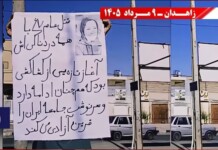
What began as a trade protest lasted only hours. Very quickly, slogans moved beyond the exchange rate and reached the root of the crisis. With striking clarity, protesters chanted:
- “Death to the dictator.”
- “Death to Khamenei.”
- “Death to the oppressor, whether Shah or Supreme Leader.”
This was a turning point. These slogans are not impulsive outbursts; they are the product of lived historical experience. They signal a society that refuses to let history be rewritten or dictatorship rebranded under a new face. The message is unmistakable: Iranians reject both the reproduction of clerical tyranny and the revival of monarchical nostalgia.
Manufactured Distractions
At precisely this moment, the scene became crowded with suspicious actors. Field evidence and numerous videos show that as chants calling for overthrow gained momentum, familiar figures—plainclothes agents, bearded Basij members, and security forces—began shouting diversionary slogans. The objective was clear: to fracture slogan unity, create noise, and drown out the chant of “Death to the dictator.”
But this was only one side of the operation.
The other side has been unfolding for years from outside Iran: a coordinated effort to sanitize the fallen monarchy and promote the former Shah’s son as an alternative. This project lacks social base, street presence, and any record of struggle. Its tools are well known:
- Fabricated video clips
- Manipulated audio overlays
- Fake social media accounts
- Media outlets tasked with hijacking a popular uprising
Exposure of a Digital Mirage
The scale of this operation was exposed when data analysis on the platform X revealed that a large share of accounts claiming to support Reza Pahlavi were not based inside Iran, were tied to organized cyber networks, or were directly connected to Iran’s regime IRGC and security institutions. A movement that claims to represent the people, yet survives online through fake accounts, exposes its own emptiness.
Likewise, the role of certain reactionary and colonial media outlets is nothing new. In every genuine uprising, their pattern remains consistent:
- Censoring anti-dictatorship slogans
- Inflating marginal figures
- Attempting to impose artificial, imported leaderships
Reality Versus Fabrication
Yet reality is more resilient than these journalistic games. A movement that starts with bread and advances toward overthrow cannot be stopped by montage and deception. Its strength does not come from media narratives or foreign money, but from a deeply rooted, organized resistance that has paid the highest price.
The uprising is not fading—it is intensifying. Iran’s streets are now filled with a generation that arrives empty-handed but armed with iron determination. Young people with nothing left to lose confront repression without hesitation. This is no longer cautious protest; it is a battle of wills.
Students at the Center
At the heart of this uprising stand revolutionary students, particularly female students, whose courage has become emblematic. Despite brutal assaults by security forces on university dormitories, batons, pellet guns, arrests, and threats have failed to strip universities of their historic role as strongholds of freedom.
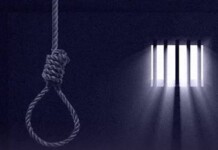
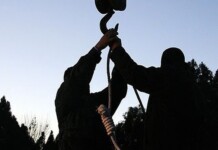
All this unfolds while the regime—often described by activists as an “execution state”—has carried out more than 2,200 executions in 2025 alone. Yet a society that has reached the point of explosion no longer fears the gallows. Fear has changed camps. Today, it is the regime that fears youth, women, students, and the streets.
A Resistance That Could Not Be Erased
For nearly six decades, successive generations of Iran’s finest sons and daughters have stood in the ranks of resistance. Prison, torture, execution, exile, and war failed to eliminate this current. Today, resistance units, the organized resistance network, and the broader movement have become material forces within society, not television projects.
That is why the regime is afraid.
That is why external powers are uneasy.
That is why diversionary projects are deployed with such intensity.
No Return
History follows its own laws. When a society reaches this level of awareness—when the chant “Death to the oppressor, whether Shah or Supreme Leader” becomes the dominant voice of the streets—there is no path backward.
Clerical reaction is on its way out.
Monarchical reaction has no path back.
And a secular, democratic republic is no longer a dream, but a concrete demand of a people who have already paid its cost.
Iran is undergoing its final passage. And this passage has no return.