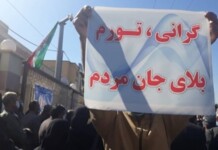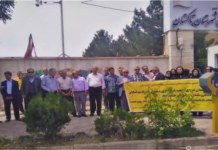
Paris, May 17, 2025 — A major international conference held in Paris brought together lawmakers and political figures from across Europe and North America to call for a new and assertive international approach toward Iran. Attendees included representatives from the United Kingdom, Canada, Ireland, Malta, Switzerland, Romania, Portugal, and the Netherlands. The event underscored growing support for the National Council of Resistance of Iran (NCRI) as a viable democratic alternative to the current regime in Tehran.
Maryam Rajavi: Regime Change Is the Solution
Maryam Rajavi, President-elect of the NCRI, delivered the keynote address, welcoming international delegates and praising their continued support for democratic change in Iran. She sharply criticized four decades of Western appeasement toward Tehran, asserting that such policies have only enabled the regime’s survival.
Calling Iran’s rulers “the source of terrorism and warmongering in the region,” Rajavi argued that the regime’s internal repression, nuclear ambitions, and regional interference are fundamental to its existence and will not be abandoned voluntarily. She voiced confidence in the Iranian people and the organized Resistance, stressing that “the real solution is the overthrow of the regime by the people of Iran and the Iranian Resistance.”
Speech at the #FreeIran2025 Conference – Onward to a Democratic Republic
“This regime has taken the freedom of the Iranian people, the peace of the Middle East, and the security of the world hostage.”
Our plan is to establish a republic based on the separation of religion and… pic.twitter.com/7RpdepOK1b— Maryam Rajavi (@Maryam_Rajavi) May 17, 2025
Presenting the NCRI and its main component, the People’s Mojahedin Organization of Iran (PMOI/MEK), as a democratic alternative, Rajavi promoted her Ten-Point Plan for a future Iranian republic based on secularism, gender equality, and a non-nuclear policy. She urged European governments to designate the Islamic Revolutionary Guard Corps (IRGC) as a terrorist entity, re-activate the UN Security Council’s snapback mechanism, and recognize the legitimacy of young Iranians resisting the IRGC.
UK Delegation Backs NCRI’s Vision
A prominent delegation from the UK expressed strong parliamentary support for the NCRI. Conservative MP Bob Blackman, Chair of the 1922 Committee, read a statement backed by 560 British lawmakers urging a shift in policy. “We must stand with the Iranian people and the organized resistance, led by Maryam Rajavi and her Ten-Point Plan,” he declared, presenting a book signed by over 190 MPs. Blackman also cited a recent foiled terrorist plot in the UK as further reason to proscribe the IRGC.
Former Cabinet Minister David Jones highlighted the NCRI’s role in exposing Iran’s secret nuclear program and criticized decades of failed diplomacy. He warned that Iran now possesses enough uranium for multiple nuclear weapons and urged the UK, Germany, and France to trigger the JCPOA snapback mechanism immediately.
Baroness O’Loan condemned the regime’s repression of women and praised Rajavi’s Ten-Point Plan as a roadmap for freedom. She noted that over 330 members of the House of Lords had endorsed the parliamentary statement and called on the UK to formally proscribe the IRGC.
Former MP Mark Williams emphasized the Iranian people’s rejection of both monarchical and religious dictatorship. Praising Rajavi’s leadership, he said, “When the history of Iran’s future democratic republic is written, it will record how you and Masoud Rajavi organized, led the cause, led dissent, led a determined resistance, and built a viable democratic alternative.”
William Powell, member of the Welsh Assembly, urged international recognition of the NCRI’s provisional government. “What unites us in this room today is a belief that Iran will soon be free—based on Madam Rajavi and the Ten-Point Plan,” he said.
Former MP Martyn Day decried Iran’s use of the death penalty as “state sanctioned terror” and praised the courage of Resistance Units and women activists. He advocated for a principled foreign policy rooted in support for the NCRI and called for an international tribunal to address regime crimes.
MP Martin Vickers added his voice in support of the Ten-Point Plan, stating, “If we keep up the pressure, we will secure democracy and freedom in Iran.”
Lord Dholakia, a long-standing supporter of the Iranian opposition, cited UK parliamentary testimony about regime threats against resistance members and urged the UK government to refer Iran’s human rights violations to the UN Security Council.
European and Canadian Lawmakers Voice Strong Support
Romania’s first post-communist Prime Minister, Petre Roman, reflected on the 1989 revolution in his country, comparing it to Iran’s ongoing struggle. “In 1989, we rose against dictatorship—and won. The same will happen in Iran,” he said. Roman described Iran’s regime as locked in an “unsolvable dilemma” and affirmed that a free Iran is being prepared “under the leadership of president Rajavi.”
From Canada, MP Judy Sgro acknowledged the NCRI’s role in revealing the Iranian regime’s global criminal activities. “You’re talking about saving thousands of lives,” she said. Sgro supported the Ten-Point Plan and Canada’s earlier designation of the IRGC as a terrorist organization, encouraging others to follow suit.
Malta’s MP Janice Chetcuti praised the bravery of Iranian women and PMOI-led Resistance Units, describing the struggle as a shared global effort for freedom and justice. “President Rajavi, we are with you with all our hearts,” she declared.
Canadian Senator Michael L. MacDonald condemned the regime’s mass executions—over 1,145 in just eight months—and praised the resistance of political prisoners. He expressed strong support for the NCRI and the Ten-Point Plan.
Irish MP Peter Cleere called for international recognition of the NCRI and designation of the IRGC as a terrorist group. He praised the Iranian people’s courage and said, “True change must come from empowering Iranians themselves.”
Senator Gerard Craughwell described the regime as one that rules through fear and violence, noting over 1,100 executions since the previous summer. He praised Rajavi’s Ten-Point Plan, calling it “a Ten-Point Plan that any democracy would be proud to use as a bedrock,” and urged the EU to move beyond dialogue and toward decisive action.
Ivan J. Bartolo, MP from Malta, recounted his visit to Ashraf 3, calling it transformative. He condemned mass executions as signs of regime fear and demanded an end to appeasement. “The NCRI is the only viable democratic alternative grounded in Iranian values,” he said.
Irish MP James O’Connor denounced the regime’s nuclear threats and declared, “The regime in Tehran cannot be trusted.” He called on the EU to engage with the NCRI, adding that the Ten-Point Plan “offers a real path to freedom, to unity, and to the peaceful transfer of power.”
Conclusion: A Global Call for a Free Iran
The #FreeIran2025 conference in Paris signaled growing international momentum behind the Iranian resistance movement. Across party lines and national borders, political leaders condemned the regime’s human rights abuses, nuclear ambitions, and regional aggression, while urging the designation of the IRGC as a terrorist organization.
Maryam Rajavi’s Ten-Point Plan emerged as a unifying vision for a future Iran—one rooted in secular democracy, equal rights, and peaceful coexistence. The event highlighted a clear shift in global attitudes and a deepening commitment to stand with the Iranian people in their pursuit of freedom, justice, and lasting democratic change.