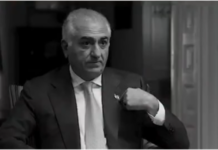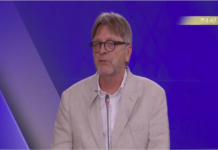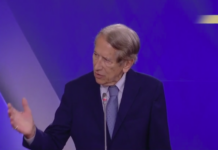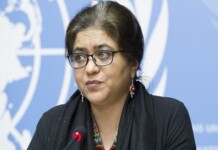
Supporters of the Iranian Resistance gather to call for the release of political prisoners and international pressure on the regime
Supporters of the Iranian Resistance gathered in Paris on March 7, 2026, in a demonstration expressing solidarity with the Iranian people and their ongoing struggle for freedom and democracy. The rally brought together freedom-loving Iranians and supporters of democratic change who called for stronger international pressure on Tehran and voiced support for the Iranian people’s right to determine their own future.
In a message to the gathering, Maryam Rajavi addressed participants and outlined what she described as the historical direction of Iran’s political transformation. She stated:
“The course and direction of Iran’s transformation can be summed up in a single sentence: No return to the past, no stagnation in the present, but a leap toward a free, democratic, and advanced future.”
Rajavi also drew attention to the continuing repression inside Iran, noting that thousands of political prisoners remain behind bars. She emphasized that many of those arrested during the January uprising are still in detention.
“At present, thousands of political prisoners, and tens of thousands of those who rose up in the January uprising, remain in captivity,” she said.
Calling for international action, Rajavi urged governments around the world to increase pressure on the Iranian authorities.
“We urge all governments to place this regime under pressure to release political prisoners, end the shutdown of the internet, and halt the executions. They must close the regime’s embassies and recognize the struggle of the Iranian people and the resistance units against the revolutionary guard corps (IRGC) for the overthrow of the regime.”
At present, thousands of political prisoners, and tens of thousands of those who rose up in the January uprising, remain in captivity.
We urge all governments to place this regime under pressure to release political prisoners, end the shutdown of the internet, and halt the… pic.twitter.com/St1T1x14MI— Maryam Rajavi (@Maryam_Rajavi) March 7, 2026
A Critical Moment for Iran
Speakers at the rally emphasized that Iran is currently passing through one of the most sensitive and decisive periods in its contemporary history. After nearly five decades of clerical rule, many participants argued that the country faces a turning point.
They pointed to the record of repression, executions, corruption, and economic devastation that has marked the rule of the clerical establishment since the 1979 revolution. According to speakers at the rally, the scale of destruction inflicted on Iran’s society, economy, and natural resources over the past decades has been unprecedented in the country’s history.
Despite these conditions, participants highlighted what they described as a clear and practical alternative put forward by the Iranian Resistance. This alternative, they argued, relies on the power of the Iranian people and their organized resistance to bring about the overthrow of the ruling system and the establishment of a democratic republic.
Iran After Decades of Religious Rule
Since the 1979 revolution, Iran has been governed under a religious system based on the doctrine of Velayat-e Faqih, or rule of the supreme jurist. After the death of Ayatollah Ruhollah Khomeini, Ali Khamenei assumed the position of Supreme Leader and continued the structure of clerical rule, which critics say has relied on repression and the suppression of basic freedoms.
Speakers at the rally suggested that the death of Khamenei represents the end of an important chapter in the history of the Islamic Republic. However, they stressed that the regime’s political and security structures still remain in place.
While key figures of the leadership have disappeared from the scene, the apparatus of repression continues to operate. As a result, many observers describe the current moment as a period of transition in which new political possibilities may emerge.
Participants also emphasized that Iran’s future cannot be determined through foreign intervention.
According to speakers at the rally, neither military strikes nor external intervention can bring freedom to Iran. Instead, they argued that the responsibility for shaping the country’s future rests with the Iranian people themselves.
Freedom Must Be Won
The rally highlighted the belief that freedom cannot be imposed from outside or granted as a gift. Rather, it must be achieved through the determination and sacrifice of the people who demand it.
Participants expressed solidarity with those inside Iran who have risked their lives in protests and uprisings. They argued that the Iranian people have earned the right to determine their own political future through their struggle.
Slogans heard during demonstrations inside Iran in recent years have rejected both clerical rule and the restoration of monarchy. Speakers echoed these sentiments in Paris, emphasizing that the Iranian people seek a democratic system based on popular sovereignty rather than any form of dictatorship.
Rejecting All Forms of Dictatorship
Participants also rejected attempts to portray a return to monarchy as a viable alternative for Iran. According to speakers at the rally, efforts to revive the legacy of the former Shah represent a step backward rather than a solution to the country’s current crisis.
They stressed that the movement for freedom in Iran draws a clear line against both religious authoritarianism and monarchical dictatorship.
As chants heard in protests inside Iran have repeatedly expressed: the future of the country lies in rejecting both forms of authoritarian rule.
For supporters of the Iranian Resistance gathered in Paris, the message was clear: Iran stands at a historic crossroads, and the decisive force shaping its future will ultimately be the will of the Iranian people and their organized struggle for freedom and democracy.