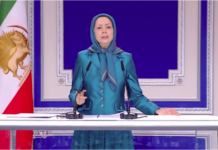
In a strong show of bipartisan unity, a majority in the U.S. House of Representatives has endorsed House Resolution 166, supporting Maryam Rajavi’s 10-point plan for a free and democratic Iran. The resolution, spearheaded by Reps. Tom McClintock (R-CA) and Brad Sherman (D-CA), marks a significant political moment in Washington’s stance toward the Iranian opposition movement.
A Unified Voice Against Tyranny
HR 166 affirms the legitimacy of Iran’s pro-democracy movement, particularly the courageous “rebellious youths” and the organized network of resistance units associated with the People’s Mojahedin Organization of Iran (MEK). These groups are at the forefront of confronting the regime’s repressive security apparatus, especially the Islamic Revolutionary Guard Corps (IRGC).
What distinguishes this resolution is its cross-party support. From Kansas, for instance, Republican Rep. Derek Schmidt and Democratic Rep. Sharice Davids are among the co-sponsors, reflecting a shared recognition that Iran’s future must be shaped by its people—not dictated by the clerical regime.
📢 #BREAKING: A Bipartisan Majority Supports U.S. House Resolution 166, affirming support for the Iranian people’s desire for a secular, democratic republic and condemning the regime’s terrorism & repression. 👇 https://t.co/PHCUXkGXZv
— NCRI-U.S. Rep Office (@NCRIUS) May 13, 2025
Change from Within the People
Lawmakers appear deeply attuned to the evolving dynamics inside Iran. Since 2017, the country has witnessed a series of mass uprisings, with the most recent wave in September 2022 clearly signaling a national appetite for systemic change. Iranians, as the resolution suggests, are not interested in superficial reforms but are demanding a complete break from the theocratic regime.
Bringing down a regime that is the world’s leading state sponsor of terrorism is no small feat. It requires a robust, organized resistance movement capable of both mobilizing the population and protecting them in the face of violent crackdowns. This change must be led by a credible and structured alternative with a proven track record, unwavering commitment, and strong grassroots support both inside and outside Iran.
Maryam Rajavi and the Democratic Alternative
That alternative exists. It is led by Maryam Rajavi, the president-elect of the National Council of Resistance of Iran (NCRI). Her 10-point plan envisions a secular, democratic, and non-nuclear Iran founded on gender equality, religious freedom, and the separation of religion and state.
The ruling clerics in Tehran are well aware of the threat posed by a viable opposition. For over three decades, they have attempted to neutralize the NCRI by promoting the illusion of reform through regime insiders. But the Iranian people have seen through this deception, especially in light of the brutal crackdowns during recent uprisings. Calls for reform have lost all credibility, shifting attention instead to real alternatives outside the regime’s structure.
Exposing Propaganda and Phony Alternatives
H.Res. 166 directly challenges the Iranian regime’s disinformation campaign. Through its cyber-army and foreign proxies, Tehran has attempted to mislead the international community by elevating figures from the defunct monarchy as alternatives. The resolution makes it clear that Iranians reject both the Shah’s dictatorship and the rule of the mullahs.

Echoing this sentiment, former U.S. Secretary of State Mike Pompeo stated on October 6, 2023, “Iran will never return to the dictatorship of the Shah. The remnants of the past monarchy failed to gain any traction during the uprising over the past year. Shah’s supporters were exposed for heavily relying on collaboration with IRGC.”
A Call for Engagement
Ultimately, HR 166 calls for a shift in U.S. policy—one that includes open dialogue with Maryam Rajavi and the NCRI regarding the transitional future of Iran after the fall of the regime. Such engagement would not only affirm the aspirations of millions of Iranians but also send a powerful message: that the United States stands with the people of Iran in their pursuit of freedom, democracy, and national sovereignty.