



Since the 1979 Iranian Revolution, the Iranian regime has systematically expanded its network of allied representatives and proxies across the Middle East. Over the years, this strategy has yielded some success, allowing Tehran’s so-called “axis of resistance” to entrench itself in Iraq, Lebanon, Syria, and Yemen.
In September 2014, Iranian-backed Houthi militias seized control of Yemen’s largest city. Shortly thereafter, an Iranian MP boasted that his country effectively controlled four Arab capitals: Baghdad, Beirut, Damascus, and Sanaa. However, the events of the past year have significantly altered the regional balance of power. Today, Tehran has largely lost control over two of these four capitals, and Hezbollah’s weakened position in Lebanon further threatens its hold on the region. Additionally, in December, opposition forces wrested control of Damascus from the Assad regime, an Iranian ally that had ruled Syria for half a century. Now, the Iranian regime fears a continuation of this domino effect.
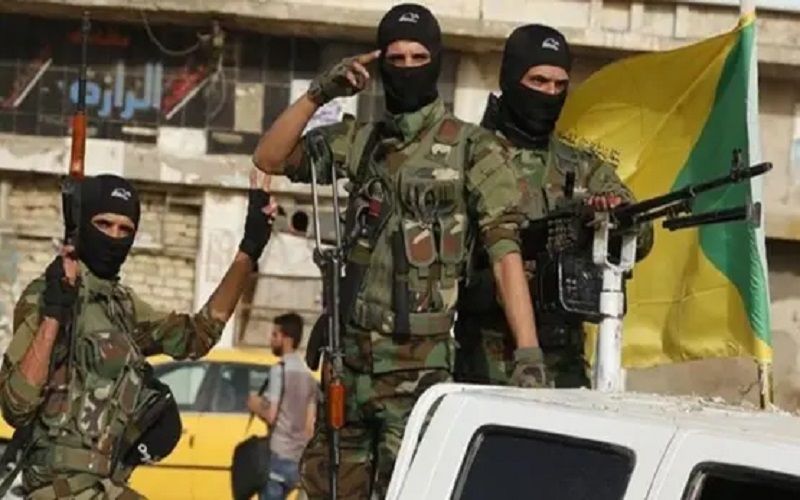
Iraq appears to be the most likely candidate for the next major shift. Unlike the Houthis in Yemen, Tehran’s proxies in Iraq do not seem as willing or prepared to engage in direct confrontation. Throughout 2024, Iran-backed Iraqi militias launched multiple attacks on U.S. targets, killing three American soldiers in a drone strike in March. Yet, they have refrained from any further attacks since early December—perhaps a strategic decision to avoid provoking Washington’s retaliation at a precarious time.
Meanwhile, Iraqi politicians appear unusually keen to appease the United States. In late January, Prime Minister Mohammed Shia’ Al-Sudani’s government—despite its close ties to Tehran—made three significant concessions to Washington. These included lifting an arrest warrant for former U.S. President Donald Trump over the 2020 killing of Qasem Soleimani and Abu Mahdi al-Muhandis, agreeing to the release of Elizabeth Tsurkov, a Princeton researcher held hostage by the Tehran-backed Kataib Hezbollah militia, and approving a budget amendment long sought by Iraq’s Kurdish population, the segment of Iraqi society with the closest ties to the U.S. government. These moves suggest that Iran’s allies in Iraq feel increasingly vulnerable.
Losing influence in Iraq would deal a severe financial blow to the Iranian regime. Iraq is a vital economic lifeline for Tehran, serving as a key conduit for circumventing international sanctions. As the world’s fifth-largest oil producer and a country free from sanctions on oil exports, Iraq provides critical funding to Iran’s Revolutionary Guard Corps, its regional proxies, Lebanon’s Hezbollah, and even the Houthis in Yemen. Given the mounting financial strain on the Iranian regime—marked by a depreciating currency and skyrocketing prices for essential goods—its reliance on Iraq has never been greater.
Beyond financial considerations, maintaining control in Iraq is crucial for the Iranian regime for symbolic and strategic reasons. The loss of influence in two Arab capitals has already dealt a significant blow to Tehran’s regional ambitions. From the regime’s perspective, losing Iraq—a country with deep geographical and cultural ties to Iran—would be catastrophic. It could also trigger further instability within Iran itself, emboldening domestic opposition and weakening the regime’s hold on power.
As regional dynamics continue to shift, Iraq may well become the next battleground in Tehran’s struggle to maintain its influence. The outcome will not only shape the future of Iranian expansionism but also determine whether Iraq can finally break free from decades of foreign interference and establish a more independent and stable future for its people.