


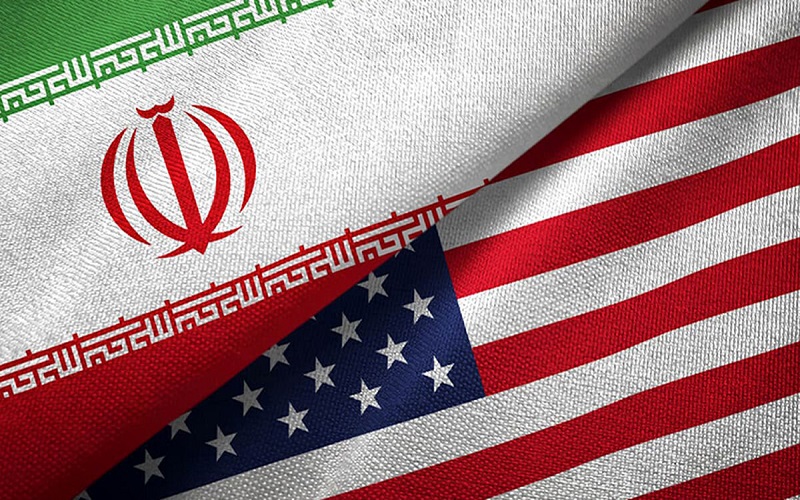

The cancellation of the fourth round of nuclear negotiations between the Iranian regime and the United States has not only frozen diplomatic progress but has also escalated tensions between officials on both sides. What began as an effort to return to the negotiating table has devolved into an intensifying war of words, raising questions about the viability of future talks and the possibility of deeper conflict.
At the heart of the current impasse lies a fundamental disagreement over uranium enrichment on Iranian soil. The U.S., under the Trump administration and spearheaded by Secretary of State Marco Rubio—who also serves as National Security Advisor—has taken an uncompromising stance. Washington demands a complete halt to domestic enrichment, even at low levels (under four percent), insisting that Iran’s regime must import nuclear fuel for civilian energy needs. In addition, the U.S. seeks to curb Tehran’s ballistic missile program and end its support for regional proxy militias.
In contrast, Iranian regime officials, particularly deputy foreign minister Abbas Araghchi, continue to frame uranium enrichment as a sovereign right under the Non-Proliferation Treaty (NPT). For the regime, enrichment is not only a technical issue but also a matter of regime pride and political legitimacy. Backing down would be seen internally as a sign of weakness—something Iran regime’s Supreme Leader, Ali Khamenei, has traditionally refused to accept in public discourse.
The U.S.’s insistence on a zero-enrichment policy stems from Iran regime’s record of non-compliance. The regime has repeatedly violated past agreements, with International Atomic Energy Agency (IAEA) reports indicating enrichment levels reaching 60 percent, and in some cases, evidence suggesting even higher levels—approaching the threshold needed for nuclear weapons. These actions have eroded international trust and cast doubt on the peaceful nature of Iran regime’s nuclear ambitions.
Complicating matters further, the IAEA is working to complete a comprehensive assessment of Iran regime’s nuclear activities, but the regime continues to deny inspectors full access to key sites. Without transparency, efforts to verify Iran regime’s compliance—or even the scope of its nuclear program—remain undermined.
Marco Rubio has made it clear that even limited enrichment poses an unacceptable risk, arguing that the regime has previously exploited such allowances. This hardline position reflects the Trump administration’s desire to distance itself from the Obama-era Joint Comprehensive Plan of Action (JCPOA), which permitted limited enrichment under strict monitoring. Any perceived return to that framework would be politically costly for Trump, who has staked much of his foreign policy legacy on a tougher approach toward Iran.
Despite his usual rhetoric, Khamenei has recently hinted at the possibility of a temporary tactical retreat. Drawing a historical parallel with the peace treaty between the second Shiite Imam and Mu’awiya, he has signaled that limited concessions could be made—though only as a strategic maneuver, not a genuine shift in policy. This opens the door, at least hypothetically, to a conditional agreement.
Reports suggest the Iranian regime may be willing to reduce enrichment levels to below 4 percent, but it remains adamant about retaining the right to enrich altogether. The Trump administration, meanwhile, has yet to decide whether it will accept such a compromise.
Should Trump determine that a deal is necessary—particularly in the early phase of a potential second term—he may opt to allow minimal enrichment under strict controls. If not, the burden of decision shifts to Tehran, where Khamenei must weigh whether maintaining the regime’s symbolic stance on enrichment is worth continued economic isolation.
Both sides face significant domestic pressure. Iran’s regime is grappling with a deepening economic crisis and growing public dissatisfaction. In the U.S., Trump is under pressure to demonstrate foreign policy success. These parallel pressures could incentivize a deal—but only if each side is willing to offer meaningful concessions.
Some observers speculate that Khamenei may be contemplating a broader policy pivot, one that might include inviting American oil companies back to Iran and reestablishing economic ties. However, such a strategic shift is not supported by current evidence. The regime’s official discourse remains virulently anti-American, and there are no signs of a willingness to normalize diplomatic relations.
For now, the nuclear talks are at a precarious crossroads. The key obstacle is no longer peripheral issues like missile development or regional influence, but the core question of uranium enrichment. Unless this fundamental disagreement is addressed, the prospects for a durable agreement remain dim.