Officials renew calls for a “National Information Network” to replace global access, citing “security threats” and “war conditions.”
In the face of growing public resistance and mounting online criticism, the Iranian regime continues to treat the Internet as a direct threat to its control. For years, regime authorities have regarded cyberspace with suspicion, seeing it as a battleground where censorship is challenged and information flows freely beyond their grasp.
Majid Khademi, head of the IRGC’s intelligence organization, recently renewed the call for tighter internet controls. Linking Israel’s June attack on the regime to what he described as “intelligence deception,” Khademi urged the regime’s parliament to expedite the long-delayed “National Information Network” — a domestic intranet designed to cut off Iranians from the global web.
Speaking at the 40th anniversary of former IRGC intelligence chief Mohammad Kazemi’s death, Khademi argued that satellite networks spread “enemy ideas” with ease. He insisted that no country should “abandon cyberspace” the way the Iranian regime allegedly has, ignoring the fact that his proposal would effectively abandon the global Internet in favor of state-controlled isolation.
Internet Restrictions During the 12-Day War
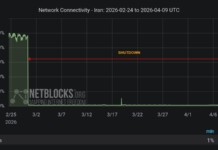
During the recent 12-day war between the Iranian regime and Israel, authorities blocked international internet access entirely, forcing all traffic through the “national network.” While the blockade was lifted after the conflict, many citizens report that the quality of service remains poor.
Multiple regime figures are now openly advocating for a permanent shutdown of global internet access. Communications Minister Sattar Hashemi defended recent GPS disruptions as “protecting people’s lives” under “war conditions.”
Fatemeh Mohajerani, the regime’s spokesperson, claimed that the public “accepted” the wartime internet restrictions — a statement critics say ignores the fact that citizens had no choice. She further alleged that foreign intelligence agencies recruit operatives through advertisements on VPNs, a claim consistent with the regime’s habit of fabricating external threats to justify repression.
Orders from the Supreme Leader
Iran regime’s Supreme Leader has long dictated the regime’s internet policy. On November 15, 2020, the state-run Tasnim News Agency emphasized that cyberspace is one of the “most important problems” for the Iranian regime, quoting the Supreme Leader’s insistence on launching a national information network. Tasnim reported that after 15 years, this demand remains unmet — something the Supreme Leader has publicly criticized.
Iran’s Global Internet Ranking
The latest Iran Internet Quality Report, published by the Tehran E-Commerce Association, ranked the country 97th out of 100 in terms of quality. In restrictions and censorship, Iran ranked 99th — just ahead of China. The report describes Iranian internet as slow, unreliable, and heavily filtered. Despite this, regime leaders are pushing for even more severe limitations.
A Plan to Seal the Digital Borders
The proposed National Information Network would sharply curtail Iranians’ access to the global web, giving authorities unprecedented control over information. Its true purpose is not to improve infrastructure but to intensify censorship, limit the free flow of ideas, and suppress dissent.
For Khademi and other security officials, the internet is less a tool for progress than a weapon in the hands of their enemies. Their vision is one of pervasive filtering, degraded service, and isolation from the outside world — policies that would further entrench Iran’s technological and political backwardness.