


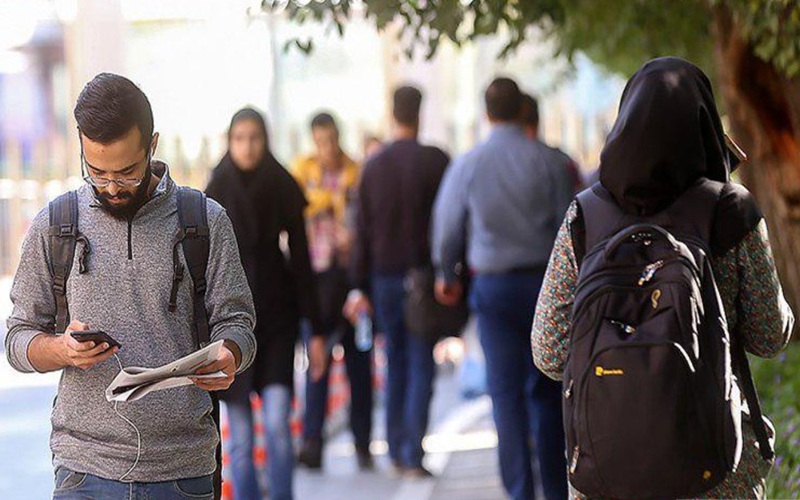

Official statistics hide mass joblessness, poor job quality, and a shrinking workforce amid economic despair.
The Iranian regime is touting its lowest unemployment rate in two decades — just 7.3 percent in spring 2025, according to the Statistical Center of Iran. At first glance, this could suggest a healthier labor market. But a closer examination of the numbers shows that this decline has little to do with job creation and much to do with statistical manipulation, misleading definitions, and the exclusion of millions from the workforce count.
Numbers That Hide the Reality
Official data claims that 25.12 million people aged 15 and above were employed in spring 2025, an increase of 377,000 from the previous year. The economic participation rate — the share of working-age people who are employed or actively seeking work — remained unchanged at 41.2 percent.
But behind these figures lies a troubling fact: the economically inactive population grew by 510,000, reaching 38.74 million. This means more than half of Iran’s working-age population — 58 percent — is not counted in the labor force at all.
Macroeconomic analyst Mohammad Taqi Fayyazi warns that if these “discouraged workers” were included, the true unemployment rate could reach 45 percent — representing over 22 million people without work.
📌 Methodology Note
The official unemployment rate of 7.3% in spring 2025 is calculated using the International Labour Organization (ILO) definition, which only counts people without a job who are actively looking for work. This excludes millions of “economically inactive” people who have given up searching due to lack of opportunities.
By contrast, the expert-adjusted figure of around 45% treats all jobless people — whether they are searching or not — as unemployed. This broader definition captures discouraged workers and better reflects the scale of economic despair in Iran.
The Problem with Definitions
One major flaw lies in how the regime defines “employment.” Following the International Labour Organization (ILO) standard, anyone who works at least one hour per week — even without pay — is considered employed. In Iran’s current economic reality, where the cost of living has soared, this definition is deeply misleading. It includes people in unstable, low-paid, or informal work that cannot sustain even basic living costs.
Rising Despair and Shrinking Opportunity
The swelling ranks of the economically inactive reflect widespread despair about finding decent jobs, especially among young people and women. Official figures show:
- Youth unemployment (15–24): 19.7%
- Unemployment among 18–35 age group: 14.5%
- Educated women’s unemployment: up to 71% in some regions
These numbers point to structural barriers and discrimination in the labor market, which push many to give up looking for work entirely.
Underemployment and Overwork
Even among those officially employed, job quality is poor. In spring 2025:
- 6.6% were underemployed — working less than 44 hours a week but wanting more work.
- 40.1% worked more than 49 hours a week, a sign of economic pressure to take on excessive hours just to survive.
- 52.4% of all jobs were in low-wage, low-skill service sectors, with little investment in manufacturing or industry — sectors that could provide stable, well-paying work.
Economic Policies Driving the Crisis
Economist Hossein Raghfar, aligned with the regime, points to decades of privatization and market liberalization policies that have reduced the state’s social responsibilities and shifted the economy toward speculative, non-productive activities. These policies have weakened demand for skilled labor, fueled elite migration — especially in medicine and technology — and suppressed wages for over 30 years.
Wage stagnation has also driven skilled workers to seek jobs abroad, particularly in neighboring countries, draining Iran of valuable human capital.
A Social Time Bomb
The decline in women’s participation and the growth of the economically inactive population represent a massive loss of talent and potential. The NEET population (youth not in employment, education, or training) makes up 15–26 percent of 15–24-year-olds, signaling a breakdown in both the education system and job creation.
This idle generation is more vulnerable to poverty, crime, and social instability. Without opportunities, many are driven toward destructive paths — a development that threatens long-term social cohesion.
Statistics vs. Reality
The regime’s narrative of a falling unemployment rate is a statistical illusion. By relying on unrealistic definitions, ignoring the inactive population, and counting precarious work as employment, the authorities are masking the severity of the crisis.
Iran’s labor market suffers from deep structural weaknesses: poor job quality, economic instability, a shrinking productive sector, and entrenched discrimination. Without tackling these root causes — and without transparent, accurate data — any claim of improvement remains a political façade.