


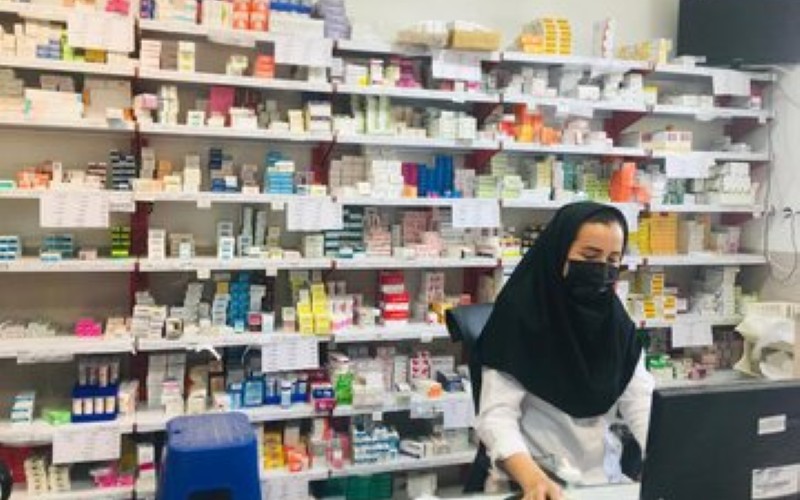

Soaring prices, empty pharmacy shelves, and unpaid debts expose a systemic failure rooted in mismanagement and militarized spending.
While officials in Masoud Pezeshkian’s government repeatedly cite “budget deficits” and “resource shortages,” Iran’s healthcare system is facing one of the most severe pharmaceutical crises in decades. The scale of the disaster is no longer confined to official statistics; it is visible in overcrowded pharmacies, skyrocketing prices of life-saving medicines, mass bankruptcies among drugstores, and interrupted treatments for patients with thalassemia, diabetes, cancer, and rare diseases.
Industry insiders warn that the final months of the Iranian year will be exceptionally difficult for the pharmaceutical sector. According to assessments shared by senior figures in the health economy, the current crisis is not a sudden shock but the culmination of years of structural mismanagement. Chronic shortages of working capital, delayed and distorted pricing policies, accumulated debts, and dysfunctional currency allocation mechanisms have now reached a breaking point, producing shortages described even by veteran professionals as unprecedented.
A System Designed to Fail
At the core of the crisis lies a deeply flawed administrative structure. Pharmaceutical companies reportedly paid the required domestic currency months ago to import raw materials, and official approvals for foreign currency allocation were issued. However, state-linked intermediary entities failed to transfer funds to foreign suppliers. The result was predictable: raw materials were never delivered, production lines slowed or stopped, and pharmacy shelves began to empty.
This dysfunction extends beyond medicines to medical equipment. Manufacturers and importers remain trapped in endless bureaucratic loops between the Central Bank and the regime’s Ministry of Health, unable to determine why allocated funds never reach their destination. Meanwhile, accumulated unpaid claims have reached staggering levels. More than 150 trillion tomans in unpaid obligations to pharmaceutical companies—owed by the government, insurance organizations, hospitals, and pharmacies—have effectively consumed half of the sector’s total cash flow.
Silent Policy Shocks, Loud Human Consequences
Amid this fragile situation, the quiet removal of preferential currency support for imported medicines for patients with special diseases delivered another blow. Patient associations report that prices for certain essential drugs have increased between fourfold and twelvefold. Since the vast majority of thalassemia patients come from low-income households, many families are now unable to continue treatment.
In some cases, families have reportedly resorted to selling organs such as kidneys or corneas to finance only a few cycles of medication. This stark reality highlights the depth of collapse in a healthcare system operating within a state that simultaneously boasts of regional military and missile superiority.
Patients with rare diseases have also been hit hard. Reports indicate that the price of critical medications, such as those used to treat cystinosis, has surged from hundreds of thousands of tomans to tens of millions. When patients and families gathered to protest these price hikes in mid-Azar (Persian Calendar), they were met not with relief or dialogue, but with police intervention.
Empty Shelves, Desperate Choices
Field reports confirm widespread shortages of antibiotics, psychiatric medications, diabetes drugs, and even cardiovascular treatments. In major pharmacies, limited supplies reportedly sell out within hours. In neighborhood pharmacies, the crisis takes a different form: patients attempt to reduce costs by removing parts of their prescriptions, skipping mental health medications, supplements, or entire antibiotic courses.
For many elderly patients, the situation is even more humiliating. Observers describe seniors standing outside pharmacies with prescriptions in hand, hoping a passerby might help cover the cost. Treatment in Iran has increasingly become a matter of financial status rather than medical need.
Insurance Collapse and Chain Bankruptcy
Official data indicate that insurance institutions are drowning in debt. The Social Security Organization alone reportedly carries liabilities approaching one thousand trillion tomans. Outstanding debts to pharmacies and medical centers continue to grow, while delayed reimbursements have already pushed roughly 3,000 pharmacies into bankruptcy over recent years.
This domino effect has eroded the entire pharmaceutical supply chain. Delayed payments weaken manufacturers, bankrupt pharmacies, disrupt distribution, and ultimately deny patients access to care.
Not a Shortage—A Structural Breakdown
Although officials habitually deflect responsibility by citing external pressures, the pharmaceutical crisis cannot be reduced to external limitations. The deeper cause lies in the regime’s own policy choices. Massive public resources have been diverted toward regional interventions, military expansion, missile programs, and ideological projects, hollowing out the state’s ability to support vital civilian sectors.
Recent disclosures about substantial financial support provided to allied regional forces underscore this contradiction. For ordinary Iranians, the question is unavoidable: if the state truly faces severe budget shortfalls, how are such vast sums mobilized—while hospitals lack medicines and patients are forced to abandon treatment?
The cost of nuclear ambitions, missile development, and regional power projection has consumed billions in public funds. Had even a fraction of these resources been directed toward healthcare, patients with cancer, thalassemia, and rare diseases would not be forced to choose between treatment and survival.
A Warning of What Lies Ahead
Experts warn that shortages will worsen in the coming months, with regime lawmakers acknowledging that the list of unavailable medicines continues to grow. The status of Iran’s strategic drug reserves remains unclear, raising serious concerns about the system’s resilience in the event of further internal or regional shocks.
Iran’s drug crisis has moved far beyond a temporary shortage or a technical funding problem. It is a symptom of a broader economic and institutional collapse driven by ideological priorities and militarized governance. The erosion of insurance systems, public trust, and state capacity has transformed healthcare into a class-based privilege.
Today, more than ever, access to treatment in Iran reflects political priorities rather than human need. And it is the regime’s own destructive policies—not external constraints—that have pushed the healthcare system to the edge of failure.