After decades of paying into pension and health insurance funds, Iranian workers see their retirement income collapse to a fraction of their former salaries, while Norway’s pension system provides retirees with a substantially higher level of income security.
Iran’s pension crisis has left millions of retired workers struggling to meet even their most basic living expenses after decades of employment and contributions to social security and pension funds. While workers spend their productive years paying insurance premiums in anticipation of financial security in old age, retirement often brings a devastating loss of income, inadequate healthcare, and a daily struggle to survive.
The scale of this decline is reflected in figures cited by representatives of Iran’s retirees. Workers may lose between 80 and 85 percent of their previous income upon retirement. An employee who earned 200 million tomans a month while working, for example, may receive only 25 to 28 million tomans after retiring.
This comes as the estimated minimum cost of living for a household has recently reached 100 million tomans a month. The resulting gap leaves retirees unable to maintain even a fraction of their previous standard of living.
The situation is particularly troubling given that many workers have contributed to pension and health insurance funds for more than four decades. One representative of the retirees’ community described paying insurance contributions for 42 and a half years, only to find that retirement brought neither an adequate pension nor satisfactory medical services.
The contrast with pension arrangements in democratic European countries illustrates how far Iran’s retirees have been left behind.
Norway’s pension system: Retirement income and economic security
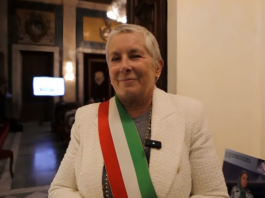
In Norway, the average monthly salaries of workers and employees range from approximately 50,500 to 62,000 Norwegian kroner. Retirees receive around 66 percent of their previous income through pension arrangements, according to the figures presented in the comparison.
This provides a substantially different retirement outlook. Rather than facing an abrupt collapse in income, workers can expect to retain a significant portion of their earnings after leaving employment.
The comparison also highlights the broader role of social protection. In Norway, pension contributions and taxes form part of a system intended to provide financial security during old age. Retirement is not supposed to mean the loss of economic independence after a lifetime of work.
By contrast, Iran’s retirees face a combination of inadequate pensions, rising prices, deteriorating purchasing power, and insufficient healthcare coverage. Their contributions over decades have failed to guarantee the basic security they expected.
Strong labor organizations protect workers and retirees
Another important difference concerns the strength and independence of labor organizations.
Norway has established labor organizations, including the Norwegian Confederation of Trade Unions (LO), which has approximately one million members. These organizations represent workers’ interests during their employment and provide continuing support after retirement.
Retired members can also benefit from substantially reduced membership fees, allowing them to maintain their connection with these organizations and continue receiving institutional support.
Such arrangements reflect a broader system in which collective bargaining, labor representation, and public support help protect workers’ rights. Retirees’ demands are not simply individual complaints but part of an established framework of social and economic rights.
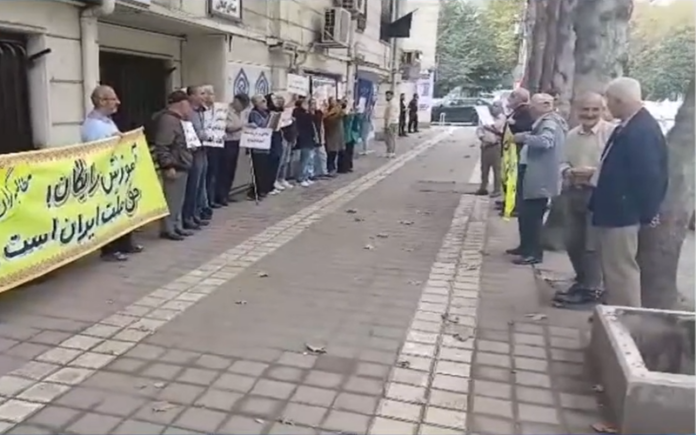
In Iran, however, independent labor organizing faces severe restrictions, while retirees repeatedly take their grievances to the streets. Their demonstrations reflect demands for adequate pensions, healthcare, and the fulfillment of commitments made during their working lives.
Slogans such as “Our rights can only be won in the streets!” capture the frustration of people who have exhausted conventional channels for securing their entitlements.
Economic instability deepens the retirement crisis in Iran
The collapse of retirement income is compounded by Iran’s currency instability and relentless inflation. Unlike Norway, where the exchange rate cited in the comparison changed from approximately seven kroner per US dollar 35 years ago to around 10 kroner, Iran has experienced repeated and dramatic currency depreciation.
For Iranian retirees, this instability means that even nominal pension increases quickly lose their value. Food, housing, medicine, and other essential expenses become increasingly unaffordable, while pension payments fail to keep pace with the rising cost of living.
The contrast is not merely about differences in salary levels. It concerns the ability of workers to rely on the institutions to which they have contributed throughout their lives.
In Norway, labor organizations, pension arrangements, and social protections provide mechanisms through which workers can defend their economic interests. In Iran, retirees confront a system in which their accumulated contributions have not translated into comparable security.
A lifetime of work should not end in poverty
The growing protests by Iranian retirees expose a fundamental failure of the country’s pension and social protection systems. People who have spent 30, 40, or even more years working and contributing to insurance funds should not have to choose between buying food, paying rent, and obtaining medical treatment.
The issue goes beyond pension calculations. It reflects the broader economic conditions under Iran’s ruling establishment, where workers and retirees bear the consequences of chronic mismanagement, corruption, inflation, and the diversion of national resources away from public welfare.
For Iran’s retired workers, the demand is straightforward: decades of work and contributions must translate into a dignified retirement, adequate healthcare, and the financial security they were promised.
Their continuing demonstrations make clear that they are no longer willing to accept poverty as the inevitable price of growing old.