


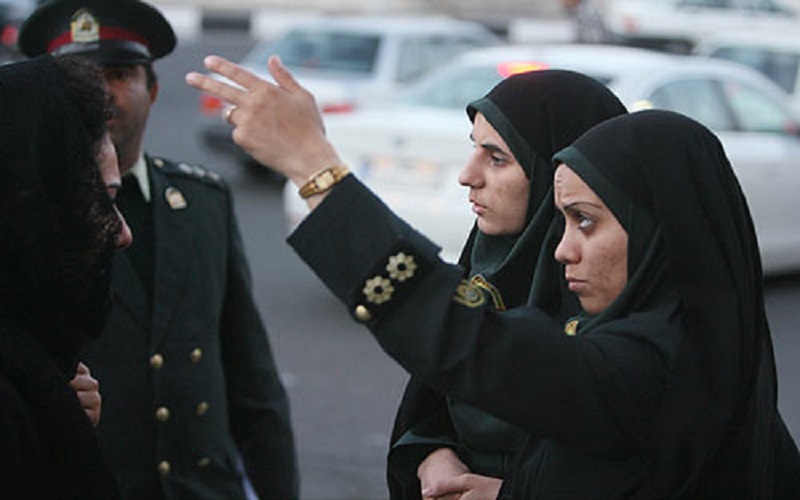

A recent report by the United Nations has revealed that Iran’s regime is increasingly relying on advanced technology, including drones, facial recognition systems, and a citizen-reporting application, to enforce its mandatory hijab laws. The report highlights the government’s systematic use of digital tools to monitor and penalize women for non-compliance.
The Role of the Nazer App
At the heart of this crackdown is the state-backed Nazer app, which allows both police and selected members of the public to report alleged hijab violations. The app enables users to submit vehicle license plate numbers, location details, and timestamps of supposed infractions. Upon receiving such reports, authorities send real-time text messages to the registered owners of the vehicles, warning them of the violation. The messages also inform them that repeated offenses could lead to the impoundment of their vehicles.
The use of the Nazer app extends to various forms of transportation, including private cars, taxis, mass transit, and even ambulances, reflecting the government’s pervasive efforts to regulate dress codes in public spaces.
Expanding Surveillance Measures
In addition to the app, Iranian’s regime authorities have reportedly deployed drones in Tehran and the southern provinces to monitor public adherence to hijab laws. This marks a significant escalation in surveillance tactics, leveraging aerial technology to track and document instances of non-compliance.
Furthermore, the report states that facial recognition software has been installed at the entrance of Tehran’s Amirkabir University, one of the country’s most prominent academic institutions. This development raises concerns about increasing restrictions on personal freedoms and heightened government control over public and private spaces.
UN to Address the Issue
The findings of the UN report are set to be presented to the United Nations Human Rights Council on Tuesday. The report underscores growing international concerns over Iran regime’s use of technology to reinforce restrictive policies, drawing criticism from human rights organizations and activists who argue that such measures further infringe on women’s rights and individual freedoms.
As Iran’s regime tightens its surveillance network, questions persist regarding the broader implications of these technologies on civil liberties, privacy, and human rights within the country.