


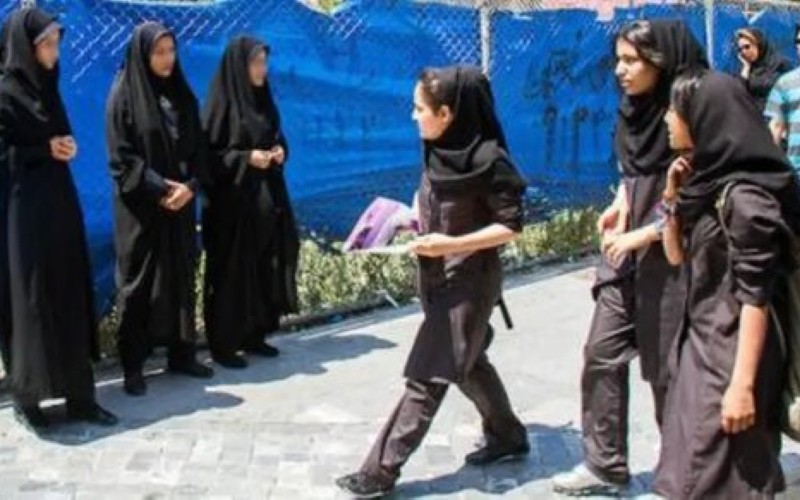

How forced unveiling under the Pahlavi monarchy and compulsory hijab under the current regime turned clothing into a political battleground—and why true freedom of choice is now a core demand of Iranian society.
The debate over hijab in Iran is not simply a religious or cultural question; it sits at the heart of modern Iranian political history. Over the past century, regimes have repeatedly used women’s clothing as a tool of power—first to force unveiling, later to impose hijab. As a result, the struggle over what women wear has become inseparable from the people’s fight against dictatorship and state coercion.
Understanding this issue requires stepping back from ideology and looking at how clothing became political. Three major approaches to hijab have shaped Iran’s history—each reflecting a deeper stance toward personal freedom, human dignity, and the role of the state in private life.
In the late 1930s, during the last years of Reza Shah’s rule, the policy of kashf-e hijab (forced unveiling) was imposed not as a social choice but as a top-down government order. Framed as “modernization,” it quickly became another form of state intrusion. Historical accounts, including personal memoirs and official records, show that many women were threatened, pressured, or even physically forced to remove their hijab in public.
What was marketed as liberation was, in reality, compulsory state engineering of personal identity. Supporters of this policy—then and now—often present it as progress, yet a freedom imposed by force is not freedom at all. Coercing women to remove hijab violated the same principle of autonomy later violated by enforcing it.
After the 1979 revolution, Iran entered a new chapter, but the logic of control remained the same. This time, the state mandated hijab. From 1980 onward, hijab became compulsory by law and a core pillar of the regime’s political identity.
Police enforcement, legal penalties, surveillance systems, workplace restrictions, and school expulsions all turned hijab into a mechanism of social control. Women became the primary targets of these policies, but the ideology of enforced appearance did not stop with them: men also faced restrictions on clothing, hair, and public presentation. This made clear that the issue was not gender alone—it was the broader authoritarian impulse to regulate citizens’ private choices.
Against both forms of state control stands a third perspective: the belief in genuine, universal freedom. According to this view, no government has the right to dictate personal clothing choices—neither to mandate hijab nor to ban it.
Clothing, like lifestyle or religious belief, belongs to the individual. This position has grown significantly in today’s Iran, embraced by women, men, human-rights activists, and especially the younger generation. Surveys and social research consistently show a clear majority of Iranians reject all forms of compulsion. For them, “freedom of choice” is not simply about hijab; it is a measure of whether a society respects its people.
Crucially, this modern pro-freedom view does not align with either past monarchy policies or the current regime’s coercion. Its foundation is universal human rights and personal autonomy—principles central to any democratic society.
Although hijab appears at first glance to be a matter of clothing, its implications run far deeper. A society unwilling to allow its citizens to decide something as basic as their own attire cannot claim to uphold larger freedoms. Iranian history repeatedly shows that whenever the state interfered with personal dress—whether to remove hijab or to force it—authoritarianism followed, not progress.
For the same reason, even today, calls for the forced removal of hijab as a reaction against the current regime repeat the same mistake. Genuine freedom cannot grow from new forms of compulsion. Freedom means choice: the right to wear hijab or not to wear it—equally, without pressure, policing, or punishment.
Ultimately, Iran’s future depends on accepting a simple but foundational principle:
Freedom of clothing is a human right for everyone—women and men alike. A nation that respects this basic liberty builds the groundwork for democracy, dignity, and social progress.