


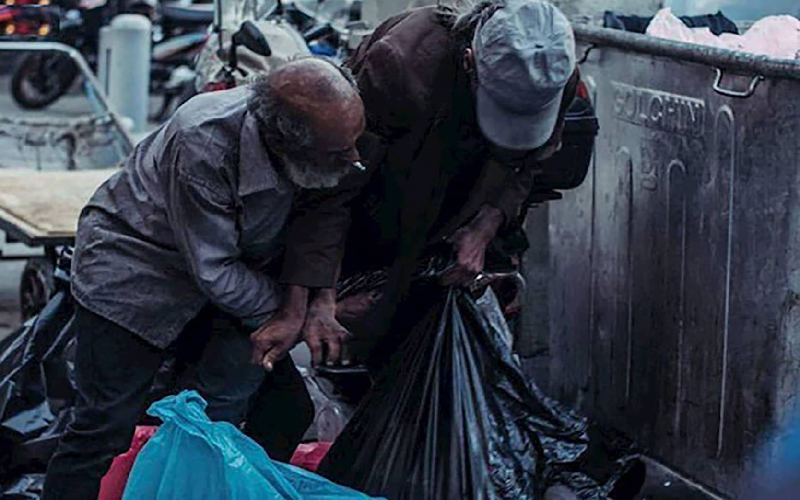

Iran’s economic indicators during Ebrahim Raisi’s presidency have shown some positive signs, but a closer examination reveals many caveats and uncertainties surrounding these apparent improvements.
A detailed analysis is difficult due to the lack of transparency, with the government often blaming previous administrations for economic crises.
One glaring example is the suspension of the Central Bank’s report on the implementation of the state budget since late 2017 during Hassan Rouhani’s presidency.
When the reports were finally released last year for 2018-2021, it was revealed that one-third of the government budget was unrealized, leading to extensive borrowing.
However, the Central Bank still avoids publishing these reports for Raisi’s tenure, likely deferring scrutiny until the next administration.
While Iran’s GDP growth appears positive in recent years, the details show this was mainly driven by increased government spending and oil exports, rather than improvements in people’s livelihoods. The IMF and World Bank project this growth acceleration to trend downward in the coming years.
Alarmingly, FAO statistics indicate Iranian red meat consumption dropped 32% over the past three years to 732,000 tons in 2023.
Combined with declining calorie intake and shrinking household food budgets, this starkly contrasts the reported 3.8% economic growth in 2022 and 4.7% in 2023, suggesting intensifying poverty and livelihood issues for citizens despite the GDP figures.
The latest data for 2023 shows economic growth was propelled by a 21.8% surge in the oil sector and a 16.7% spike in government consumption expenditure – factors disconnected from people’s daily lives.
On unemployment, while the government claims an 8.1% rate as of May 2024, the Statistics Center data reveals this drop is not due to increased employment. Rather, it results from a staggering 3.5 million citizens becoming discouraged and inactive in the labor force over the past four years.
The number of employed has only risen by 1 million, attributed to post-pandemic job restoration rather than new job creation.
Inflation figures also lack credibility, with the government’s own institutions providing contradictory assessments. The Statistics Center reported 41% inflation for 2023, while the Central Bank estimated 52.3% – the highest in 80 years.
Despite promises to curb inflation by reining in liquidity and borrowing, both government debt to banks and liquidity have doubled under Raisi.
Government debt is a mounting crisis, with arrears to private power plants alone tripling to over 90,000 billion tomans in three years. Sectors like construction, pharmaceuticals, and industries face similar debt burdens.
Crucially, the government owes $100 billion to the National Development Fund, equivalent to over two years of the total budget.
The national currency has also lost over half its value during Raisi’s tenure.
On housing, despite pledges to build 1 million units annually, only 25% progress has been made on the ‘National Housing Movement’ project as of April 2024, with only a ‘very small’ portion delivered – largely holdovers from the previous administration’s projects.
While touting Iran’s transformation into a regional transit hub, World Bank data shows Iran’s logistics efficiency ranking plummeted from 64th globally in 2018 to 123rd in 2023 – the worst among neighboring countries except Afghanistan.
This decline is attributed to maritime sanctions, a grounded air fleet, and other countries surpassing Iran’s logistics capabilities.
In summary, while some high-level economic indicators appear positive under Raisi, a deeper examination exposes worsening poverty, unemployment, inflation, debt burdens, currency devaluation, and stagnation across sectors like housing and logistics.
The lack of transparency obfuscates the true extent of these challenges facing ordinary Iranians.