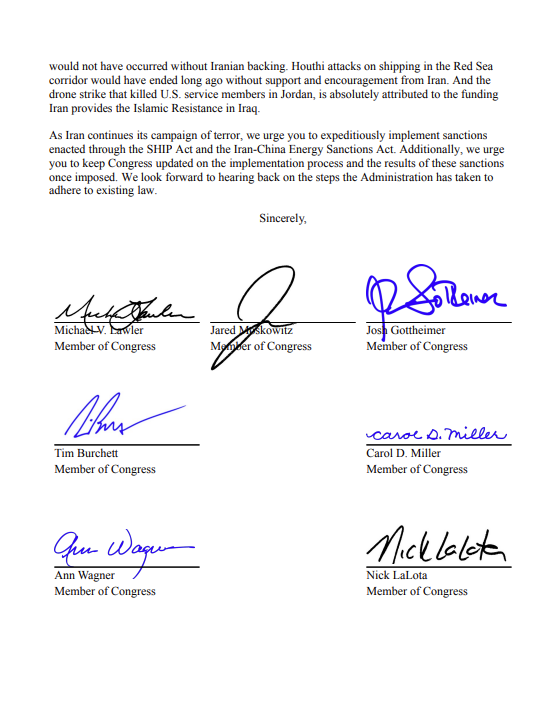
Washington D.C. – A group of over 40 U.S. House lawmakers, led by Representatives Mike Lawler (R-NY), Jared Moskowitz (D-FL), and Josh Gottheimer (D-NJ), are urging the Biden administration to swiftly implement new sanctions targeting Iranian oil exports to China.
The lawmakers, representing both sides of the aisle, sent a letter to Secretaries Antony Blinken (State) and Janet Yellen (Treasury) calling for the “expeditious implementation” of the Stop Harboring Iranian Petroleum (SHIP) Act and the Iran-China Energy Sanctions Act. Both measures were passed by Congress in April as part of a national security funding package and signed into law with bipartisan support.
These sanctions aim to cripple Iran’s oil trade with China, a key source of revenue for the Iranian government. The SHIP Act targets Chinese ports, refineries, and other entities involved in processing Iranian oil, while the Iran-China Energy Sanctions Act goes after Chinese financial institutions facilitating Iranian oil transactions.
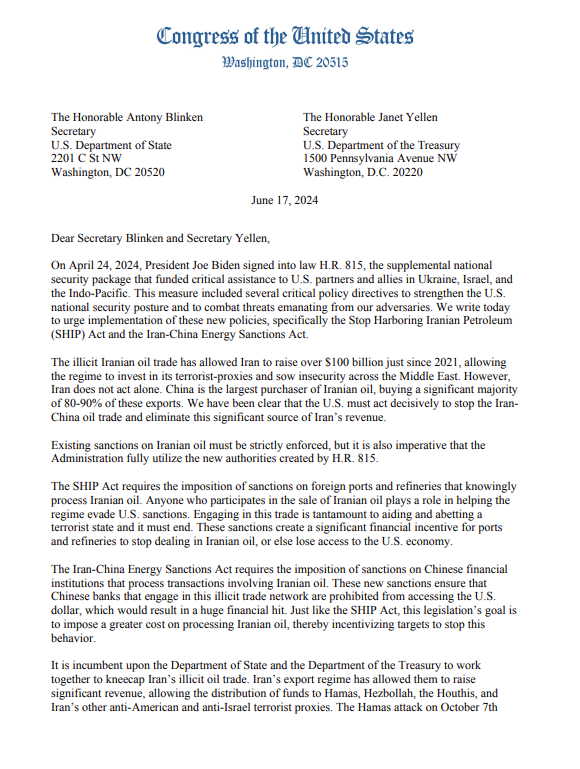
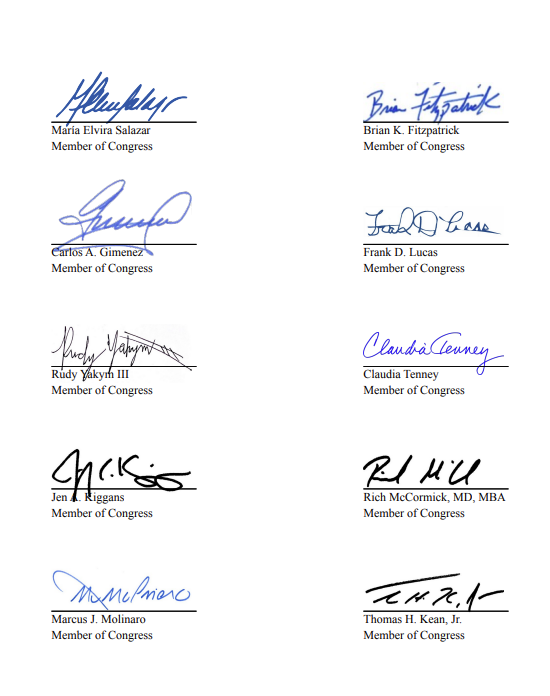
The letter expresses concern that the administration may not be fully enforcing existing sanctions or pursuing sanctions evasion aggressively enough. Lawmakers argue that stricter enforcement is crucial, and that the newly passed legislation provides powerful tools to achieve this.
They further argue that Iranian oil sales contribute to funding attacks by Iranian proxies, citing examples like the recent Hamas attack on Israel, Houthi activity in the Red Sea, and a strike by the Islamic Resistance in Iraq that killed American soldiers.
The letter concludes with a call for swift implementation of the new sanctions, along with regular updates on the process and their effectiveness. Lawmakers express their desire to see the administration uphold existing laws and effectively utilize the additional sanctions authorities granted by these bills.
History of Iran’s Recent Oil Sales to China
Iran’s oil exports to China have seen significant fluctuations in recent years. Following the lifting of sanctions under the 2015 Iran nuclear deal, China became a major buyer of Iranian crude. However, the deal’s collapse in 2018 and the re-imposition of U.S. sanctions led to a sharp decline in Iranian oil exports.
Despite the sanctions, Iran has continued to find ways to sell oil to China, often through disguised shipments and the use of intermediaries. In 2023, Iran’s oil exports to China reached a 10-year high, driven by attractive discounts offered to Chinese buyers willing to take the risk of violating U.S. sanctions. However, recent months have seen a renewed decline in Iranian oil exports to China, possibly due to a combination of factors including price disagreements and pressure from the U.S. government.
The new sanctions aim to further disrupt this trade and limit Iran’s ability to generate revenue from oil sales. The effectiveness of these measures remains to be seen, but they represent a significant escalation in efforts to pressure the Iranian government.