Mostafa Pourmohammadi, a candidate for the 14th term of the Iranian regime’s presidential elections, has been embroiled in controversy due to his involvement in the execution of political prisoners in the 1980s. In a recent interview, Pourmohammadi addressed his role in these executions, which he described as part of the “project of the Islamic Republic” and “hard moments of the system.”
Pourmohammadi was a prominent member of the execution committee known as the ‘Death Committee’ during the summer of 1988. In an online program published on Sunday, June 23, he defended his actions, stating that only members of the People’s Mojahedin Organization of Iran (PMOI/MEK) who were “at war with the people” received death sentences from various Death Committees across the country.
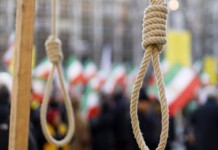
In July and August 1988, a significant number of political prisoners, mainly members of the MEK, were executed in the regime’s notorious prisons. These executions were carried out on the orders of Ruhollah Khomeini, the founder of the Islamic Republic, and the victims were subsequently buried in unmarked graves in Khavaran Cemetery in southeast Tehran.
During the interview, Pourmohammadi attempted to distance himself from one of the most egregious crimes against humanity since World War II. He asserted that he was merely a judge carrying out his duties. He claimed to have pardoned many prisoners, and in a meeting with Hossein Ali Montazeri, then deputy leader of the regime, Montazeri remarked: “If I didn’t consider this [Pourmohammadi] a pious person, and if I didn’t consider Pourmohammadi a good guy, I wouldn’t let you here at all.”
Pourmohammadi, who was the representative of the Ministry of Intelligence in Evin Prison at the time, met with Montazeri, along with Hossein-Ali Nayyeri (Head of the Death Commission in Tehran), Morteza Eshraghi (then Tehran prosecutor), and Ebrahim Raisi (then deputy prosecutor). An audio recording from this meeting revealed Montazeri condemning the 1988 massacre as a historical crime, stating: “In my opinion, the biggest crime committed in the Islamic Republic since the beginning of the revolution has been committed by you. In the future, you will be remembered among the criminals of history.”
In July 2022, Nayyeri defended the 1988 massacre, arguing that in such critical circumstances, decisive action was necessary. He stated: “In such critical circumstances, what were we to do? We had to hand down verdicts decisively. He who is running the court and dealing with the cases has to resolve the cases. In such circumstances, we cannot run the country by offering them hugs and kisses! The atmosphere of the prison was in their hands and therefore new conspiracies were at work. Maybe the situation would have been different. Perhaps the Islamic Republic would not have survived at all.”
Pourmohammadi claimed that the 1980s were very different from today, asserting that people were their defenders and demanded stricter verdicts. He pointed out that during the executions, “30 delegations (Death committees)” were active in Iran, each comprising three to five members. He insisted he was “not responsible for this and was not in the security team.”
Discussing the brief trials of 1988 political prisoners, Pourmohammadi said: “Our audience was emotional and had blood in front of his/her eyes. We said twice, sir, madam, what you are saying is that your previous sentence should be implemented.” He claimed that because of his good-natured disposition, regime officials invited him to be a member of the Death Committee. According to him, the authorities were fearful of extremism and asked him to ensure the executions did not go too far.
Pourmohammadi expressed frustration over the ongoing scrutiny of these events, acknowledging that if the officials at that time had the experiences of today, they would have implemented measures to minimize the repercussions. Nevertheless, he emphasized that “decisive and serious action definitely has its consequences.”
On June 15, during a television program, Pourmohammadi accused the MEK of trying to form a government with the participation of prisoners and their supporters after the operation known as Forough Javidan (Eternal Light). This operation, carried out by the MEK, took place six days after Iran accepted United Nations Resolution 598, which called for a ceasefire with Iraq.
Human rights activists and major human rights organizations have consistently condemned the 1988 massacre, asserting that the Iranian regime executed these prisoners without due legal process and without new charges. The regime’s officials have yet to provide a clear explanation or take responsibility for these executions. Ebrahim Raisi, the regime demised president, has previously justified these executions as actions in “defense of human rights.”
Pourmohammadi’s candidacy has reignited discussions about the 1988 massacre, highlighting the unresolved nature of this dark chapter in Iran regime’s history. As the presidential elections approach, his involvement in these events remains a contentious issue, reflecting broader concerns about justice and accountability within the Iranian regime.