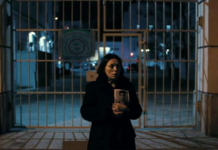
As Tehran escalates executions under the cover of war, a deeper confrontation unfolds between structural repression and a society increasingly oriented toward organized resistance and democratic change
While Iran’s regime attempts to frame its self-inflicted war as the central issue facing the country and the region, a far more consequential struggle is unfolding beneath the surface. Inside Iran, within a volatile and uprising-ready society, a parallel conflict is underway—one that pits a deeply entrenched structure of repression against an increasingly organized and defiant social force.
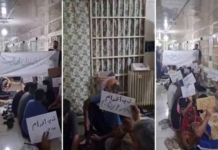
The regime’s response to mounting internal pressure has been both predictable and revealing. Exploiting wartime conditions, authorities have accelerated executions, targeting members of the PMOI (Mujahedin-e Khalq), Resistance Units, and defiant youth labeled as “rioters.”
This escalation is not incidental—it reflects a strategic calculation. Tehran understands that after the seismic shocks of past uprisings, particularly those that began in recent years, Iranian society has irreversibly changed. The state no longer sees war as a threat, but as an opportunity: a tool to suppress internal dissent before it matures into an existential challenge.
This raises several critical questions. Why has the machinery of execution intensified amid external crises? Where is the confrontation between rebellious will and structural repression heading? And can a democratic alternative emerge from the ashes of these executions?
Historically, authoritarian and ideological regimes have often used external crises to consolidate internal control. Iran is no exception. The leadership anticipates that post-war instability could further erode its already fragile foundations. In response, it has moved preemptively—using executions as a blunt instrument to block pathways that, in its view, lead to organized resistance and ultimately to regime overthrow.
Yet this strategy carries an inherent contradiction. By resorting to executions, the regime inadvertently signals where its real threat lies—not in distant battlefields, but within its own cities, neighborhoods, and even its most heavily secured centers. Each execution becomes less an act of dominance and more an admission of vulnerability.
The execution of individuals such as Mohammad Taqavi, Akbar Daneshvar Kar, Babak Alipour, Pouya Ghobadi, Abolhassan Montazer, and Vahid Bani Amerian, alongside seven young protesters, constitutes what can only be described as a “forced confession” by the regime: that the force capable of challenging it is already embedded within society.
But can executions crush the will of a generation?
Historical precedent suggests otherwise. Movements rooted in a unifying, liberation-oriented vision have repeatedly demonstrated the capacity to withstand even the harshest repression. What the regime labels as “chaos” or “sedition” often reflects, at a deeper level, the emergence of collective political consciousness.
Today’s generation of resistance—particularly those aligned with organized opposition networks—appears driven by a fundamentally different calculus. For them, the concept of life is inseparable from freedom. This shift marks a decisive break from earlier cycles of reformist hopes or reliance on external intervention. Instead, it points toward a distinctly internal, revolutionary trajectory.
Crucially, this movement has not been weakened by past crackdowns; rather, it has absorbed them, transforming repression into momentum. Each act of state violence reinforces the narrative that systemic change is not only necessary but inevitable.
However, resistance alone is not sufficient. The decisive factor lies in whether this social energy can be translated into a coherent political alternative. The regime’s deepest fear is not spontaneous protest, but organized opposition capable of channeling unrest into a structured transition.
This is where the concept of a provisional government—centered on the principles of peace and freedom—enters the equation. Proposed by the National Council of Resistance, it represents a direct counterpoint to the regime’s deadlock. Unlike the current system, which relies on repression and ideological rigidity, this alternative envisions a democratic republic grounded in popular sovereignty and the rule of law.
The significance of such a framework is not merely theoretical. It provides a roadmap for transitioning from authoritarian rule to a system in which power is genuinely vested in the people. In doing so, it addresses one of the central uncertainties that often hampers revolutionary movements: the question of what comes next.
Ultimately, the wave of executions, while deeply tragic, may also serve as an indicator of shifting power dynamics. Far from demonstrating control, they reveal a regime under strain—one that increasingly relies on coercion as its primary instrument of governance.
History offers a consistent lesson: systems that depend on fear and death to sustain themselves eventually confront forces they cannot suppress. In Iran today, that confrontation is reaching a critical juncture. The struggle between a war-driven authoritarian state and a society seeking peace and freedom is no longer abstract—it is immediate, tangible, and approaching a decisive moment.
As repression intensifies, so too does the proximity of change. No power in history has succeeded indefinitely by waging war against its own people’s desire for life and liberty.