



The Iranian regime, led by Supreme Leader Ali Khamenei, continues to intensify its crackdown on cyberspace and social media critics. Recently, Khamenei publicly directed Iran’s judiciary and security apparatus to target dissenting voices under the guise of “providing the psychological security of society.”
This directive came as protests over government policies and deteriorating economic conditions in Iran have become more prominent online. In response, Gholam-Hossein Mohseni-Eje’i, head of the judiciary, warned that critics could face arrest and prosecution. The strategy is not new; for decades, the regime has relied on suppression, detention, threats, and executions to silence opposition voices.
With international pressure mounting and domestic criticism growing after Iran’s decision to back militant groups in the Gaza conflict, the regime has once again opted for intensified censorship. The regime’s approach to cyberspace has been steadily repressive.
Laws such as the Internet User Protection Bill (IUPB), partially implemented without formal parliamentary approval, allow the government extensive censorship and surveillance powers. The Iranian state has also developed a “tiered” internet system that offers “preferential access” to approved users like freelancers, developers, and academics.
Efforts to restrict free expression extend beyond legislation. Since 2022, the ICT Ministry has imposed fines and imprisonment on citizens using virtual private networks (VPNs) to bypass censorship.
The expansion of Iran’s National Information Network (NIN) further restricts international access, reinforcing Iran’s restrictive online environment by blocking websites, especially those belonging to foreign news agencies, minority advocacy groups, and human rights organizations.
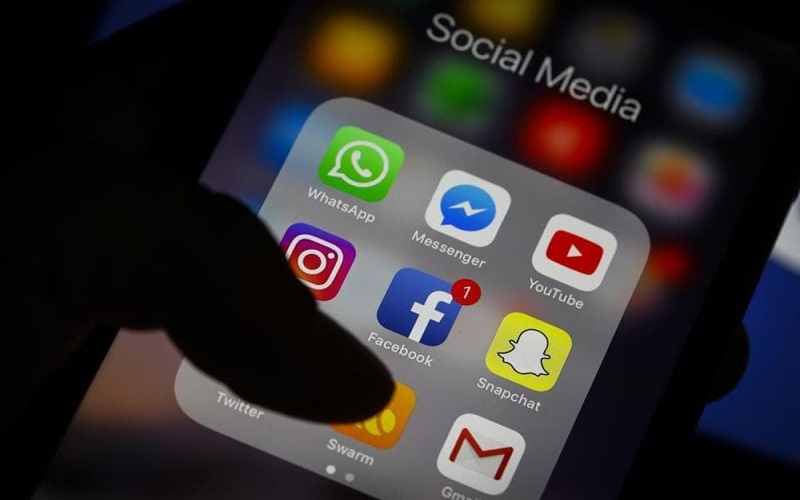
Websites that challenge Iran’s political narrative or religious doctrine are also banned, and both social media sites and messaging platforms like Twitter, Facebook, and Telegram have been systematically blocked.
Social media remains a target. Though Instagram and WhatsApp were among the last accessible international platforms, they were blocked during nationwide protests in 2022, with officials citing national security as the reason.
The Iranian regime’s control over the internet allows it to orchestrate network-wide filtering, blocking specific sites within hours and compelling private ISPs to use government-provided infrastructure to filter banned content.
As Iranians increasingly turn to VPNs and proxy services, the government has countered by blocking these alternatives. Authorities force website owners to register with the Ministry of Culture, giving the government leverage to demand the removal of “unacceptable” content.
In addition to technical restrictions, the regime engages in widespread content manipulation, leveraging media control to craft pro-government narratives. Through a network of inauthentic social media accounts, digital propaganda, and “cyber battalions,” the regime pushes its ideology online, often suppressing news of domestic unrest and targeting journalists who cover politically sensitive topics.
Efforts to replace popular platforms with state-sponsored alternatives have led to the development of Iranian social media apps like Bale, Rubika, and Soroush, which receive government funding. As the regime tightens control, it promotes state-backed apps and offers incentives to developers, hoping to shift users to a tightly regulated digital ecosystem.
While the regime’s tactics have successfully suppressed some criticism, they have ultimately fostered a generation of bold, tech-savvy activists who resist state norms and openly challenge the regime’s legitimacy online.
As the Iranian government intensifies censorship, the gap between government narrative and public discourse grows, leading to greater frustration and emboldened opposition. The attempt to control cyberspace is proving more difficult than shutting down traditional media, yet the regime’s insistence on repression risks backfiring, fueling the resolve of those committed to holding it accountable.