


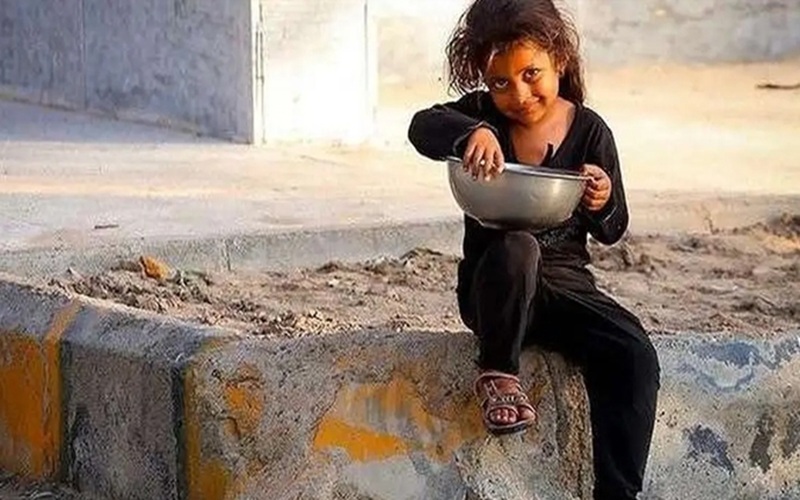

Regime-linked admissions on mass poverty and psychological breakdown expose how economic deprivation in Iran has evolved from a crisis into a deliberate mechanism of social control.
For years, poverty in Iran has no longer been merely the consequence of economic mismanagement or corruption. It has evolved into something deeper and more dangerous: a governing instrument. Under the rule of the clerical establishment, deprivation has increasingly become a strategic mechanism for weakening society, exhausting resistance, and reshaping the psychological fabric of the nation itself.
What is particularly revealing is that this reality is no longer exposed only by critics or opposition voices. Increasingly, warnings are emerging from within the regime’s own media ecosystem and affiliated experts. These admissions paint a devastating portrait of a society being systematically driven toward psychological exhaustion and social fragmentation.
A report published on May 25, 2026, by the regime-affiliated newspaper Tose’e Irani, citing remarks made by psychiatrist Mohammad Ghadiri Vasfi in an interview with the state-linked ILNA news agency, acknowledged that nearly 50 percent of Iranian society now lives below the poverty line. Even within the tightly controlled framework of official discourse, such an admission is staggering.
More alarming, however, were the consequences described by the university-affiliated psychiatrist himself. According to the report, absolute poverty is directly fueling rising rates of psychiatric disorders, including anxiety, depression, drug and stimulant abuse, impulsive behavior, aggression, and violent crime. In his words, poverty is no longer simply an economic condition; it has become a generator of social breakdown.
This is perhaps the clearest illustration yet of the relationship between authoritarian governance and engineered social exhaustion. A society crushed under relentless economic pressure gradually loses not only material security, but also psychological balance, social trust, and long-term hope. Citizens consumed by survival are deprived of the ability to organize, imagine alternatives, or challenge entrenched power structures.
The most disturbing aspect of these warnings lies in their intergenerational implications. The psychiatrist emphasized that the effects of poverty persist for generations, even after partial economic recovery. Malnutrition among impoverished families, particularly during infancy and breastfeeding periods, damages children’s neurological development and leaves lasting cognitive and psychological scars.
In other words, poverty does not merely empty tables today; it diminishes the intellectual and developmental capacity of tomorrow’s society.
When deprivation reaches this scale, it acquires an unmistakably political function. A population struggling with hunger, untreated trauma, addiction, and instability becomes easier to suppress and less capable of collective mobilization. Economic collapse thus transforms into a tool of governance.
Equally revealing is the reported destruction of Iran’s middle class. According to the same discussion, nearly 30 percent of the middle class has already been pushed into poverty. In any functioning society, the middle class serves as the backbone of stability, education, cultural development, and economic growth. Its erosion signals not merely recession, but structural societal decay.
The destruction of the middle class also destroys the social horizon itself. It replaces ambition with despair, mobility with stagnation, and civic participation with alienation. Under such conditions, emigration accelerates, social cohesion deteriorates, and public trust collapses.
What emerges from these regime-linked admissions is a chilling reality: the crisis in Iran is not simply financial. It is civilizational. Poverty is no longer incidental to governance; it increasingly appears embedded within the logic of survival for a ruling system that sustains itself through repression, dependency, and exhaustion.
The central question, therefore, is no longer whether these policies are destructive. Even voices within the establishment now acknowledge that they are. The real question is how long a system can continue sustaining itself through the systematic erosion of human dignity, psychological well-being, and the future of entire generations.
No regime can indefinitely preserve power while consuming the very society upon which its survival depends. Iran today stands as a stark warning of what happens when authoritarian rule transforms economic suffering into state strategy — and when the destruction of human potential becomes a pillar of governance itself.