



In recent weeks, as tensions escalated between Israel and Iran, a leak of highly sensitive U.S. documents detailing Israeli military deployments stirred intrigue. The leaked documents, originating from within the U.S. government, remain a mystery.
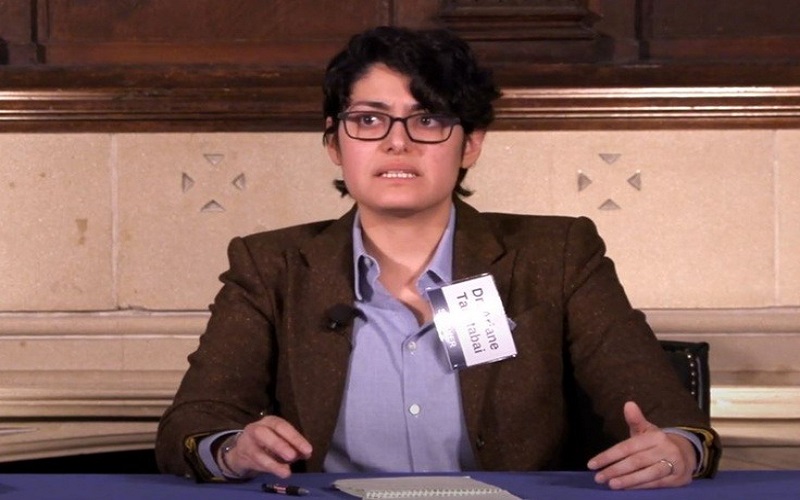
Though countless officials had access, one name repeatedly surfaced online: Ariane Tabatabai, a senior Defense Department official. The Free Press reported this unfolding story, tracking the Pentagon’s responses and Tabatabai’s recent career shift.
While rumors circulated, no evidence has linked Tabatabai to the leak, and U.S. Secretary of Defense Lloyd Austin has publicly suggested that neither Tabatabai nor anyone else within the Pentagon is likely the source.
Still, in a quiet but significant move, the Pentagon recently reassigned her from her post as chief of staff in the Office of Special Operations and Low Intensity Conflict (SO/LIC). This role granted her access to sensitive intelligence and detailed insights into global U.S. special operations—one of the most highly classified portfolios within the military.
On October 25, the Pentagon informed Congress that Tabatabai would transition to a new role as Deputy Assistant Secretary of Defense for Force Education and Training, a position notably distant from high-level intelligence.
The Pentagon declined to comment on this reassignment, even as some lawmakers, particularly Republicans, have voiced concerns over her previous interactions with the Iranian government, according to The Free Press.
Tabatabai initially joined the Biden administration in 2021 as part of the State Department’s Iran negotiating team. She worked under Special Envoy Robert Malley, who was later stripped of his security clearance and is now under FBI investigation for mishandling classified information. Soon after Malley’s departure, Tabatabai moved to the Pentagon and took up her post in SO/LIC.
Scrutiny around Tabatabai intensified last year following a report by Semafor. They accessed Iranian government emails from as early as 2014, revealing Tabatabai’s involvement in the Iran Experts Initiative (IEI), a program spearheaded by the Iranian Foreign Ministry to promote Tehran’s perspectives within Western think tanks and media.
Some emails showed her consulting Iranian officials on her travels and congressional appearances. Tabatabai has yet to publicly address her role in the IEI, and Republican lawmakers have repeatedly called for her security clearances to be revoked due to these alleged ties.
The Pentagon has not clarified if her recent transfer relates to this issue, although a conservative watchdog group recently sued the Pentagon for documents related to Tabatabai and Malley’s activities.
The Free Press also reported that Tabatabai’s reassignment poses a challenge for the Biden administration. Her history of collaboration with Philip Gordon, Vice President Harris’s national security adviser, is well-known, including several 2020 opinion pieces advocating for renewed U.S.-Iran nuclear diplomacy and easing sanctions on Iran.
While technically a promotion to the rank of deputy assistant secretary of defense, former officials, including Garrett Exner, a former SO/LIC official, suggest the move to troop education and training is effectively a step down.
“Everyone in the know understands this isn’t a promotion,” Exner told The Free Press, adding that Tabatabai is now separated from high-level policy and classified intelligence. Another SO/LIC veteran emphasized the high sensitivity of her former role, noting that “the operations handled by SO/LIC are more sensitive than even the CIA’s.”