
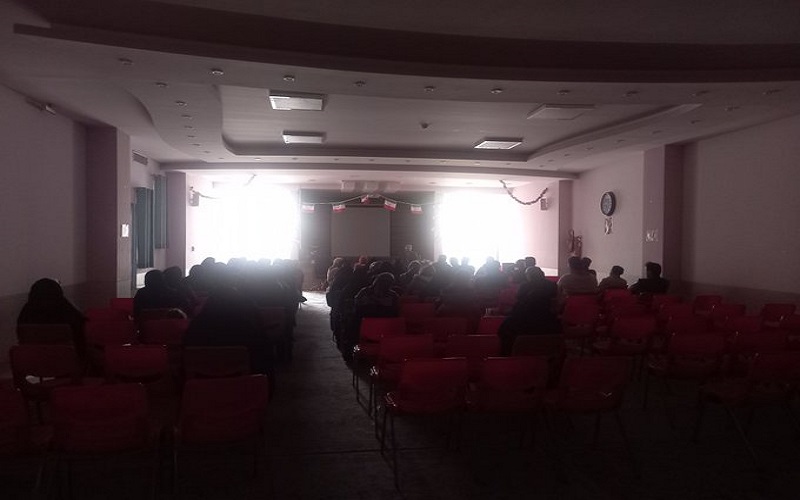

The Iranian regime continues to demonstrate its inability to meet the basic needs of its citizens, as evidenced by the country’s ongoing energy crisis. On Thursday, the regime’s President, Massoud Pezeshkian, released a video on his social media accounts urging citizens to lower their home temperatures by at least two degrees to conserve energy. However, shortly after this appeal, large swaths of Iran, including the capital, experienced unannounced power outages lasting three to seven hours, leaving homes and public roads in darkness.
Escalating Blackouts and Failing Infrastructure
The situation worsened when Iran’s Tavanir Company announced a new schedule of planned power outages. This announcement highlighted the regime’s lack of commitment to improving energy infrastructure, such as building power plants or increasing gas production capacity. Instead, the regime appears focused on boosting military expenditures.
On Friday, the secretary of Iran’s power plant union warned that electricity supply restrictions could extend into the winter. Historically, blackouts in Iran occurred mainly during the summer months. Now, for the first time since the Iran-Iraq War, they are expected to persist for approximately nine months of the year.
He explained: “The country requires about 50,000 megawatts of electricity. If sufficient fuel is not provided to power plants, blackouts will be used to manage consumption. Winter might also see power supply restrictions.”
He added that out of the one billion cubic meters of daily gas production, over 350 million cubic meters are consumed domestically, leaving insufficient fuel for power plants. As a result, these plants are forced to switch to diesel or mazut, further straining the system. He cautioned that inadequate supplies of these alternative fuels could cause power plants to shut down entirely.
Widespread Consequences
Mehr News Agency confirmed the resurgence of household power outages, citing a statement from the Tehran Electricity Distribution Company. According to the statement, “Due to the beginning of the cold season and increased domestic gas consumption, citizens should refer to the My Electricity application or the Tavanir site to view blackout schedules.” Additionally, Tavanir Company warned that electricity to garden villas could be disconnected if disputes over usage escalate.
The crisis extends beyond electricity. The Ministry of Information and Communications Technology admitted that widespread internet outages in Tehran and other cities were caused by power cuts, which depleted the batteries at operator sites. However, the ministry failed to explain why no action has been taken in recent years to modernize electricity storage infrastructure. Ironically, the regime has heavily invested in advanced equipment for internet censorship and surveillance, showcasing misplaced priorities.
Environmental and Health Impact
The crisis is compounded by severe air pollution caused by burning mazut in power plants. Provinces such as Tehran, Alborz, Isfahan, Khuzestan, and East Azarbaijan have experienced dangerously high pollution levels, prompting school and office closures. On Friday, Tehran’s air pollution index reached 182, a hazardous level, despite two days of shutdowns.
Economic Mismanagement and Priorities
In recent weeks, Pezeshkian acknowledged the government’s inability to address the worsening economic situation or alleviate poverty. The head of the Research Center of the Chamber of Commerce of Iran also declared that government resources for financing development projects have “almost reached zero.”
Despite these admissions, the regime’s leadership insists on maintaining its costly warmongering and destructive foreign policies. These priorities divert substantial resources from addressing domestic crises, further exacerbating public dissatisfaction.
Conclusion
The Iranian regime’s mismanagement has plunged the country into a deep energy crisis, with far-reaching implications for the economy, environment, and public well-being. While citizens endure power outages, air pollution, and economic hardship, the regime remains focused on militarization and foreign policy pursuits. This stark contrast underscores the regime’s failure to prioritize the needs of its people, fueling growing discontent and calls for systemic change.