Ali Rabii, the Aide to the President of Iran for Social Affairs, recently highlighted a stark reality of life in Iran, stating that “poverty in Iran is the basis of many structural and non-structural disturbances.” Reflecting on the widespread protests of 2022, Rabii noted that poverty—or as he termed it, survival—played a pivotal role in generating conflicting values between the impoverished population and the rigid ideological framework imposed by Iran’s regime. He further emphasized that “poverty is a security issue” in the country, linking the phenomenon directly to social unrest.
This acknowledgment came during a meeting attended by high-ranking regime officials, including Esmail Gorjipour, Deputy Minister of the Ministry of Cooperatives, Labour, and Social Welfare, and Ebrahim Sadeghi, Head of the Labor and Social Security Institute. The discussions focused on the socioeconomic factors driving instability in Iran, with particular attention to the 2022 protests. Officials noted that the middle class, disillusioned with the regime’s policies, played a critical role in mobilizing the lower-income groups to join the demonstrations.
Dire Poverty Statistics and Their Consequences
Ebrahim Sadeghi shed light on the grim economic realities facing Iran, revealing that 27% of the population lives below the poverty line, unable to meet basic needs. He cited alarming trends such as an increase in school dropouts, rising chronic diseases, and regional inequalities as direct consequences of this widespread poverty. He further noted that the percentage of Iranians living below the poverty line exceeds the global average, attributing this to a combination of factors, including disease, drought, sanctions, and systemic mismanagement.
Ali Rabii echoed these sentiments, stressing that the protests initially reflected the values and frustrations of the middle class, which subsequently inspired broader participation from the poorer segments of society. He reiterated that poverty is not only an economic issue but also a profound threat to the regime’s stability.
Corruption, Sanctions, and Structural Failures
Rabii identified the lifting of international sanctions as the first critical step toward combating poverty. However, he admitted that sanctions alone are not to blame for Iran’s dire economic state. “The destroyed bureaucratic system, rooted in corruption, conflicts of interest, nepotistic management, and inflation,” has compounded the country’s economic woes, he said.
Rabii lamented that corruption has normalized poverty in Iran, making efforts to fight it increasingly difficult. According to him, “sanctions have turned poverty into a rule,” and any policies that delay the removal of sanctions have only deepened poverty across the nation.
Rabii criticized the Islamic Republic’s successive governments, describing them as uniformly “failures in the field of poverty reduction.” He argued that the regime’s economic policies inherently foster inequality by limiting access to wealth and resources, warning that such inequality would only intensify if these policies persisted.
A Nation on the Brink
The Iranian regime’s inability to meet the most basic needs of its people—ranging from electricity and gas to water and bread—has reached a breaking point. Corruption and embezzlement are rampant, with reports of entire cargo shipments disappearing, while the Iranian rial has become the world’s most devalued currency. The unrelenting rise in the price of the U.S. dollar underscores the nation’s economic instability.
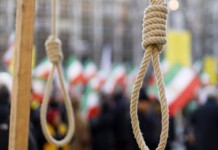
Regime insiders describe this dysfunction with terms like “the apathy of the rulers” and “the coma of the decision-making system,” revealing a government that is increasingly paralyzed. In response to its inability to govern effectively, the regime has resorted to intensifying repression, including a sharp rise in the number of daily executions.
Yet, this repression has done little to quell public dissent. Across the streets of Iran, millions of disillusioned citizens chant slogans like, “poverty and corruption, high prices—we are going to overthrow [you].” This growing wave of dissatisfaction reflects a “revolutionary situation,” as defined in classical terms. A government-affiliated sociologist has bluntly described the country’s precarious state: “Iranian society is approaching a critical turning point.”
Conclusion
The intersection of widespread poverty, entrenched corruption, and an unresponsive regime has created a volatile environment in Iran. The 2022 protests underscored the profound disconnect between the ruling elite and the populace, particularly the middle and lower classes. With the government unable—or unwilling—to address the root causes of economic disparity, the likelihood of further unrest remains high. Iran now stands at a crossroads, with poverty and repression fueling a society on the verge of revolution.